IN Brief:
- Airbus Helicopters has delivered Belgium’s first H145M from Donauwörth.
- Belgium has exercised an option for three additional aircraft, taking its total H145M order to 20.
- The aircraft supports light attack, special operations, cargo, hoisting, digital connectivity, self-protection, and uncrewed teaming.
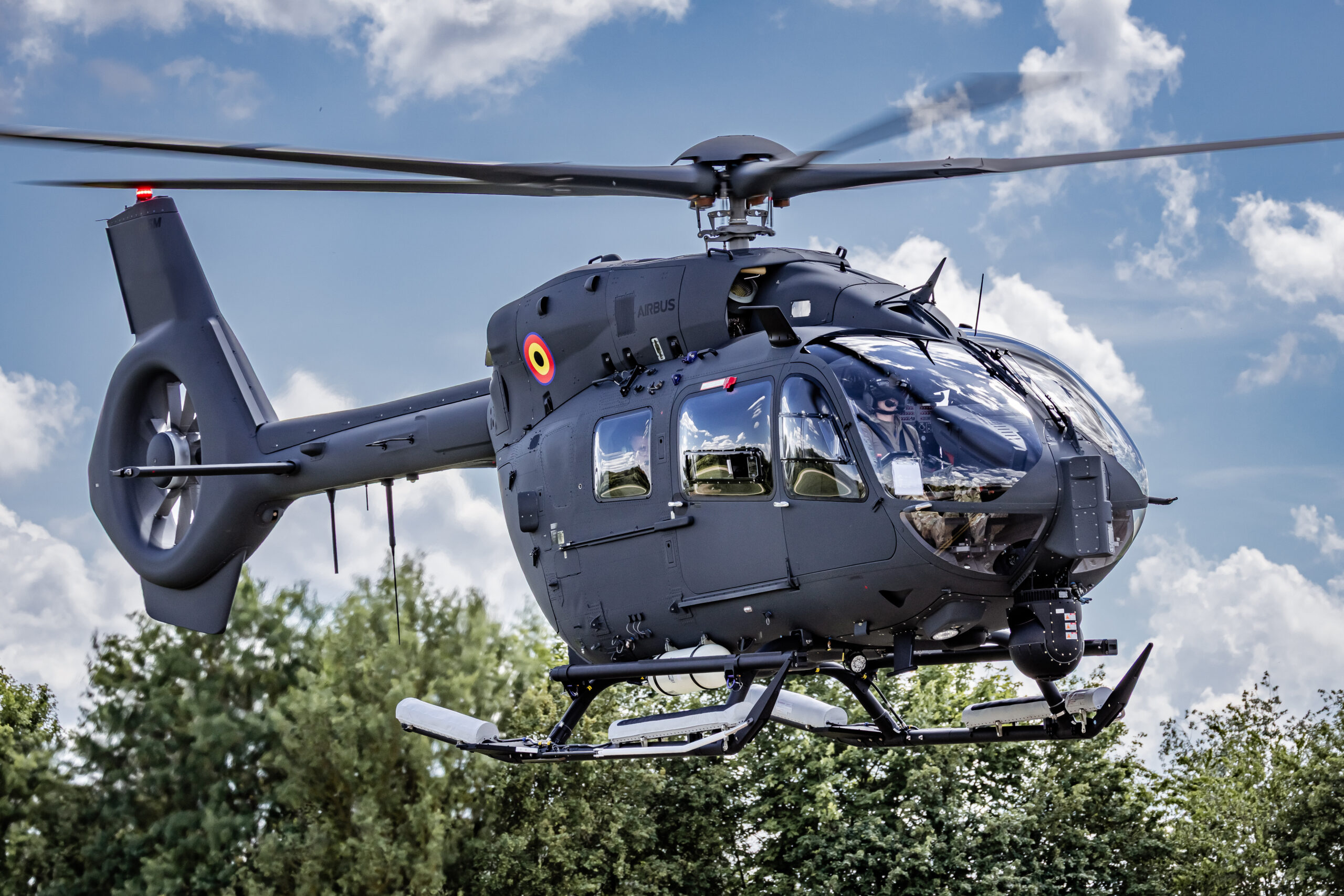
Airbus Helicopters has delivered Belgium’s first H145M, beginning the fleet introduction phase of a 20-aircraft programme for the country’s defence and security users.
The aircraft is part of a procurement agreed in 2024 through the NATO Support and Procurement Agency to equip the Belgian armed forces and the Federal Police. Belgium has also exercised an option for three additional helicopters, increasing the total fleet on order to 20.
Built at Airbus Helicopters’ Donauwörth site in Germany, the delivery strengthens the H145M’s position inside Europe’s light military helicopter market. The platform is the military version of the H145 light twin-engine family and is designed for a broad set of roles, including light attack, special operations, hoisting, external cargo, and security missions.
Although the aircraft is compact compared with medium and heavy military helicopters, its production and integration demands are substantial. A modern light military rotorcraft is expected to carry mission equipment, weapons, sensors, self-protection systems, communications, digital avionics, hoists, fast-rappelling equipment, and role-specific fittings while preserving availability and manageable operating costs.
The H145M’s appeal rests partly on its ability to be reconfigured quickly. That flexibility depends on controlled interfaces, qualified mission packages, spares availability, software discipline, and maintenance procedures that allow operators to change roles without creating configuration confusion. A helicopter that can move between military and security tasks needs a support model as carefully engineered as the airframe.
Belgium’s mixed military and police requirement adds another layer. Common airframes can reduce training and sustainment complexity, yet the two user groups will place different stresses on the fleet. Military operations may prioritise self-protection, tactical communications, weapons interfaces, and deployed support. Police missions may emphasise surveillance, search-and-rescue, domestic readiness, and civil-security equipment. The common fleet only delivers value if those configurations remain manageable over time.
The aircraft is powered by two Safran Arriel 2E engines with FADEC and is fitted with Airbus Helicopters’ Helionix avionics suite, including a four-axis autopilot intended to reduce pilot workload. Those systems create supplier demand well beyond final assembly, spanning engines, avionics, sensors, wiring, software, cockpit displays, electronic systems, and through-life support.
The wider H145 family has accumulated more than 8.5 million flight hours, while the military family includes operators such as Germany, Hungary, Serbia, Luxembourg, Thailand, Ecuador, Honduras, and the US Army’s UH-72 Lakota fleet. That installed base supports recurring demand for spares, upgrades, training, maintenance, and mission equipment, giving the programme industrial depth beyond each individual delivery.
European rotorcraft sustainment is becoming a more active market as countries modernise fleets, rebuild readiness, and extend platform life. Austria’s Black Hawk sustainment route and Airbus work on the Tiger upgrade path show how helicopter capability is increasingly tied to long-term industrial support, avionics refresh, software control, and local maintenance structures. The H145M occupies a lighter class, but the same logic applies.
Digital connectivity and uncrewed teaming add another production burden. Light helicopters are increasingly expected to share data with drones, ground forces, command systems, and other aircraft. That requires secure communications, cyber-resilient software, electromagnetic compatibility, and update processes that keep the aircraft useful as networked combat evolves.
For Airbus, the Belgian fleet adds another European customer to a growing H145M base and supports production continuity at Donauwörth. For Belgium, the aircraft offers a consolidated light-helicopter capability across defence and internal security, with a common platform that can be shaped by mission package rather than entirely separate fleets.
The programme will now move into the less visible but more decisive phase of training, spares provisioning, configuration management, maintenance planning, and role integration. First deliveries attract attention, but fleet value is created over years through availability, controlled upgrades, and the ability to sustain different mission sets without fragmenting the support base.
Belgium’s first H145M is therefore not just a new aircraft entering service. It is the start of a long industrial relationship linking European helicopter production, mission-system integration, and through-life support across military and security operations.