IN Brief:
- India has commissioned INS Dunagiri, INS Sanshodhak, and INS Agray in Kolkata.
- The three platforms cover a Project 17A stealth frigate, a Survey Vessel Large, and an Arnala-class ASW shallow-water craft.
- GRSE, the Warship Design Bureau, and more than 200 MSMEs have supported a delivery set with indigenous content above 75 percent.
India has commissioned three indigenously designed and built naval platforms in Kolkata, placing Garden Reach Shipbuilders & Engineers at the centre of a broad naval production milestone.
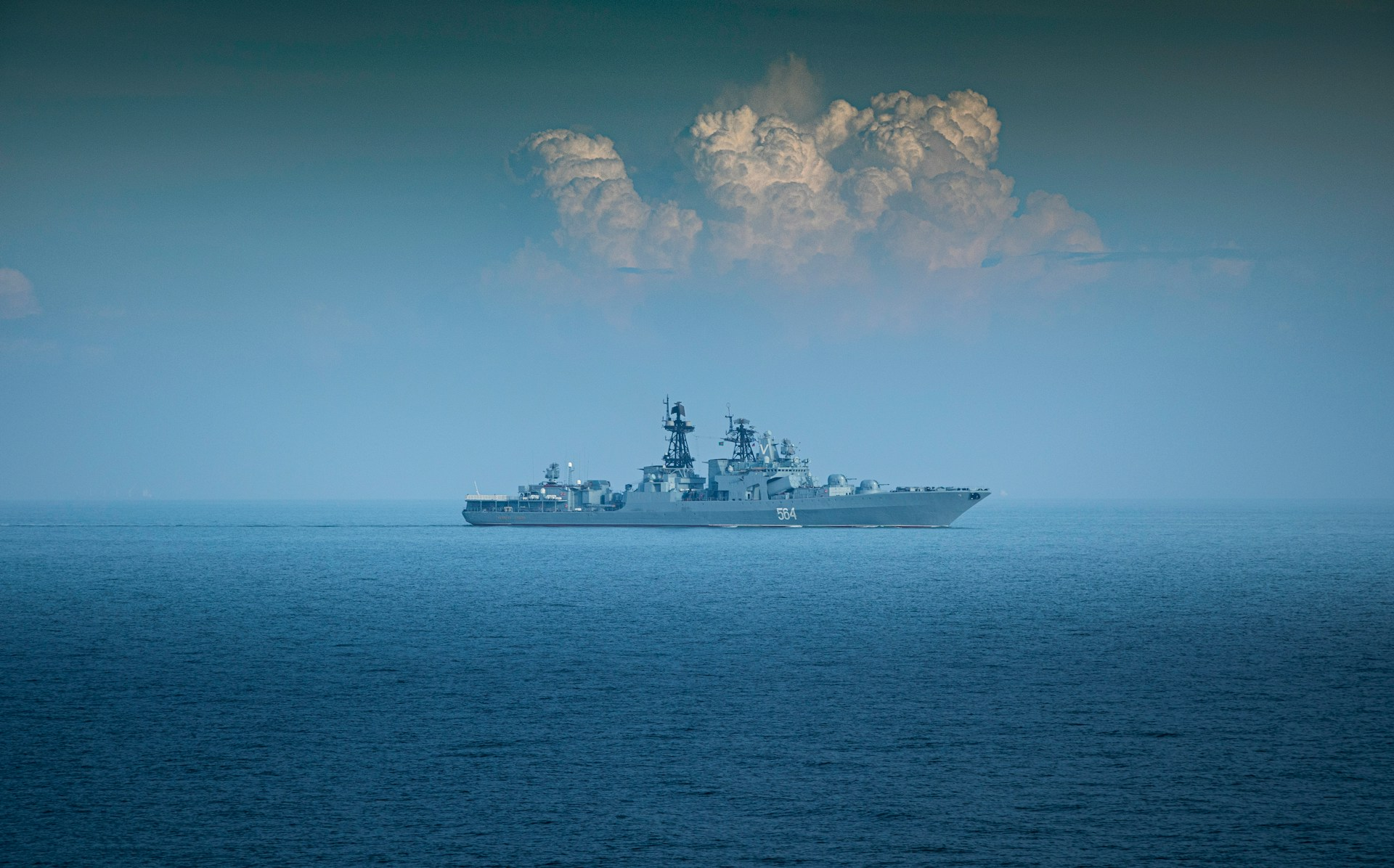
INS Dunagiri, INS Sanshodhak, and INS Agray entered service together at Syama Prasad Mookerjee Port, adding capability across blue-water combat, hydrographic survey, and shallow-water anti-submarine warfare. The vessels were designed by the Indian Navy’s Warship Design Bureau and built by GRSE, with more than 200 MSMEs contributing to the wider industrial effort.
Although the three ships serve different missions, their joint commissioning gives a clear picture of how India’s naval manufacturing base is being used. Dunagiri brings a high-end frigate requirement, Sanshodhak adds specialist survey and data-gathering capability, while Agray contributes littoral ASW capacity. One yard has therefore delivered across combat, scientific, and coastal warfare roles, each with its own production rhythm and supplier requirements.
INS Dunagiri is the fifth Project 17A stealth frigate and carries advanced sensors and weapons, including BrahMos surface-to-surface missiles and the Medium Range Surface-to-Air Missile system. A ship of this class places heavy integration demands on combat-management systems, radar, missile launchers, propulsion, power distribution, electronic warfare, aviation facilities, and damage-control architecture.
INS Sanshodhak, as a Survey Vessel Large, sits in a different industrial category but is no less important to naval effectiveness. Hydrographic and oceanographic work underpins safe navigation, submarine operations, amphibious planning, maritime infrastructure, and naval charting. The vessel’s production pulls in specialist equipment, data systems, survey sensors, remotely operated vehicles, autonomous underwater vehicles, and stable working spaces for scientific and naval tasks.
INS Agray adds a third layer through shallow-water anti-submarine warfare. Littoral ASW craft need sonar integration, lightweight weapons, communications, propulsion suited to coastal waters, and equipment that can function in noisy, congested, and environmentally complex operating areas. As undersea competition rises across the Indo-Pacific, shallow-water ASW capacity is becoming a more prominent requirement for regional fleets.
The commissioning therefore brings together more than three hulls. It shows how naval production maturity depends on a wide supplier ecosystem, from steel and propulsion to electronics, combat systems, cabling, auxiliary machinery, insulation, accommodation, and specialist mission equipment. The involvement of more than 200 MSMEs reinforces how shipbuilding demand spreads beyond the prime yard.
For India’s defence-industrial policy, indigenous content above 75 percent gives the milestone additional weight. Domestic design and construction reduce dependence on foreign shipyards, but the more significant gain comes from sustaining companies that can build, repair, upgrade, and support naval platforms through decades of service. Sovereign shipbuilding is valuable only when it creates a living industrial base, not a succession of isolated delivery ceremonies.
The regional context is also tightening. Indo-Pacific navies are accelerating work on frigates, submarines, patrol vessels, unmanned vessels, and maritime-domain-awareness systems, while shipyards in South Korea, Japan, Australia, China, and India compete across both domestic and export markets. South Korea’s efforts to sharpen frigate production rhythm sit within the same wider race to build complex naval platforms at pace and with fewer schedule shocks.
Production rhythm now matters as much as individual design quality. A shipyard that can move several classes through construction, integration, and trials builds skills that cannot be bought quickly. Engineers learn interface discipline, suppliers learn documentation and quality requirements, and naval customers gain confidence in delivery patterns. Those gains become especially important when fleets need both high-end warships and less glamorous enabling vessels.
Through-life support will decide whether the commissioning’s industrial value endures. Dunagiri, Sanshodhak, and Agray will need spares, software updates, sensor maintenance, weapon-system upgrades, hull work, machinery support, and periodic refits. Each vessel starts a long sustainment cycle that can either reinforce domestic capability or expose gaps in component availability and technical depth.
The three-ship commissioning also highlights how naval capability depends on more than headline combatants. Survey vessels provide the maritime data that supports operations, ASW craft protect coastal approaches, and frigates offer high-end combat reach. A balanced navy needs all three, and a mature industrial base must be able to build across that spread without treating every class as a one-off exercise.
For GRSE, the event strengthens its position as a central player in Indian naval construction. For the Indian Navy, it adds capability in areas where regional competition is growing. For suppliers, it confirms that domestic naval production is creating demand across multiple vessel types, not only the most visible front-line platforms.
India’s shipbuilding ambition will be judged over years by delivery consistency, defect resolution, upgrade discipline, and fleet availability. The commissioning of Dunagiri, Sanshodhak, and Agray gives the country a useful marker on that path, with domestic production sitting at the core of the achievement.