IN Brief:
- Germany has terminated the delayed F126 frigate programme after cost and schedule concerns.
- Berlin is moving toward an eight-ship MEKO A-200 route led by TKMS.
- The shift places greater emphasis on deliverability, anti-submarine warfare, yard capacity, and stable systems integration.
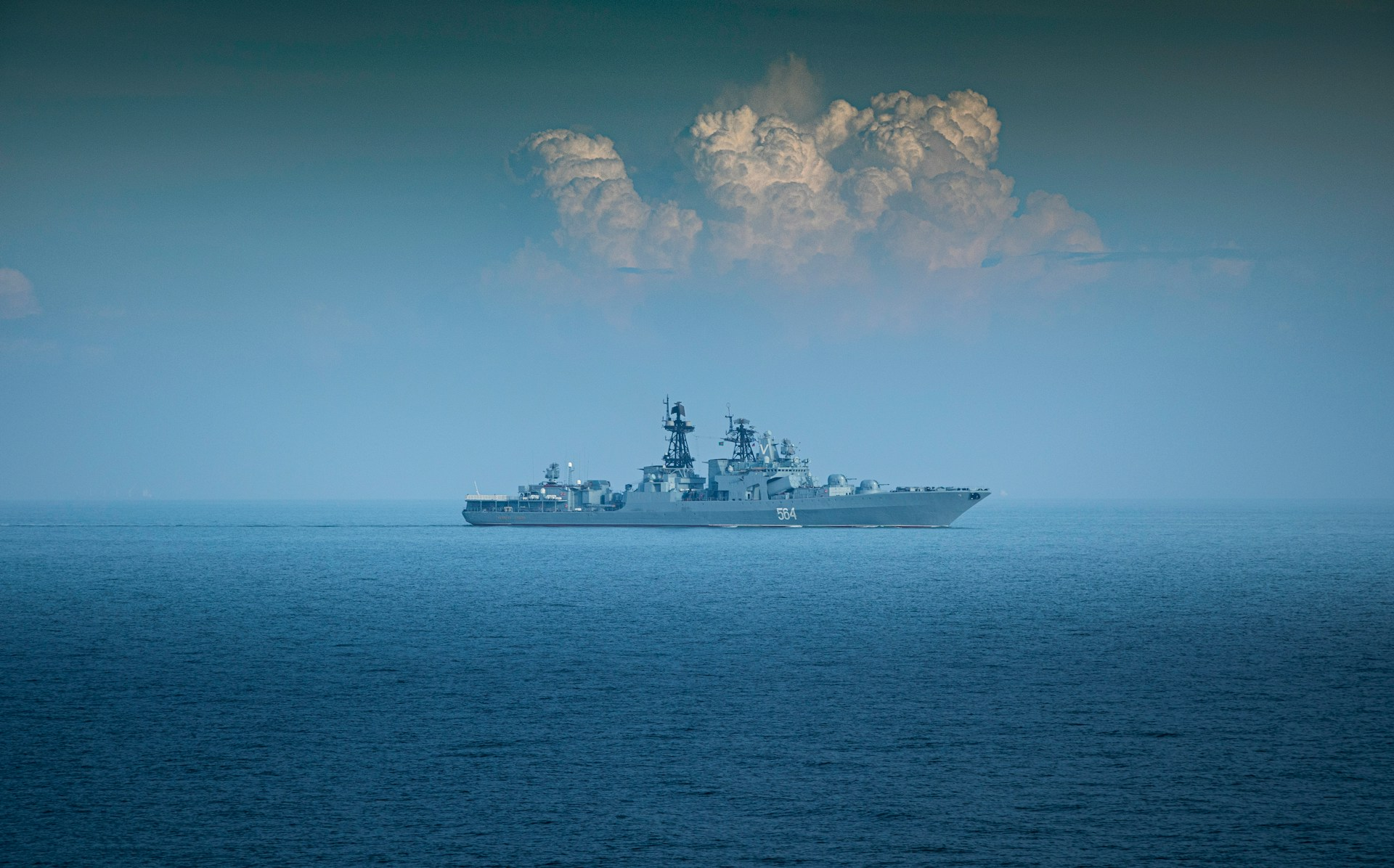
Germany has cancelled the troubled F126 frigate programme and moved toward a MEKO A-200 route, reshaping one of Europe’s most important naval procurement efforts around delivery risk and industrial practicality.
The F126 programme had been intended to provide six large frigates, but cost growth, delay, and contractor risk pushed Berlin away from continuation. Germany has already spent heavily on the effort, while the remaining cost of completion had become increasingly difficult to defend. The replacement route now points to eight MEKO A-200 frigates from Thyssenkrupp Marine Systems, with an initial batch of four ships and an option for four more.
Although European governments continue to call for more sovereign capability and larger fleets, Germany’s decision shows how quickly ambition can be overtaken by production risk. Warship programmes consume years of engineering, supplier coordination, integration work, and trial activity before the first ship enters service. When cost and schedule drift become embedded early, the eventual fleet can arrive too late and too expensively to meet the requirement that created it.
The MEKO route appears to prioritise a more deliverable design path. Anti-submarine warfare is expected to be a central requirement, reflecting NATO’s renewed focus on the North Atlantic, Baltic Sea, undersea infrastructure, and submarine threat detection. That mission set brings demand for sonar systems, acoustic management, quiet propulsion, combat-management integration, torpedo handling, helicopter facilities, and long-term sensor upgrades.
For TKMS, the move strengthens its position inside Germany’s surface-combatant pipeline. For Rheinmetall, which had expanded its maritime position through the acquisition of NVL, the cancellation removes an expected path into a major frigate programme. Other German yards may still gain work if production is distributed, particularly if the option for four additional ships is exercised.
The switch also gives a sharper meaning to Germany’s earlier move to reserve MEKO frigate production capacity. What looked at first like programme insurance now appears to have become the main route. That kind of capacity reservation is becoming more common as European states try to avoid discovering too late that yard slots, engineering teams, or suppliers have already been committed elsewhere.
For shipbuilders, a clearer design path can be more valuable than a more ambitious but unstable requirement. Frigate production depends on design maturity, modular construction discipline, equipment lead times, combat-system interfaces, testing capacity, and supply-chain reliability. When those foundations are weak, every later stage becomes more expensive.
The F126 decision also reflects a wider procurement correction across Europe. Armed forces want sophisticated platforms, but defence ministries are increasingly intolerant of programmes that absorb budget without producing equipment. The war in Ukraine has reinforced the need for stockpiles, replenishment, fleet availability, and industrial throughput. A ship that cannot be delivered in useful time has less strategic value than a slightly less ambitious vessel that reaches the fleet.
That does not make MEKO A-200 a low-risk choice. German requirements, NATO interoperability, ASW specialisation, domestic workshare, cyber standards, and future upgrade needs will all have to be integrated without recreating the same risk profile. A 2029 first-delivery target leaves limited room for requirements churn. The programme will need tight configuration control if it is to avoid becoming another expensive redesign exercise.
The production challenge extends beyond the prime contractor. Combat systems, propulsion, sensors, weapons, electronic warfare, communications, auxiliary machinery, cables, accommodation, and software all require stable procurement signals. Suppliers need to know what they are building, when they are delivering, and how design changes will be controlled. Without that certainty, even a mature hull design can suffer.
Germany’s choice also highlights a structural tension inside European defence industrial policy. Governments want domestic workshare, but complex multi-yard arrangements can increase integration burden if not managed carefully. Keeping industrial participation broad while preserving schedule discipline will be one of the hardest parts of the MEKO route.
For the German Navy, the decision promises a more credible path to renewed frigate capacity, especially in anti-submarine warfare. For industry, it underlines how cost control, production readiness, and schedule reliability now shape strategic decisions as much as headline capability.
The cancellation of F126 is not only a programme reset. It is a reminder that European rearmament will be judged by equipment delivered, not equipment planned. In naval manufacturing, the ships that reach the water are the only ones that count.