IN Brief:
- Tobyhanna Army Depot is opening advanced manufacturing lines for small-drone brushless motors and related components.
- A circuit-card production line is also being built to support high-volume electronics output for uncrewed systems.
- The programme reflects a wider push to bring drone-component production into the US organic industrial base.
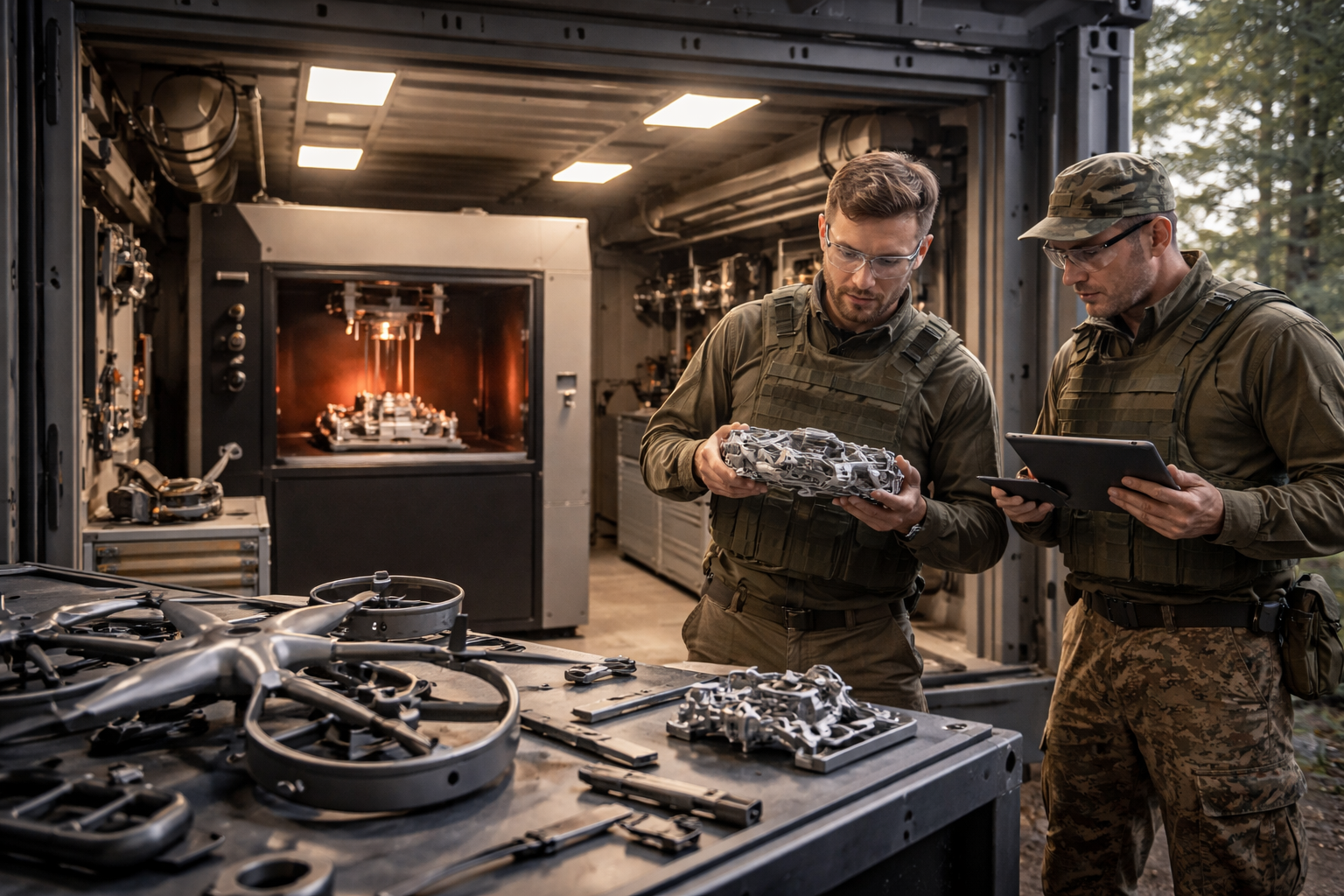
The US Army is expanding advanced manufacturing at Tobyhanna Army Depot, bringing small-drone component production into the organic industrial base through new work on brushless motors and circuit-card assemblies.
The Pennsylvania depot is opening manufacturing capacity for small uncrewed aircraft system motors, while circuit-card production is being built to support high-volume electronics output. The work supports a wider Pentagon push to build low-cost drones domestically and reduce reliance on vulnerable overseas supply chains.
The industrial value sits in the components rather than the airframe. Drone strategies often focus on platforms, swarms, autonomy, or battlefield use, yet production scale depends on motors, magnets, circuit boards, processors, sensors, batteries, connectors, frames, software, and test equipment. A country unable to source those parts reliably cannot field drones at wartime tempo, however strong its operational concepts appear.
Tobyhanna’s role places part of that burden inside the Army’s organic industrial base. Depots, arsenals, and ammunition plants have historically focused on maintenance, repair, overhaul, and selected production missions. Drone-component work broadens that role into electronics-heavy, fast-cycle manufacturing. The Army is not only repairing legacy equipment; it is trying to build capacity for systems that may change rapidly between production runs.
Brushless motors are a useful example of the hidden supply-chain problem. Small drones depend on compact, efficient electric motors using precision components and, often, permanent magnets linked to rare-earth supply chains. Commercial drone markets have relied heavily on overseas manufacturing for many of these parts. Defence users now want secure, traceable, available sources, especially for systems expected to be consumed in large numbers.
Circuit cards carry the same weight. Flight controllers, power distribution, communications, sensors, payload interfaces, and electronic speed-control systems all depend on boards that must be manufactured, inspected, programmed, and tested. Scaling output requires pick-and-place equipment, soldering processes, inspection systems, environmental testing, component traceability, software loading, and quality assurance. These are precision manufacturing disciplines rather than simple assembly tasks.
Britain’s drone surge has already shown how quickly factory-to-field ambitions run into production-rate, component, and support questions. Tobyhanna’s effort moves one layer deeper, into the motors and electronics that decide whether drone programmes can sustain volume. Platforms may change quickly, but every version still needs a controlled flow of dependable components.
The Army’s approach also suggests a more adaptable manufacturing philosophy. The work is framed around advanced manufacturing for small UAS components rather than a single fixed drone design. That flexibility is important because drone technology changes quickly. Motors, electronics, airframes, batteries, radios, and payloads can become obsolete within short cycles. A line too tightly optimised around one component could become stranded when requirements change.
The challenge will be maintaining defence-grade quality without losing the cost and speed advantages that make small drones attractive. Military production processes can become slow, expensive, and paperwork-heavy. Commercial drone supply chains can be fast but fragile. Tobyhanna’s task is to create enough traceability, quality assurance, and ruggedisation for military use without turning low-cost drone components into boutique products.
Workforce skills will be central. Depot technicians need electronics production knowledge, motor-manufacturing competence, additive or advanced manufacturing awareness, inspection experience, software-loading discipline, and failure-analysis capability. Traditional maintenance skills remain valuable, but drone-component production adds a different mix of precision manufacturing and electronics expertise. Training and retention may become as important as capital equipment.
Strategic stockpiling also sits behind the production decision. Drones are attritable by design, and their components may be consumed quickly in training and operations. Domestic motor and circuit-card production can support replenishment, but upstream supply remains critical. Rare-earth magnets, semiconductors, copper, batteries, and electronic components still need secure sourcing. Depot production is a necessary layer, not a complete supply-chain answer.
The organic industrial base will also need tighter relationships with private companies. Drone systems evolve faster than many depot production models. The Army will need methods to absorb commercial innovation, validate new designs, protect intellectual property, and move improved components into production without waiting for long acquisition cycles. Tobyhanna can become a production node, but it should not become an approval bottleneck.
The programme is significant because it treats drone scale as a component-manufacturing problem. The airframe is visible, the software is fashionable, and autonomy attracts funding attention, but the motor and circuit board decide whether a production surge is real. Tobyhanna’s new lines give the Army a route to build that depth inside its own industrial base. The measure of success will be reliable output, adaptable processes, and components available at the pace drone warfare now demands.