IN Brief:
- KONGSBERG has signed a roughly $400m contract with Raytheon for NASAMS deliveries to Kuwait.
- The system will form part of Kuwait’s layered air-defence architecture against a wide range of aerial threats.
- Production pressure sits across launchers, command-and-control, sensors, missile integration, training, spares, and sustainment.
KONGSBERG’s roughly $400m NASAMS contract for Kuwait adds another export demand signal to a Western air-defence supply chain already stretched by drones, cruise missiles, aircraft, and missile threats.
The Norwegian company will deliver NASAMS elements to Kuwait through a Raytheon-linked US Foreign Military Sales route. The system will become part of Kuwait’s layered air-defence architecture, supporting protection of population centres, strategic sites, and critical infrastructure. NASAMS has become one of the most widely recognised medium-range ground-based air-defence systems in allied service, built around a modular architecture that can integrate multiple sensors, launchers, command elements, and missile options.
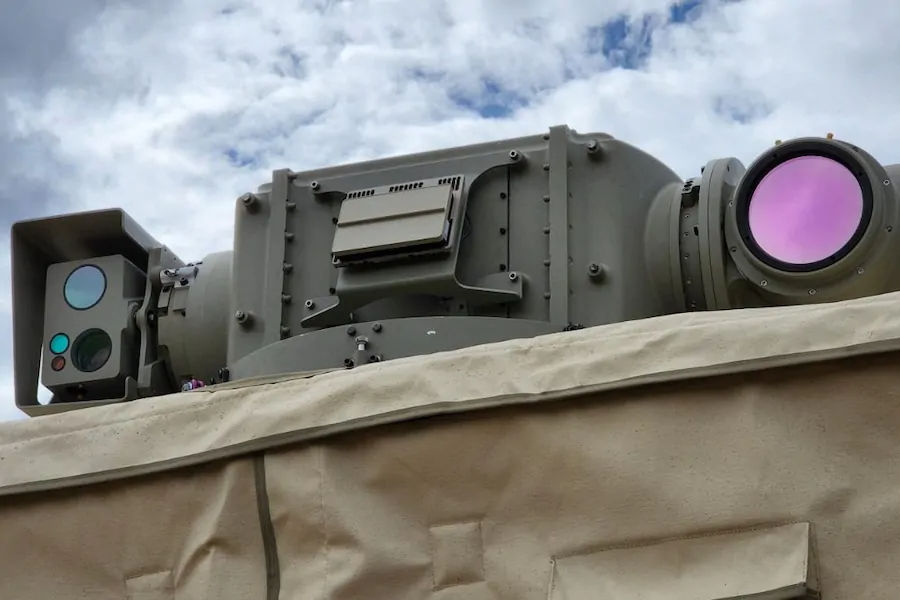
Customers are increasingly buying air defence as an expandable architecture rather than a fixed battery. That places pressure on interceptors, launchers, fire distribution centres, radars, electro-optical sensors, datalinks, software, power systems, training devices, spares, and depot support. Every new customer adds configuration work, integration demand, and long-term sustainment obligations.
NASAMS has benefited from its modularity and open architecture. The system can integrate different sensors and missile types, including AMRAAM-family weapons. That flexibility supports customer tailoring, while also creating engineering work around interfaces, fire-control logic, cyber protection, weapons clearance, operator training, and system-of-systems validation. Ground-based air defence is as much a software and integration discipline as a launcher-production business.
The Kuwait order reinforces the industrial relationship between European and US suppliers. KONGSBERG provides central NASAMS architecture and command elements, while Raytheon supplies key missile and sensor-linked components depending on the configuration. The US FMS route gives allied customers access to established procurement channels, but it also ties deliveries to approval processes, production slots, and US industrial capacity.
That queue is lengthening. Ukraine has demonstrated the rate at which air-defence missiles, radars, launchers, and support equipment can be consumed or worn through in sustained operations. NATO states are rebuilding inventories. Gulf states are strengthening protection against drones and missiles. Asia-Pacific customers are reassessing base defence and infrastructure protection. Each additional order competes for engineering teams, factory slots, test capacity, missile stocks, and field-support personnel.
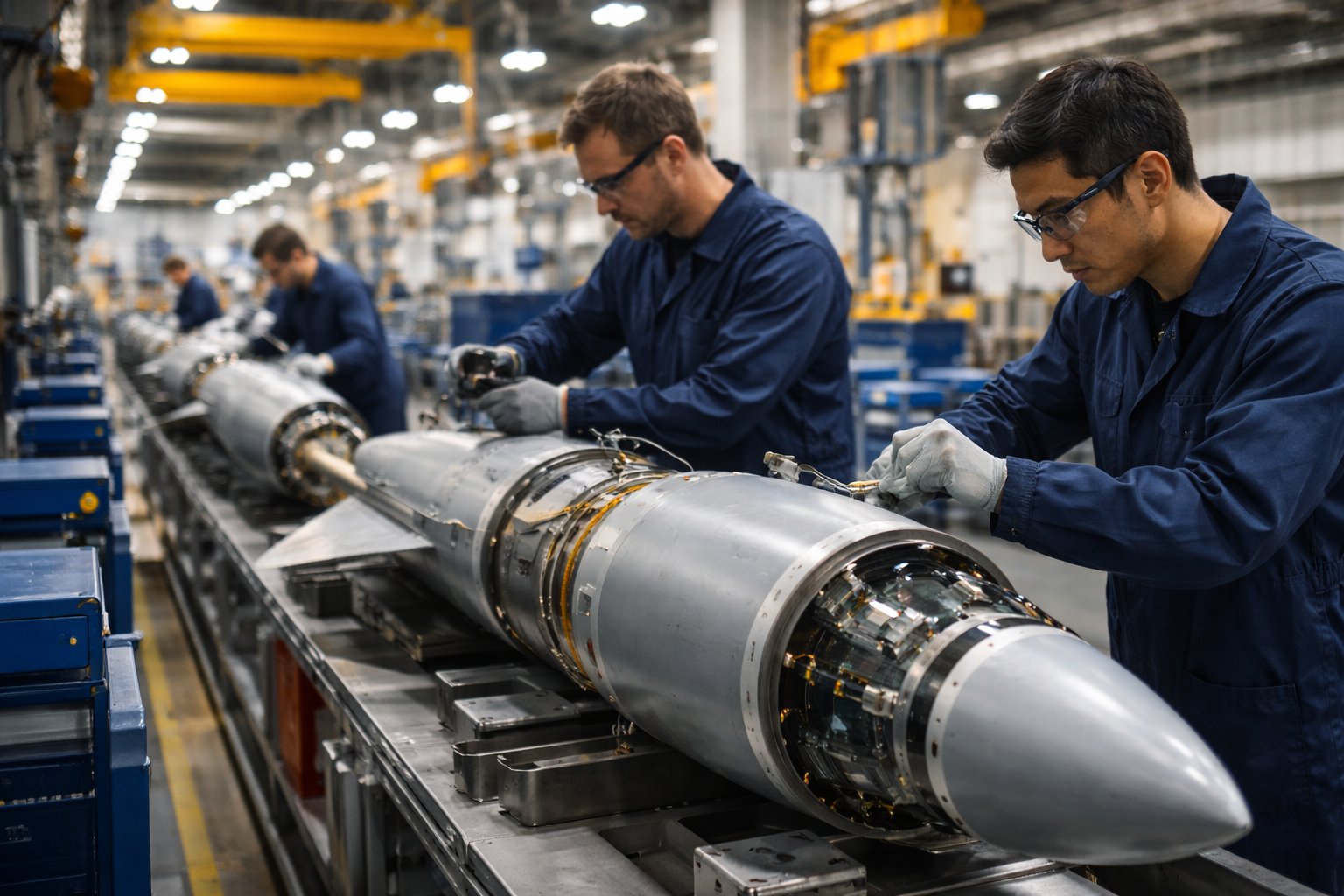
The missile layer remains central. NASAMS’ use of AMRAAM-family interceptors offers commonality with air-force stocks and other users, but it also links ground-based air defence to wider missile demand. Air-to-air customers, NASAMS batteries, and future AMRAAM variants all pull on the same broad production ecosystem. Seekers, rocket motors, warheads, control sections, electronics, software, and final assembly become shared constraints when demand rises across multiple mission areas.
Kuwait’s operating environment adds its own sustainment burden. High temperatures, dust, coastal conditions, and infrastructure-protection missions place stress on electronics, cooling systems, shelters, vehicles, connectors, radars, and power units. Equipment delivered to the Gulf has to survive an environment that can punish weak thermal management, poor sealing, or over-sensitive electronics. Spares, training, environmental testing, and local support therefore form part of the system’s real value.
Layered air defence also depends on command discipline. Systems cannot sit as isolated batteries with limited data exchange. They have to connect into national command networks, identify friend from foe, prioritise threats, avoid wasteful interceptor use, and share tracks across sensors. That creates production demand for simulation tools, software integration, operator consoles, mission-data handling, and secure communications.
The same industrial pattern is already visible across European and allied air-defence procurement, from Romania’s SPYDER work to continuing AMRAAM-family development. The recurring problem is no longer simply whether nations want modern air defence. It is whether suppliers can produce, integrate, deliver, and sustain enough systems while simultaneously replenishing missile stocks and supporting upgrades.
For KONGSBERG, the Kuwait award strengthens NASAMS’ export position and supports workload continuity. For Raytheon, it reinforces the role of US missile and FMS structures in allied air defence. For the wider industrial base, it is another marker of a long-cycle capacity problem. A contract can be signed in weeks. A resilient air-defence manufacturing network takes years to build.
Kuwait’s order is not the largest air-defence award in the market, but it adds weight to a clear demand curve. Modular, networked air defence has become a production race in which sensors, launchers, missiles, software, and sustainment have to arrive together. The limiting factor is not appetite. It is throughput.