IN Brief:
- The Defence Investment Plan commits £298bn over four years, including more than £5bn for drones and autonomous systems.
- Additive manufacturing and SME engineering capacity could support faster iteration, distributed repair, and sovereign supply resilience.
- Procurement access, contracting speed, and supplier onboarding will shape how quickly the UK converts spending into deployable capability.
This week’s UK Government Defence Investment Plan has put £298bn behind the next phase of military modernisation, including an additional £15bn above the previous Spending Review settlement, as ministers seek to increase readiness and shift the Armed Forces towards a more integrated, technology-led model of warfare.
Behind the headline total sits a set of capability choices that will place much greater pressure on industrial speed. The plan includes more than £5bn for drones and autonomous systems, £650m for inexpensive expendable autonomous systems, nearly £2bn for a new AI-enabled Digital Targeting Web, £790m for air, drone, and missile defence, and £11bn for munitions and weapons. By 2030, the Government expects at least six new energetics factories to have been built, alongside increased national munitions production capacity.
Yet the budget is only the starting point for defence manufacturers. Drones, autonomous platforms, counter-drone systems, software-defined targeting, and battlefield sustainment all require shorter production cycles, faster supplier onboarding, and procurement routes that can absorb smaller, specialist companies without burying them in process.
Craig Pyser, chief executive of Portsmouth-based additive manufacturing specialist AMufacture and chair of AMUK, welcomed the plan as “a long-awaited step in the right direction,” but warned that higher spending cannot be allowed to become another missed industrial opportunity.
“It’s positive that the plan has finally landed but we must be honest about the scale of the challenge. We squandered the peace dividend for 80 years. We cannot afford to squander the defence dividend,” he said.
Procurement meets the drone cycle
Across Ukraine and other recent conflicts, drones have shown how quickly low-cost systems can shift operational assumptions, force countermeasures, and demand redesign. A capability that enters service through one configuration may need new housings, mounting points, payload integration, thermal management, or protection changes within weeks, rather than years. That rhythm sits awkwardly beside acquisition models built around long programmes, extensive tooling, fixed specifications, and slow qualification pathways.
The Defence Investment Plan recognises drones and autonomy as central to the UK’s future force, but recognition alone will not shorten the route from prototype to production. For expendable systems, uncrewed platforms, sensors, and mission-specific components, the manufacturing model needs to accommodate rapid changes in design while still meeting defence assurance requirements.
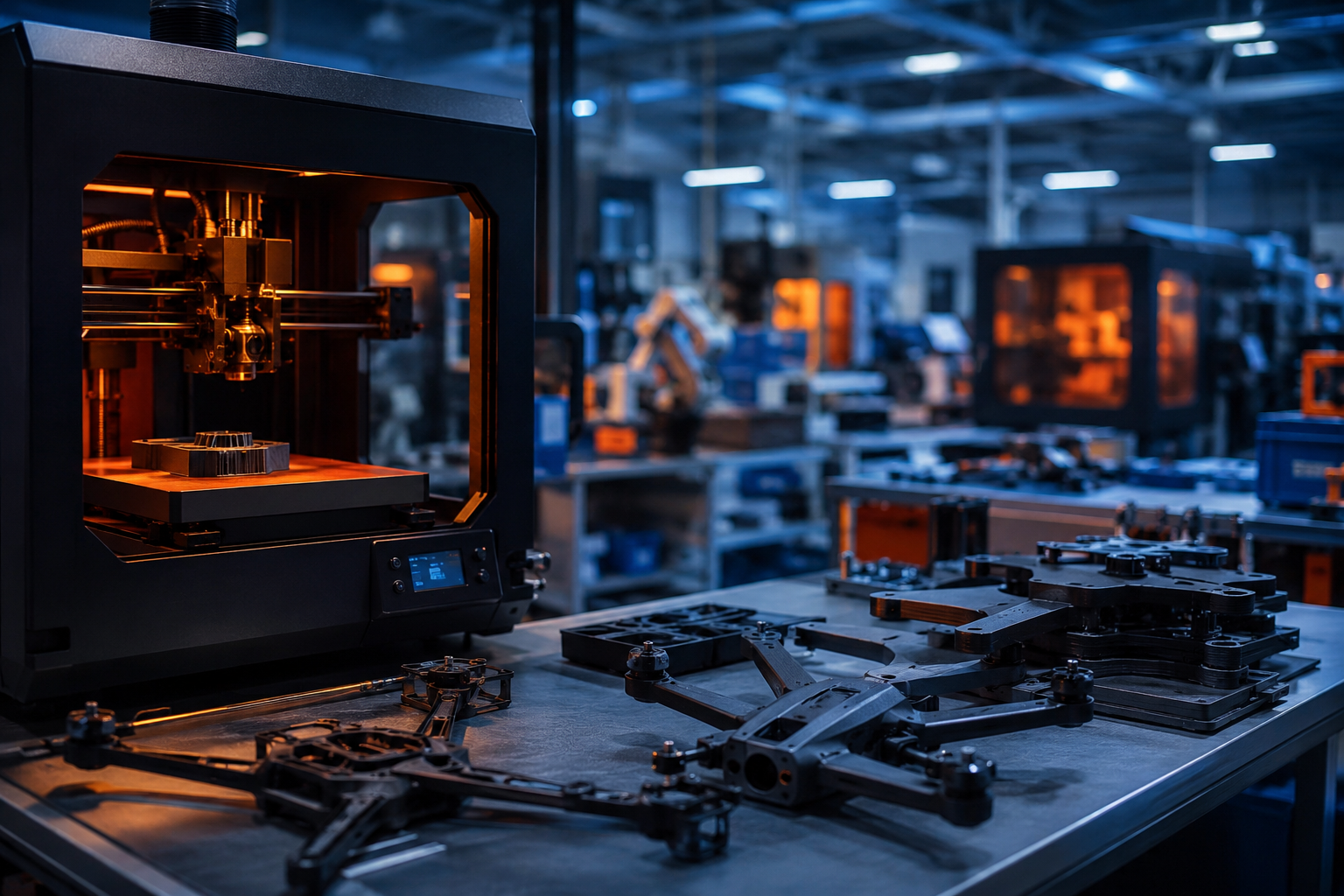
AMufacture already supplies components for drones and autonomous systems across air, land, sea, and underwater domains. Pyser argues that additive manufacturing can give the UK a practical route to faster iteration, especially where traditional tooling would slow production or make small-batch adaptation uneconomic.
“There’s no need for significant amounts of traditional tooling to make every component. We have developed one of the largest fleets of advanced polymer 3D printers in Europe, which enables rapid, precise and repeatable production,” he said.
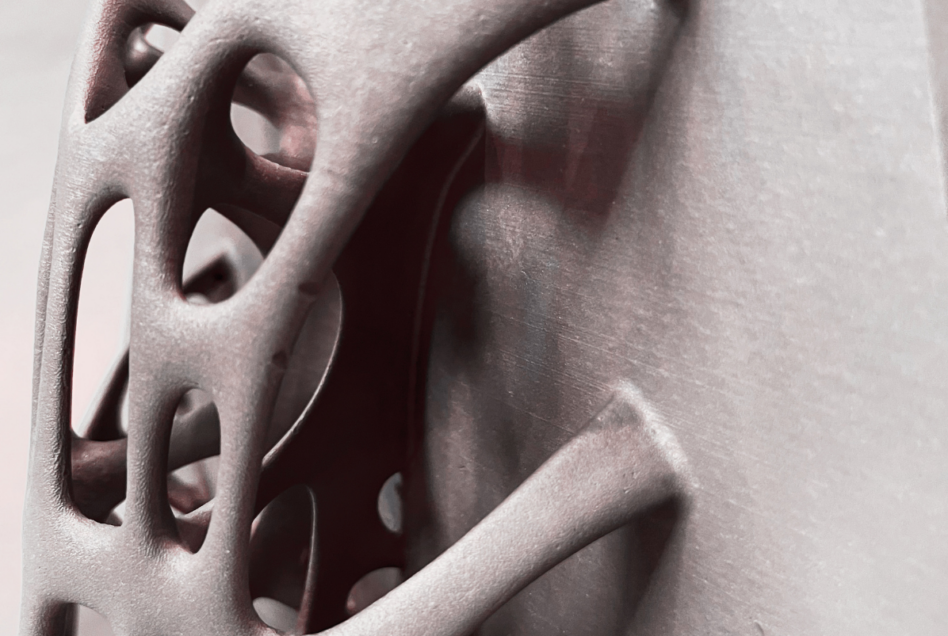
Additive manufacturing will not replace the deep industrial capacity required for combat aircraft, submarines, complex missiles, or armoured systems. Its value sits in the layer of defence production now growing around those major platforms: drone structures, fixtures, housings, brackets, sensor integration parts, replacement components, and modified equipment that can change as operating conditions change. In that space, reduced tooling dependency and repeatable digital production can shorten the distance between design change and usable hardware.
Sustainment is part of the same industrial shift. Pyser pointed to the MoD’s “hub and spoke” vision for forward-deployed manufacturing, where parts can be produced closer to need rather than shipped through long logistics chains. For drones, autonomous systems, and attritable equipment, distributed production could reduce downtime, strengthen resilience, and support sovereign supply without depending on every component moving through a conventional spares pipeline.
SMEs and distributed manufacturing
Although the plan allocates £900m to efficiency and procurement reform, including a £500m Transformation Fund, smaller companies still face a difficult route into defence work. The Government has linked the investment programme to jobs, exports, and British supply-chain capacity, while UK Export Finance has launched a £50bn defence export facility to support British companies competing internationally. That ambition will rely on suppliers beyond the prime contractor base.
Jennifer Hughes, general manager of Telford-based engineering company Transicon, welcomed the clarity provided by the Defence Investment Plan, but said smaller manufacturers need more realistic access to defence opportunities, particularly in industrial regions such as the West Midlands.
“Currently, contracts in the defence sector are hidden behind complex procurement routes, pre-qualification processes and portals that smaller businesses often do not have the time or resource to keep navigating,” she said.
For large defence primes, contracting standards, portals, assurance requirements, and commercial terms are established operating conditions. For SMEs, the same processes can sit on top of production, recruitment, quality management, investment decisions, and cash-flow discipline. A business that has the engineering capability to contribute may still lack the spare commercial or legal capacity to navigate the system at the pace required.
Regional manufacturing depth gives the UK an advantage only when those companies can enter the supply chain on workable terms. The West Midlands, like other industrial regions, has controls specialists, machine shops, materials companies, software providers, production engineers, and precision manufacturers that can support defence modernisation. If procurement remains difficult to access, the Government risks leaving useful capacity outside the programmes designed to rebuild national resilience.
The same challenge runs through the plan’s ambitions for munitions, drones, digital systems, and sovereign production. Faster contract awards, clearer routes for SMEs, better qualification pathways, and practical support for smaller suppliers will determine whether the new funding strengthens the industrial base or simply concentrates more work within established channels.
Investment can buy equipment, factories, and stockpiles, but speed will determine whether those assets arrive in time and adapt quickly enough. For manufacturers already building drone components, autonomous-system parts, and specialist engineering capacity, the next battlefield is not only in the air, at sea, or on land. It is inside procurement.