IN Brief:
- Hanwha Aerospace has shipped the first customised K9PL 155mm self-propelled howitzers from Changwon to Poland.
- The K9PL configuration integrates Polish command, communications, fire-control, and protection equipment.
- The programme shows how rapid artillery procurement is turning into localisation, support, and long-term fleet management.
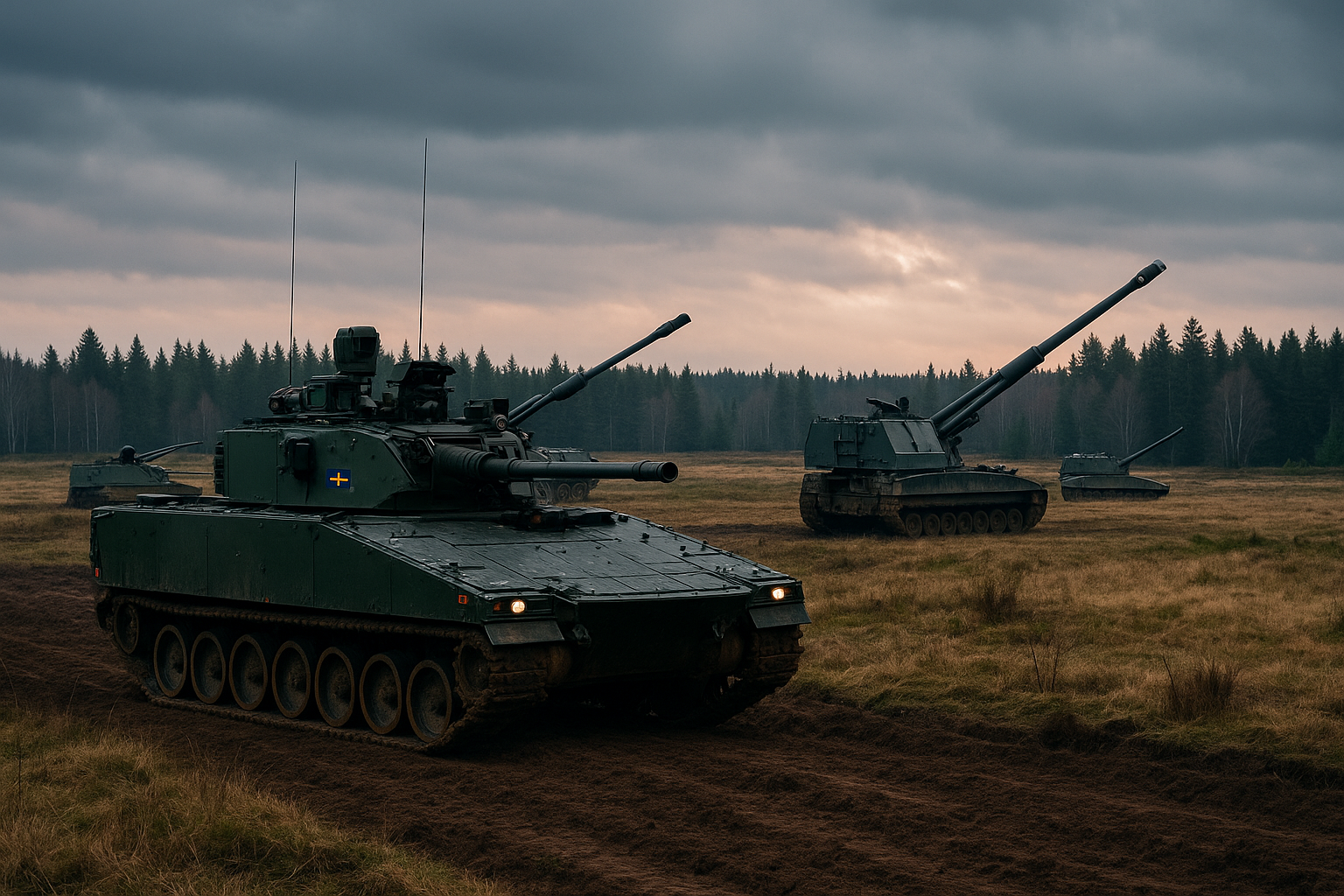
The first customised K9PL 155mm tracked self-propelled howitzers have left Hanwha Aerospace’s Changwon plant for Poland, taking one of Europe’s largest artillery recapitalisation programmes into a more demanding industrial phase.
Poland’s early K9 procurement restored gun numbers quickly at a moment when European armies were reassessing artillery mass and stockpile depth. The K9PL phase is different, because the programme is now moving from urgent delivery of mature South Korean systems to a Polish-adapted configuration built around national command, communications, fire-control, protection, and support structures. For a country rebuilding heavy fires at speed, that shift will shape the fleet’s value for decades.
The K9PL retains the core firepower of the K9 family, built around a NATO-standard 155mm 52-calibre weapon system. Its Polish equipment set includes domestic elements such as Topaz automated fire control, Fonet communications, and Obra-3 laser warning sensors. Those integrations bring the vehicle closer to Polish operational practice, while adding engineering work around power, space, electromagnetic compatibility, software, training documentation, spares, and maintenance procedures.
Self-propelled artillery looks simple only from a distance. The chassis, gun, recoil system, turret, autoloader, communications equipment, navigation, fire-control electronics, software, armour, hydraulics, and crew interfaces have to function as a single combat vehicle under vibration, shock, mud, cold, heat, and heavy firing cycles. National subsystems improve usability and sovereignty, but they also create configuration baselines that have to be managed through production and sustainment.
Poland’s artillery structure is becoming unusually dense by European standards, with the K9 programme sitting alongside the domestic AHS Krab and wider long-range fires investments. Common 155mm ammunition helps, but vehicles from different production lines still bring different spare parts, repair pathways, training requirements, diagnostic tools, and obsolescence risks. Fast procurement can restore capability quickly, while fleet support determines whether that capability remains available under pressure.
Local integration gives Polish industry a stronger role across the vehicle’s life cycle. Domestic electronics, fire-control systems, and communications equipment create work beyond vehicle receipt, and they reduce some of the friction that comes from importing a complete platform into a national command network. The balance will come in keeping the configuration stable enough for production while still allowing updates to radios, sensors, software, protection systems, and ammunition interfaces.
South Korea’s wider defence relationship with Europe is also changing. Hanwha is no longer selling only complete platforms into urgent capability gaps. Its European programmes increasingly involve local production, technology transfer, support packages, training pipelines, and long-term industrial participation. Estonia’s move to expand its long-range fires capacity through Chunmoo showed the same pattern: delivery speed opens the door, but sustainment and localisation decide how durable the relationship becomes.
Artillery demand across Europe has been transformed by ammunition consumption, barrel wear, repair throughput, spare-parts availability, storage limits, and training needs. A tracked 155mm fleet is valuable only when the industrial system behind it can feed ammunition, replace worn components, return damaged vehicles to service, and keep crews trained. The K9PL programme therefore sits at the intersection of platform delivery, ammunition policy, and domestic defence-industrial development.
The shipment will test more than Hanwha’s logistics. Poland must manage a large mixed artillery inventory while building domestic support capacity around imported designs. Depot-level maintenance, technical data access, supply assurance, electronics obsolescence, and ammunition compatibility will carry more weight after the first vehicles arrive than the initial delivery milestone itself.
Support vehicles, simulators, diagnostic equipment, recovery systems, maintenance tooling, software updates, and ammunition production all sit around the platform order. A major howitzer programme can anchor years of follow-on work if the support model is disciplined, funded, and technically coherent. Without that structure, artillery fleets become collections of impressive vehicles waiting for parts, barrels, or trained maintainers.
Poland’s first K9PL shipment is therefore a marker of how European land procurement is changing. Urgency remains, but governments are trying to combine immediate capability with national integration and long-term industrial control. The K9PL is not only another artillery delivery; it is a test of whether rapid acquisition can mature into a supportable fleet architecture.