IN Brief:
- Rolls-Royce Submarines has started major expansion work at its Raynesway site in Derby.
- The project will support nuclear reactor production for UK and Australian submarine programmes.
- The investment places workforce, welding, quality, and production-capacity pressures at the centre of AUKUS delivery.
Rolls-Royce Submarines has started foundational work on a major expansion of its Raynesway site in Derby, converting the AUKUS submarine commitment into a visible manufacturing-capacity project.
The expansion is part of a plan to double the size of the site, where Rolls-Royce designs, manufactures, and supports the nuclear reactors that power Royal Navy submarines. More than 100,000m² of manufacturing and office space will be added, with more than 1,000 skilled roles created across engineering, manufacturing, and support functions.
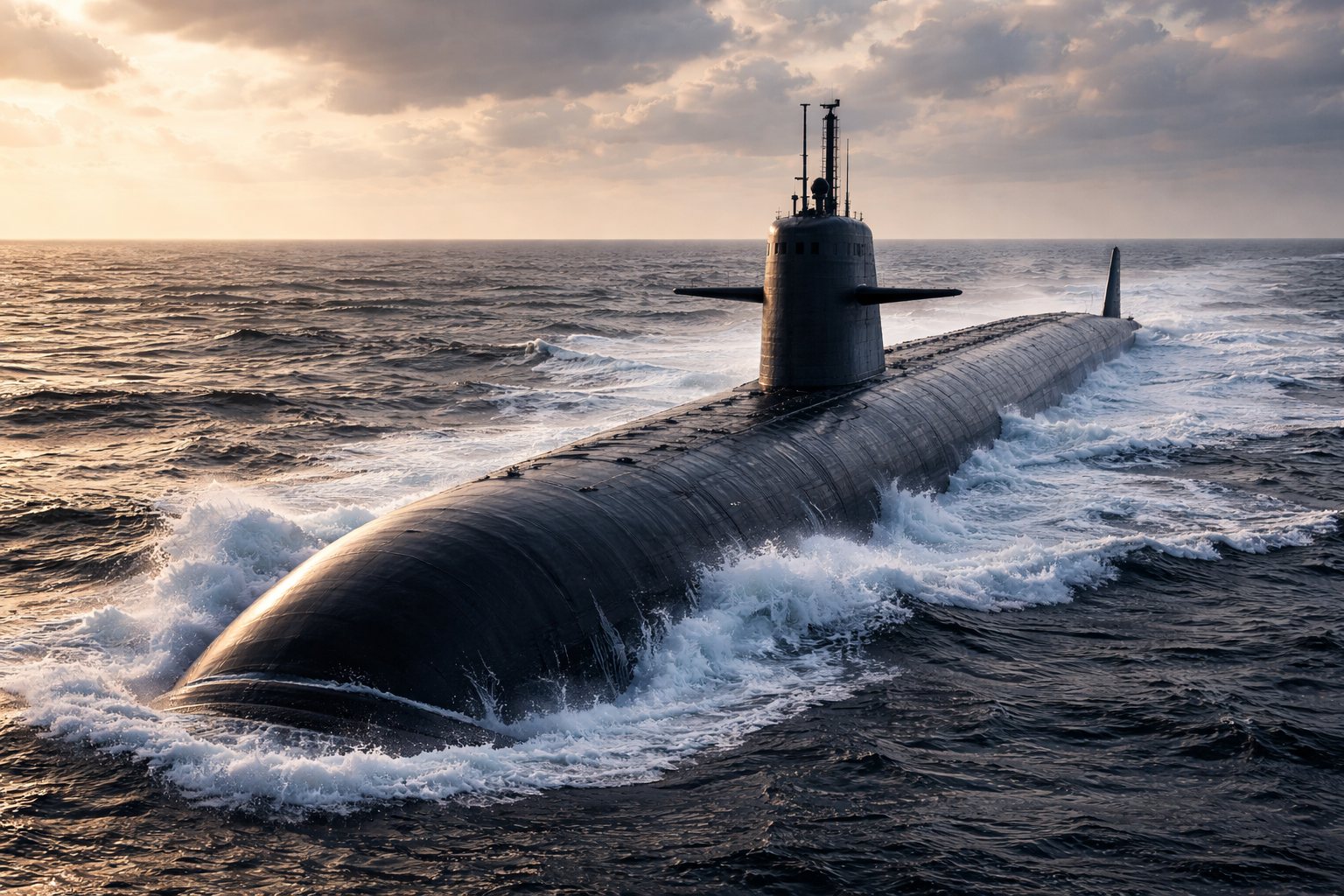
Rising demand from UK and Australian submarine programmes is driving the work. Under AUKUS, Australia will acquire conventionally armed, nuclear-powered submarines based on the SSN-AUKUS design, with Rolls-Royce supplying reactors for both British and future Australian boats. That places Raynesway among the most important production sites in the trilateral submarine programme.
Submarine reactors cannot be scaled like standard mechanical assemblies. They depend on highly specialised manufacturing, nuclear-qualified welding, rigorous quality assurance, long-lead materials, secure facilities, inspection regimes, and a workforce that takes years to train. New buildings create space, but production output will rise only when those spaces are equipped, certified, staffed, and connected into tightly controlled manufacturing processes.
Workforce development will be one of the decisive constraints. Nuclear-grade welding, precision inspection, manufacturing engineering, safety assurance, and production planning are all in high demand across defence and civil nuclear markets. Rolls-Royce’s success in regional welding competitions offers a small but useful glimpse of the skills pipeline being built around Derby, where welding is not a general fabrication role but a qualified discipline tied to documentation, repeatability, and inspection.
Raynesway also sits within a broader submarine support environment that is being reshaped by AUKUS. Australia’s future nuclear-powered fleet will require reactor supply, dockyard infrastructure, training, maintenance systems, spares, digital technical data, and safety regimes that align with UK and US practice. Recent dockside experimentation with submarine additive manufacturing on the Clyde, and Australia’s work around early support for visiting nuclear-powered submarines, show how the industrial system is being assembled in several places at once.
The risks are structural. Submarine programmes are unforgiving because delays compound across design, reactor production, hull construction, combat-system integration, testing, crew training, and dockyard readiness. A bottleneck in one high-skill production area can alter boat-build schedules years later. Nuclear propulsion manufacturing is one of those deep constraints, and Raynesway’s expansion addresses a point in the system that cannot be easily outsourced or accelerated at short notice.
Supplier depth will carry almost as much weight as the main site expansion. A larger Rolls-Royce facility needs a network able to provide qualified components, materials, tooling, inspection services, digital systems, specialist maintenance support, and secure engineering inputs. Defence nuclear manufacturing has high entry barriers because qualification, security, traceability, and technical assurance prevent rapid supplier substitution. Early supplier development will decide how resilient the expanded site becomes.
For UK industry, the project offers a clearer example of defence spending becoming advanced manufacturing capacity than many procurement announcements. It supports regional growth, but it also exposes the narrowness of some critical labour pools. Higher submarine output requires welders, engineers, inspectors, planners, quality specialists, project managers, and nuclear-qualified technicians at a scale that the UK has not needed for many years.
Construction is only the visible start. New production areas must be fitted out, machinery installed, processes validated, safety cases maintained, operators trained, and throughput stabilised. Expanding a nuclear manufacturing site while continuing to support existing submarine programmes creates a parallel burden: delivery cannot stop while capacity is being rebuilt around it.
AUKUS has often been framed through strategy, deterrence, and Indo-Pacific alignment. Raynesway reduces the programme to its industrial essentials. Nuclear submarines require factories, reactors, welders, materials, inspectors, and decades of engineering discipline. The Derby expansion gives the UK and Australia more room to deliver, while making the production challenge harder to ignore.