IN Brief:
- Kraken has raised $175 million in Series B funding at a $1 billion valuation.
- The company will expand USV development, payload capability, and localised manufacturing.
- Partnerships with Rheinmetall, Anduril, and Davie point to a distributed production model for maritime autonomy.
Kraken Technology Group has raised $175 million in Series B funding at a $1 billion valuation, giving the British-founded maritime defence company the capital base to expand uncrewed surface vessel development and localised manufacturing.
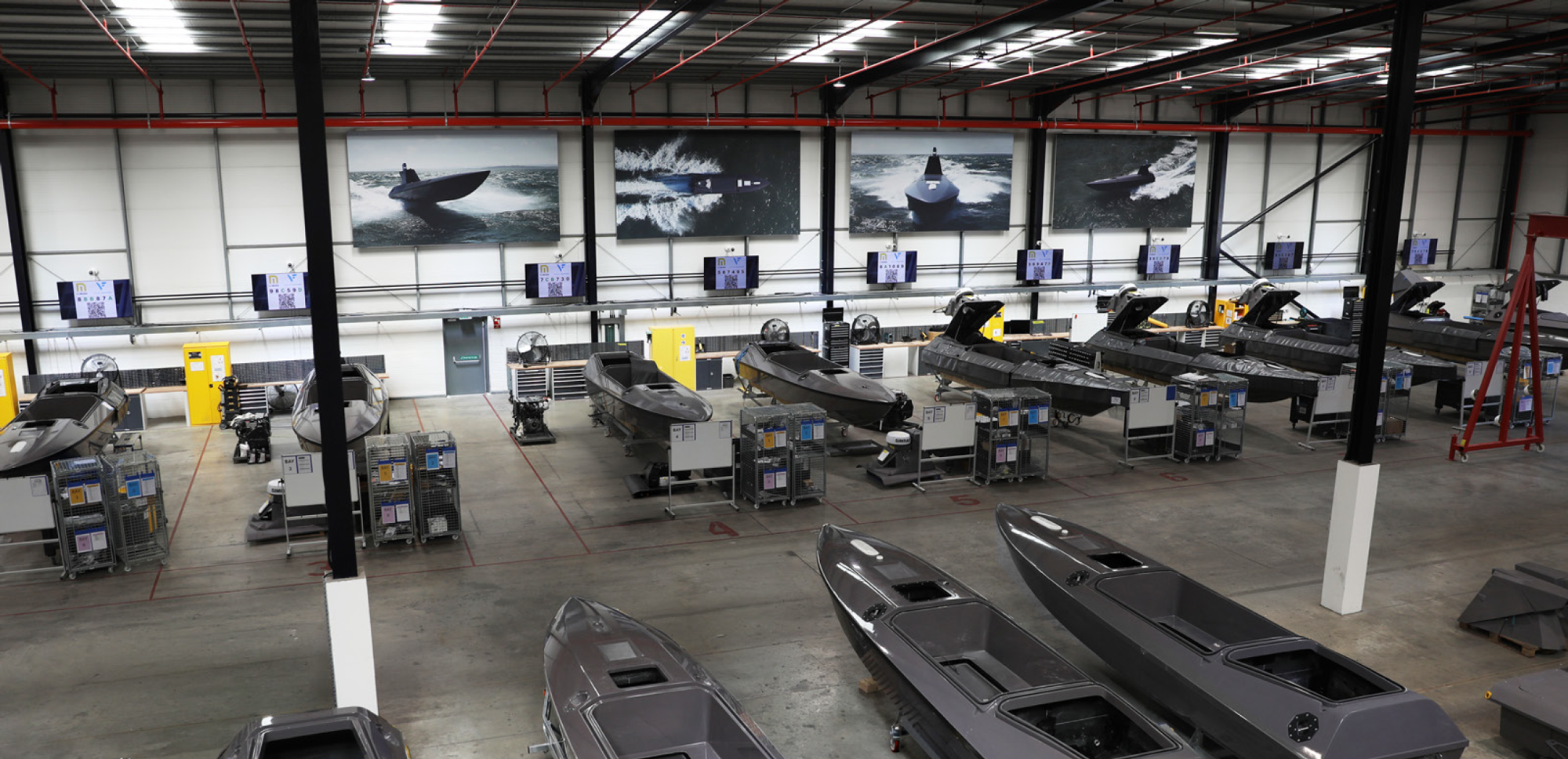
The round was led by Digital Transformation Capital Partners and included backing from the British Business Bank, NATO Innovation Fund, Rheinmetall, Inocea Group, HICO, Thesiger, BOKA, Supernova, and Hakluyt. Kraken will use the funding to accelerate USV development, expand payload capability, and build local manufacturing capacity around the world.
The company already has contracts with the UK Ministry of Defence, NATO European partners, and USSOCOM. Its industrial partnerships include Rheinmetall in Germany, Anduril in the US, and Davie Shipbuilding in Canada, with additional partnerships expected in the Middle East and Indo-Pacific.
That partner network gives the funding round its weight. Maritime autonomy is moving out of the prototype lane and into a production race. USVs need hulls, propulsion, autonomy stacks, communications, navigation, payload integration, launch and recovery arrangements, control stations, training, and maintenance. No single small company can scale all of that globally without industrial partners.
Kraken’s challenge is to preserve the pace of a defence technology start-up while creating the repeatability expected from naval suppliers. That means controlling configuration across multiple production sites, maintaining software commonality, qualifying payload interfaces, and proving that vessels built or supported in different countries behave the same way under operational conditions.
The manufacturing pressure is different from traditional boatbuilding. A USV is not simply a small craft with remote control added. It is a naval system whose value sits in autonomy, sensing, communications, data links, electronic resilience, modular payload bays, and updateable software. Systems integration therefore carries as much weight as the hull.
The Royal Navy’s Project Beehive order already gave UK hybrid fleet suppliers a production signal, with Kraken’s 20-boat award forming a bridge between experimentation and repeatable procurement. The new funding round scales that argument beyond a single UK order and into a wider network of partner manufacturing, payload development, and export opportunity.
The Royal Navy’s wider hybrid fleet push also gives Kraken a domestic reference point. The UK wants crewed platforms operating alongside autonomous systems, but that requires more than trial craft. It needs support networks, training, safety cases, autonomous mission planning, payload libraries, and doctrine that treats uncrewed vessels as fleet assets rather than occasional demonstrations.
The funding lands in a maritime market being reshaped by Ukraine and the Red Sea. Uncrewed surface systems have shown how relatively small craft can impose disproportionate pressure on larger naval forces, ports, and coastal infrastructure. Navies now want their own USVs for surveillance, force protection, mine countermeasures, logistics, deception, and potentially strike missions. Demand is broadening faster than traditional acquisition structures are used to handling.
Kraken’s global manufacturing plan also answers a political requirement. Many governments want sovereign access to autonomous maritime systems. Local manufacturing or final integration can make procurement easier, especially when systems involve sensitive payloads, national data, and export-controlled components. A distributed model allows Kraken to meet those expectations while keeping a central product architecture.
Localisation brings risk as well as access. Designs can fragment, upgrade paths can slow, and multiple support baselines can emerge unless configuration control is tightly managed. USVs also face difficult safety and legal requirements around autonomous navigation, collision avoidance, and operation near civilian traffic. Military customers may accept more risk in combat zones, but peacetime testing and training require disciplined assurance.
Payload integration will be a decisive area. The most valuable USV suppliers will not simply sell hulls. They will provide mission-configurable platforms that can carry sensors, communications relays, electronic warfare payloads, mine countermeasure packages, surveillance systems, or effectors. That shifts value toward open architecture, power margins, payload certification, and rapid integration teams.
Kraken’s valuation gives it status, but production will define its credibility. Defence customers are no longer short of maritime autonomy concepts. They are short of reliable suppliers that can build, support, modify, and deploy USVs in numbers across multiple theatres.
The funding round gives Kraken a chance to become one of those suppliers. Once a USV company becomes a unicorn, the market stops judging it as a promising disruptor and starts judging it as a manufacturer.