IN Brief:
- A YFQ-44A Collaborative Combat Aircraft fired an AIM-120 at a digital target over the Mojave Desert.
- The live event followed captive-carry, handling, data-link, operator-command, and simulated employment testing.
- Production maturity depends on converting flight data into stable hardware, software, weapons interfaces, and repeatable aircraft.
The US Air Force has completed a live AIM-120 firing from Anduril’s YFQ-44A Collaborative Combat Aircraft, moving the uncrewed platform farther into integrated weapons testing.
During the event over the Mojave Desert, the aircraft engaged a digital target under work led by the 412th Test Wing’s Air Dominance Combined Test Force. A human operator retained authority for weapon release, after which the aircraft completed the firing sequence within defined parameters.
The launch followed a staged campaign involving inert captive carriage, aircraft-handling measurements, weapon data-link integration, operator commands, simulated employment, and final live firing.
Carrying and releasing a missile affects the aircraft’s aerodynamics, vibration, structural loads, electrical systems, and flight-control behaviour. Separation introduces rapidly changing forces and a risk of contact between the weapon and airframe, requiring extensive modelling before live testing begins.
Collaborative Combat Aircraft add another control chain because the platform manages autonomous flight and mission functions while the missile requires target information, launch authority, and compatible post-release support.
The YFQ-44A is supporting the first increment of the US Air Force’s CCA programme, which aims to field uncrewed aircraft alongside fighters and other platforms. Candidate roles include carrying additional weapons, extending sensor coverage, electronic attack, communications relay, and absorbing risk that would otherwise fall on a crewed aircraft.
Flight data now returns to production
Engineers will use the firing to compare predicted and measured structural loads, vibration, separation behaviour, timing, communications, and aircraft response.
Any changes must enter configuration control across aircraft already built, future production, tooling, training systems, software, and technical documentation. A small adjustment to launcher geometry or flight-control logic can affect several parts of the programme.
Development speed does not remove the safety and performance requirements associated with live weapons. The programme may use shorter design cycles than a conventional fighter, but stores integration still demands controlled release envelopes and extensive regression testing.
AIM-120 is a mature weapon, although its integration with a new uncrewed platform requires stores-management software, physical and electrical interfaces, target-quality data, and reliable communication between the aircraft, weapon, and operator.
The platform must also respond safely when a launcher, missile, data link, or command does not behave as expected. Fault logic must account for hung stores, interrupted communications, and aborted engagements without placing nearby aircraft at risk.
Human release authority establishes a clear decision point, while autonomy manages detailed execution. Operators need enough information to understand the aircraft’s status, the quality of the targeting data, and whether the engagement remains inside approved constraints.
Software configuration will continue to change after the physical aircraft stabilises. Mission autonomy, flight controls, communications, stores management, and sensor processing evolve at different rates, creating interactions that require repeated testing.
A comparable challenge is emerging in the Navy’s MQ-25 programme, where the second flight article has placed software integration directly on the test line. Both programmes show how aircraft manufacturing now extends beyond structures and systems into continuous management of controlled code.
Affordable quantity still depends on aerospace discipline
CCA programmes are intended to add combat mass at a lower cost than buying equivalent numbers of crewed fighters. That places production rate, unit cost, maintenance, and supply resilience alongside aircraft performance.
Anduril has promoted digital engineering, modularity, and commercial manufacturing techniques, yet YFQ-44A still depends on aerospace-grade structures, propulsion, actuators, computers, antennas, and environmental qualification.
Compact military turbofans may become a limiting item as cruise missiles, target aircraft, and autonomous combat platforms compete for engines, control electronics, precision components, and test cells.
Weapons carriage raises the reliability threshold across the aircraft. Navigation, structure, power, and software must remain predictable throughout a mission when the platform is carrying a live missile beside crewed aircraft.
International combat-air development is moving in the same direction. China’s emerging sixth-generation aircraft activity suggests that collaborative and autonomous platforms are becoming part of future force design rather than a separate experimental category.
The Air Force must now translate technical progress into production decisions. Suppliers need quantities, delivery schedules, and configuration stability before committing to facilities, tooling, and additional sources.
Live firing gives the YFQ-44A a credible programme milestone, although the aircraft still has to prove that weapons integration can be repeated across a fleet rather than demonstrated by a small test team.
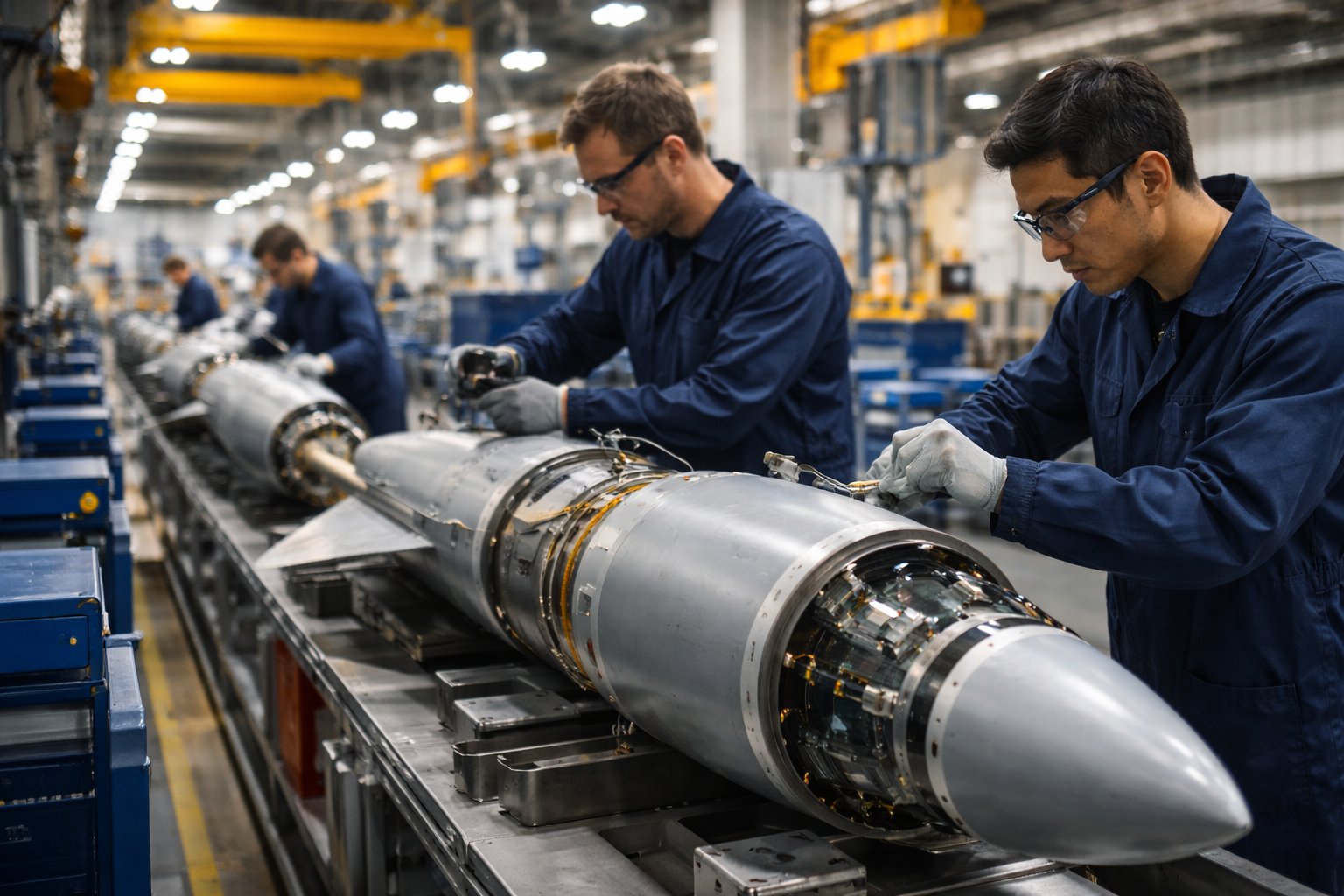
Test data must ultimately become standard work instructions, accepted parts, controlled software, and consistent aircraft leaving the factory. Until that transition occurs, the programme remains an advanced development effort rather than a source of operational mass.
The AIM-120 event shows that autonomous combat air is moving into the practical disciplines of weapons employment. Its longer-term success will depend on whether those disciplines can be maintained at the cost and production rate used to justify the CCA concept.