IN Brief:
- Allen Control Systems will integrate Bullfrog autonomous weapon technology with the Marine Corps’ L-MADIS counter-UAS platform.
- Bullfrog combines passive detection, machine vision, automated tracking, and service-common weapons.
- Integration must reconcile target identification, firing safety, vehicle movement, electronic attack, software control, and ammunition supply.
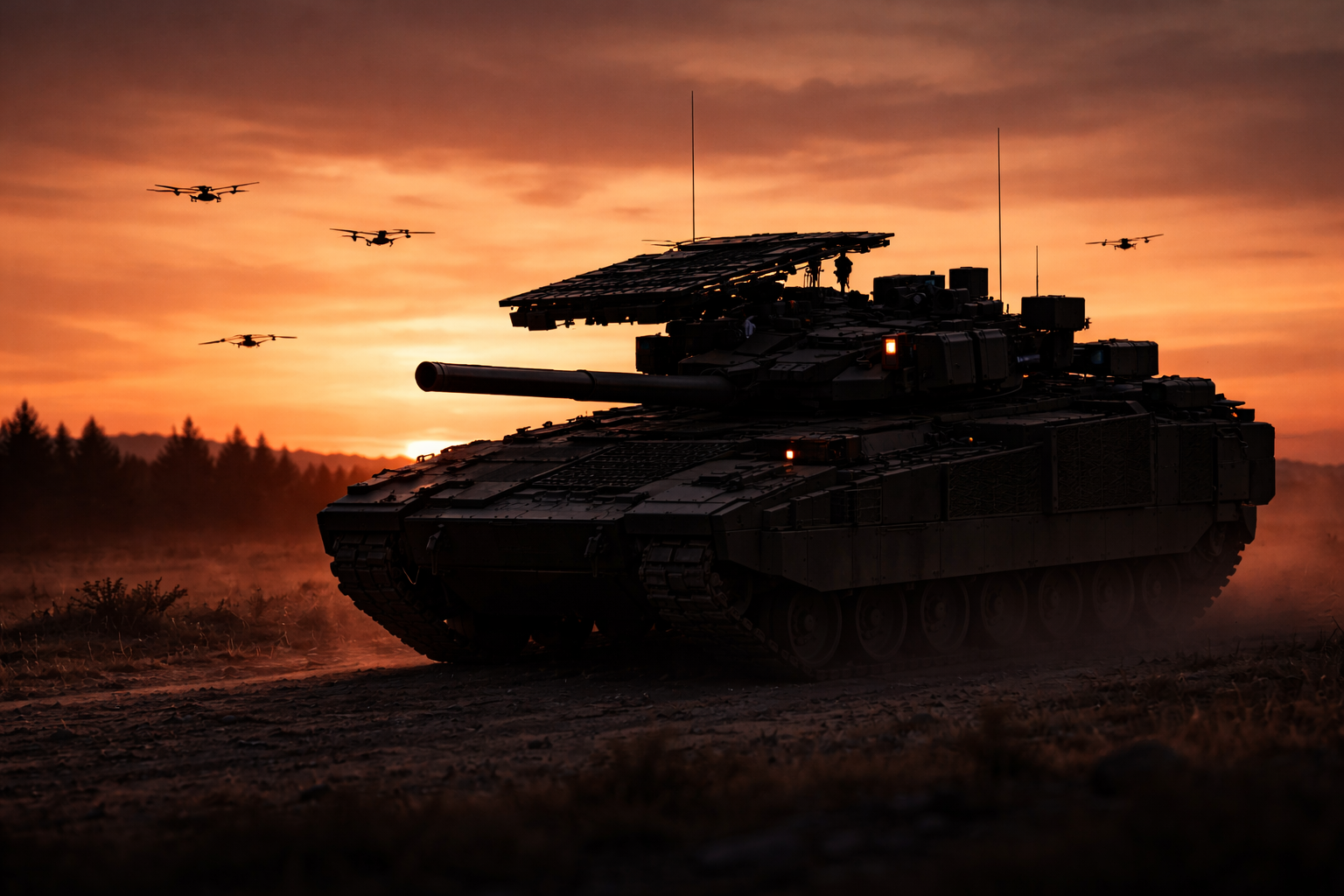
The US Marine Corps has selected Allen Control Systems to integrate its Bullfrog autonomous weapon technology with the Light Marine Air Defence Integrated System, adding a potential kinetic defeat layer to a mobile counter-UAS platform built around sensing and electronic warfare.
L-MADIS uses two Ultra-Light Tactical Vehicles carrying complementary detection, command, and electronic-attack equipment. The system can identify and disrupt unmanned aircraft while remaining mobile enough to accompany Marine formations.
Bullfrog adds machine vision, automated tracking, stabilised weapon control, and conventional ammunition. The weapon configuration selected for the integration has not been disclosed, although the Bullfrog family has been demonstrated with the M240, M2, M230, and M134.
Each option creates a different engineering balance. Calibre, rate of fire, recoil, ammunition capacity, range, barrel heating, vehicle weight, and collateral risk all influence the installation and its operating procedures.
Conventional ammunition can reduce the cost of engaging small drones when compared with missiles, but favourable ammunition prices do not guarantee economical defeat. The sensor and fire-control system must generate a high probability of kill without consuming excessive rounds.
Small unmanned aircraft present a difficult gunnery problem. Their visual and radar signatures are limited, their flight paths can change quickly, and their low altitude may place buildings, terrain, vehicles, or friendly personnel behind them.
Fire-control software needs to estimate target range, speed, direction, and future position while accounting for weapon dispersion, ammunition ballistics, platform movement, wind, and sensor error. A small mistake in any one of those calculations can become a substantial miss at engagement distance.
Bullfrog relies heavily on passive sensing and computer vision, reducing dependence on a dedicated fire-control radar. Passive operation limits emissions, although optical systems are affected by light, weather, camouflage, background clutter, vibration, dust, and obscuration.
Cueing from the wider L-MADIS sensor picture could improve detection and tracking, but it introduces more software, communications, and timing dependencies. Tracks generated by different sensors must describe the same object consistently before a weapon is authorised to engage.
Joining electronic and kinetic defeat
Electronic attack remains valuable against drones that depend on command links or satellite navigation, while autonomous platforms may continue towards their target after communications are disrupted. A gun provides another defeat mechanism without consuming a premium missile.
Combining the two effects requires a common command structure. Operators need one coherent air picture rather than separate consoles generating competing tracks, priorities, and engagement recommendations.
Weapon safety will remain central to the integration. Automated detection and tracking do not remove the requirement for positive identification, controlled firing arcs, inhibit zones, and human authority over lethal force.
The system must distinguish hostile drones from friendly aircraft, birds, debris, and other objects while operating around troops and civilian infrastructure. Classification confidence, sensor faults, and communication loss need predetermined responses rather than improvised operator judgement.
Installing Bullfrog on L-MADIS will also affect the vehicle physically. Recoil and vibration can disturb sensor alignment, while ammunition storage changes weight distribution, safety arrangements, and available space.
Muzzle flash, smoke, dust, heat, and gun gases may interfere with nearby optics or antennas. The turret needs a clear field of fire without endangering electronic-warfare equipment mounted on the same or adjacent vehicles.
Power demand and cooling must fit within the existing platform, particularly when sensors, communications, processors, and electronic-attack systems are operating simultaneously. Added equipment can also affect transportability and cross-country mobility.
Software integration may carry the greatest long-term workload. Bullfrog’s tracking and fire-control functions must exchange data with L-MADIS without allowing an update to one system to create unexpected behaviour in another.
Every significant release will require regression testing across sensors, command software, electronic attack, vehicle interfaces, and the weapon station. Cybersecurity controls must also prevent compromised data or software from influencing target selection and firing.
The same engineering pressure is reshaping other remote weapon programmes. Work to integrate protected counter-drone fire on Paladin has linked turret design, crew protection, sensors, and future air-defence functions around an existing vehicle.
Bullfrog moves further towards automated aerial tracking and engagement. Its performance will be measured through detection range, track continuity, ammunition consumption, stoppage rates, false classifications, and the ability to retain accuracy while moving.
Ammunition logistics will remain substantial, particularly for high-rate weapons. Vehicles must carry, protect, inspect, and reload sufficient rounds without reducing mobility or overwhelming the crew.
Barrel wear and heat will constrain sustained engagements even when the software can follow multiple targets. Fire-control logic needs to understand the weapon’s physical condition rather than treating it as an unlimited effector.
The L-MADIS programme gives Bullfrog a route from standalone demonstrations into a layered Marine Corps system. Successful integration will depend on the control of software, recoil, sensing, safety, ammunition, and electronic warfare as a single vehicle-level engineering problem.