IN Brief:
- HD Hyundai and SIMA have completed the basic design of a customised 1,500-tonne submarine.
- Peru is seeking domestic construction, maintenance, and engineering capability around the future fleet.
- Pressure-hull production, supplier qualification, design authority, and workforce continuity will govern delivery.
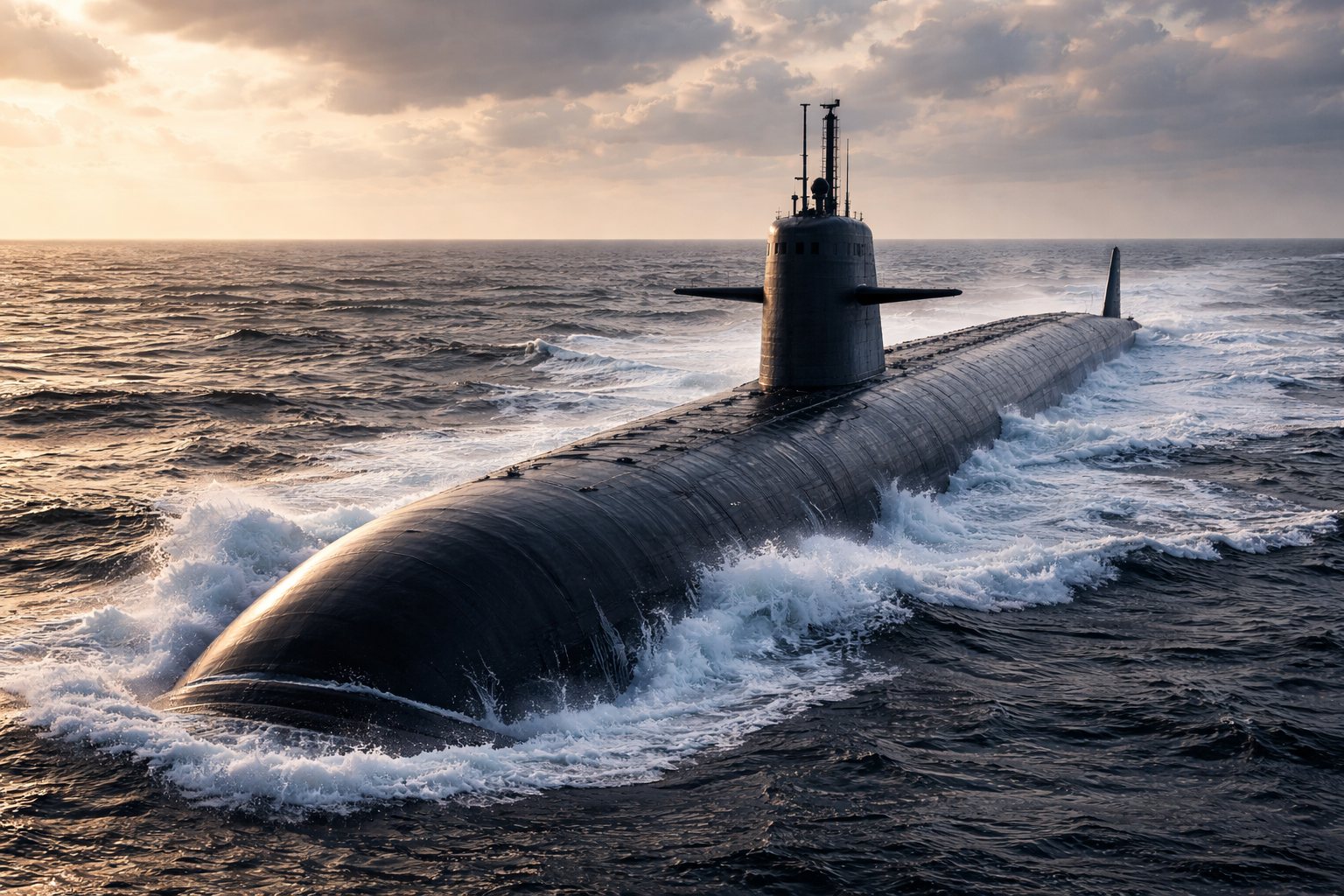
HD Hyundai Heavy Industries and Peru’s state-owned shipbuilder SIMA have completed the basic design of the HDS-MGP submarine concept, moving their joint proposal closer to a construction programme for the Peruvian Navy.
Derived from HD Hyundai’s HDS-1500 export design, the approximately 65-metre, 1,500-tonne boat has been adapted around Peruvian requirements. The concept is intended to support replacement of the navy’s ageing German-designed Type 209 fleet while creating a larger domestic role in construction, maintenance, repair, and overhaul.
The partnership began with a memorandum signed during APEC 2024 and has since expanded through joint-development and training arrangements, including cooperation with Peru’s National University of Engineering. Completion of basic design gives the partners a clearer technical baseline, although detailed design, financing, combat-system selection, workshare allocation, and contractual risk remain unresolved.
Submarine construction is among the least forgiving manufacturing disciplines in defence. Pressure-hull sections must be formed, aligned, and welded to tightly controlled tolerances, with material traceability and non-destructive examination maintained across every critical joint. Defects that might be repairable in a conventional surface ship can carry far greater consequences in a structure designed to operate repeatedly under external pressure.
SIMA’s existing shipbuilding experience provides infrastructure and skilled labour, but submarine work introduces additional requirements around workshop control, lifting, alignment, welding procedures, cleanliness, security, and test. Facilities may need substantial upgrading before local construction can progress beyond relatively conventional modules and outfitting.
The workforce challenge extends well beyond welders. A sustainable programme needs naval architects, hydrodynamic specialists, electrical engineers, combat-system integrators, acoustic engineers, quality personnel, configuration managers, project controllers, and maintainers. Those skills take years to develop and are difficult to retain when vessel deliveries are separated by long gaps.
Technology transfer will therefore have to reach deeper than drawings and manufacturing data. The receiving yard must be able to interpret the design, control changes, manage approved suppliers, document every critical process, and demonstrate that completed work satisfies the design authority’s requirements. HD Hyundai would need to maintain close oversight while SIMA builds independent competence.
Workshare decisions will shape both schedule and sovereignty. Sensitive or highly specialised equipment is likely to remain internationally sourced, including sensors, propulsion components, weapons interfaces, combat-system elements, and acoustic treatments. Local content may begin with structures, cabling, pipework, foundations, support equipment, and selected modules before expanding as suppliers qualify.
Peru’s geography strengthens the sustainment case. A domestic submarine-support base would reduce dependence on overseas yards and give the navy greater control over refits, emergency repairs, and future upgrades. Over a fleet life measured in decades, maintenance and modification work may generate more enduring industrial value than initial assembly.
HD Hyundai has also presented Peru as a possible regional base for further Latin American activity. That ambition will depend on whether SIMA can demonstrate repeatable quality and schedule control on the first boats, since submarine customers are cautious about production lines without a proven delivery record.
Korean shipbuilders have expanded aggressively into overseas naval markets by combining active production infrastructure with competitive delivery and willingness to discuss local participation. Surface-ship exports have created confidence, but submarines require a deeper transfer of process control, acoustic knowledge, safety assurance, and design support.
Battery selection, propulsion architecture, acoustic performance, and combat-system integration will dominate the next engineering phase. Each choice affects weight, internal volume, endurance, cooling, electrical distribution, maintenance, and supplier dependence, while late changes can spread through structures and compartment layouts already approaching maturity.
Design authority will become another defining issue. A submarine built domestically can remain highly dependent on the overseas designer for modifications, certification, and fault resolution. Establishing a Peruvian engineering organisation capable of managing future changes would deepen sovereignty, although it would increase initial cost and training requirements.
The local supply chain will need realistic qualification pathways. Commercial marine companies may possess useful capabilities, but submarine work demands evidence on shock, vibration, noise, pressure, fire, electromagnetic compatibility, and long-term support. Suppliers must understand that certification records and configuration discipline are as important as the component itself.
Production planning should also avoid a sharp employment peak followed by a collapse. A paced build schedule, followed by maintenance and upgrade work, can preserve specialist teams and reduce the cost of relearning critical processes for each hull. Export or regional support work would strengthen that continuity if it materialises.
SIMA’s opportunity is consequently larger than a vessel contract. A credible submarine line could anchor decades of engineering, maintenance, training, and specialist supply, while exposing the yard to severe commercial consequences if cost, quality, or schedule control fails.
Basic-design completion marks a genuine programme milestone, but the next phase will test whether industrial ambition can be translated into qualified work packages, funded facilities, trained teams, and a construction sequence that both partners can sustain.