IN Brief:
- BLADE is one of five companies selected for the US Army’s Project Sustainment.
- Dire WOLF combines a six-wheel chassis with diesel-electric propulsion and autonomous control.
- Fleet production will depend on mobility, repairability, sensor calibration, component availability, and affordable support.
HDT Robotics, trading as BLADE, has been selected as one of five industry participants in the US Army’s Project Sustainment initiative, offering its Dire WOLF unmanned ground vehicle for autonomous battlefield logistics.
Managed through the National Advanced Mobility Consortium, the programme is intended to automate the movement of ammunition, equipment, and other supplies through environments where routes, depots, communications, and transport personnel may be exposed to attack.
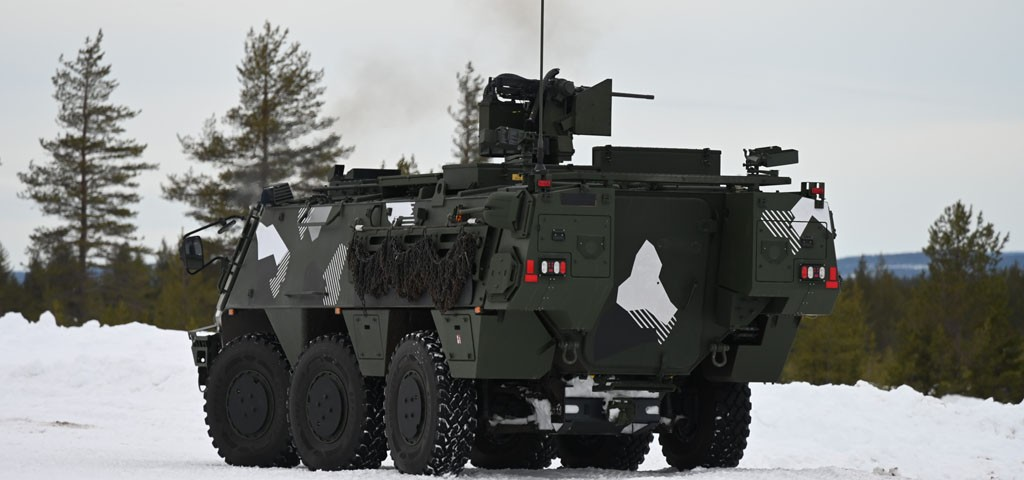
Dire WOLF is a six-wheeled diesel-electric platform derived from the company’s wider WOLF robotic-vehicle family. It is designed to carry substantial payloads across long and short routes without placing a driver inside the vehicle.
The selection does not yet represent a large production order, but it places the system within a structured Army assessment where mobility, payload, autonomy, reliability, support, and manufacturing readiness can influence later procurement.
A prototype can rely on engineers who understand every component and software decision. A logistics fleet has to be operated by ordinary units, diagnosed under field conditions, and repaired without requiring a factory team after each fault.
Diesel-electric propulsion offers useful torque, onboard electrical generation, and flexibility in distributing power to sensors or payloads. It also combines an internal-combustion system with batteries, electric drive, power electronics, controls, cooling, and high-voltage safety arrangements.
Each layer introduces production and maintenance demands. Engines, generators, motors, inverters, cables, batteries, suspension, tyres, wheel-end components, seals, and cooling equipment must survive mud, water, dust, shock, and repeated heavy loading.
Autonomy must survive the workshop
Contested logistics has moved higher within US Army planning as future operations assume that rear areas, depots, and conventional supply routes may be monitored or attacked. Autonomous vehicles can distribute cargo across more routes and reduce personnel exposure, although they also create dependence on sensors, software, communications, and computing.
Dire WOLF must recognise terrain, obstacles, people, vehicles, and route boundaries while operating with degraded satellite navigation and intermittent communications. It also needs controlled behaviour when conditions fall outside the validated autonomy envelope.
Those requirements reach directly into the factory. Cameras, lidar, radar, inertial sensors, processors, antennas, and protected electronics must be installed and calibrated consistently, since small alignment errors can affect how the vehicle interprets its surroundings.
Repair procedures must restore that calibration after a sensor is replaced or a mounting is damaged. Automated checks and defined reference points can reduce dependence on specialist technicians, while poorly designed alignment processes could keep otherwise serviceable vehicles off the road.
BLADE is working with Michelin and Carnegie Robotics, combining mobility and autonomy expertise within the programme. Modern robotic vehicles depend on suppliers whose software, sensors, tyres, and electronic components can influence performance as strongly as the chassis manufacturer.
Commercial processors and perception sensors offer cost and capability advantages, but their product cycles are shorter than military fleet lives. Obsolescence management will require substitute components, software changes, and repeated testing throughout production.
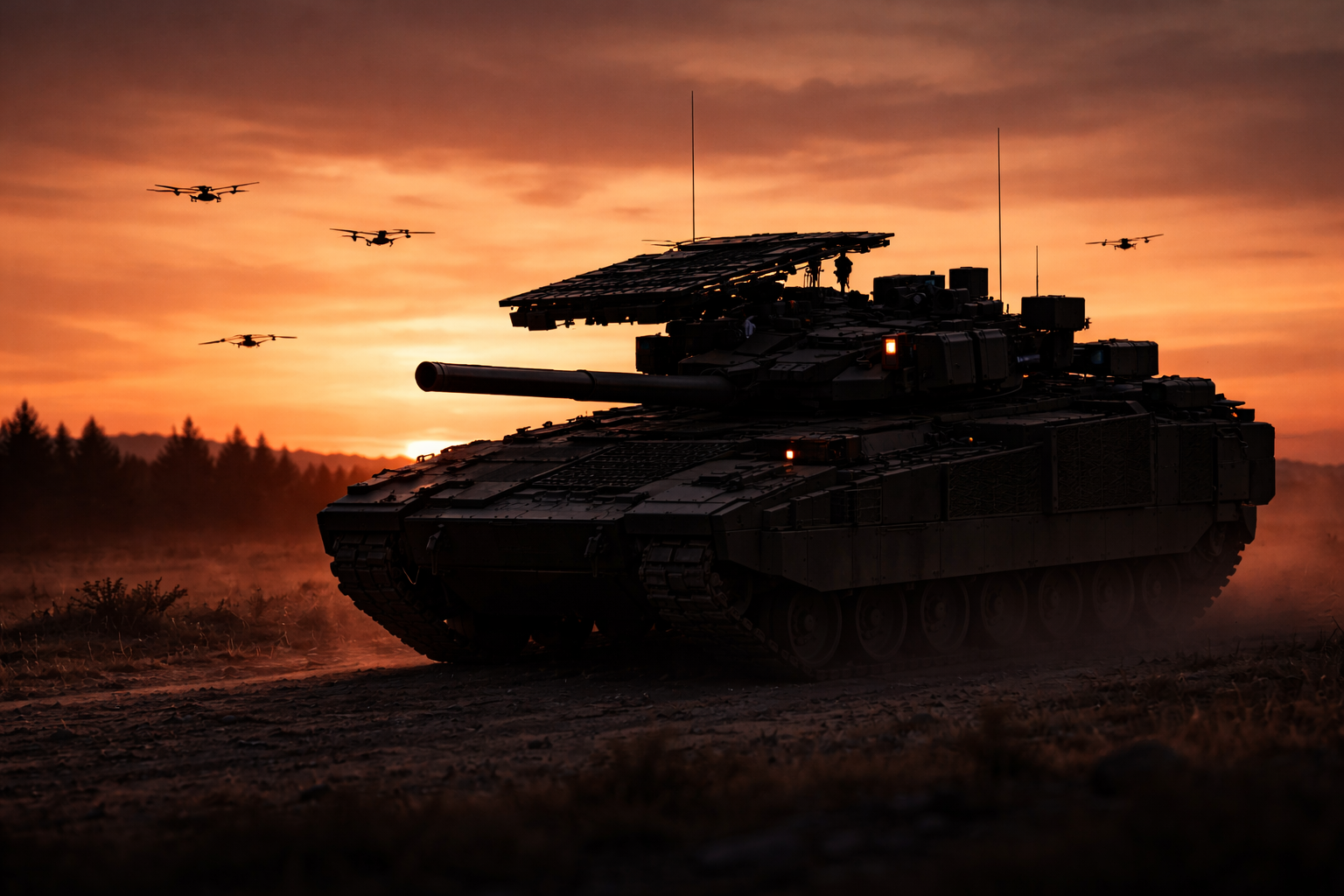
Mounting counter-drone equipment on an unmanned chassis, as demonstrated by the Tolga and Katica integration, shows how robotic vehicles are developing beyond simple carriers. Dire WOLF follows a parallel path in logistics, where cargo modules, casualty evacuation, power generation, or other roles may eventually share one vehicle family.
Expansion should not compromise the initial transport requirement. Logistics vehicles earn their value through payload moved and journeys completed, not the range of equipment displayed during demonstrations.
Field repairability will consequently deserve close attention. Wheels, suspension parts, sensors, batteries, and control modules need accessible replacement routes, while partial system failures should not make the entire vehicle impossible to recover.
Attrition also changes the production model. Vehicles operating near the tactical edge may be damaged or lost more frequently than conventional support equipment, so procurement planning must include replacement output rather than assuming each platform will remain in service for decades.
A system intended to reduce personnel exposure cannot demand disproportionate maintenance manpower elsewhere in the chain. Diagnostics, modular components, common tools, and clear fault reporting will influence its practical labour requirement.
Project Sustainment gives the Army an opportunity to compare several industrial and autonomy approaches before committing to fleet scale. BLADE must now demonstrate that Dire WOLF combines robotic capability with the availability, repairability, and manufacturing discipline expected from routine logistics equipment.