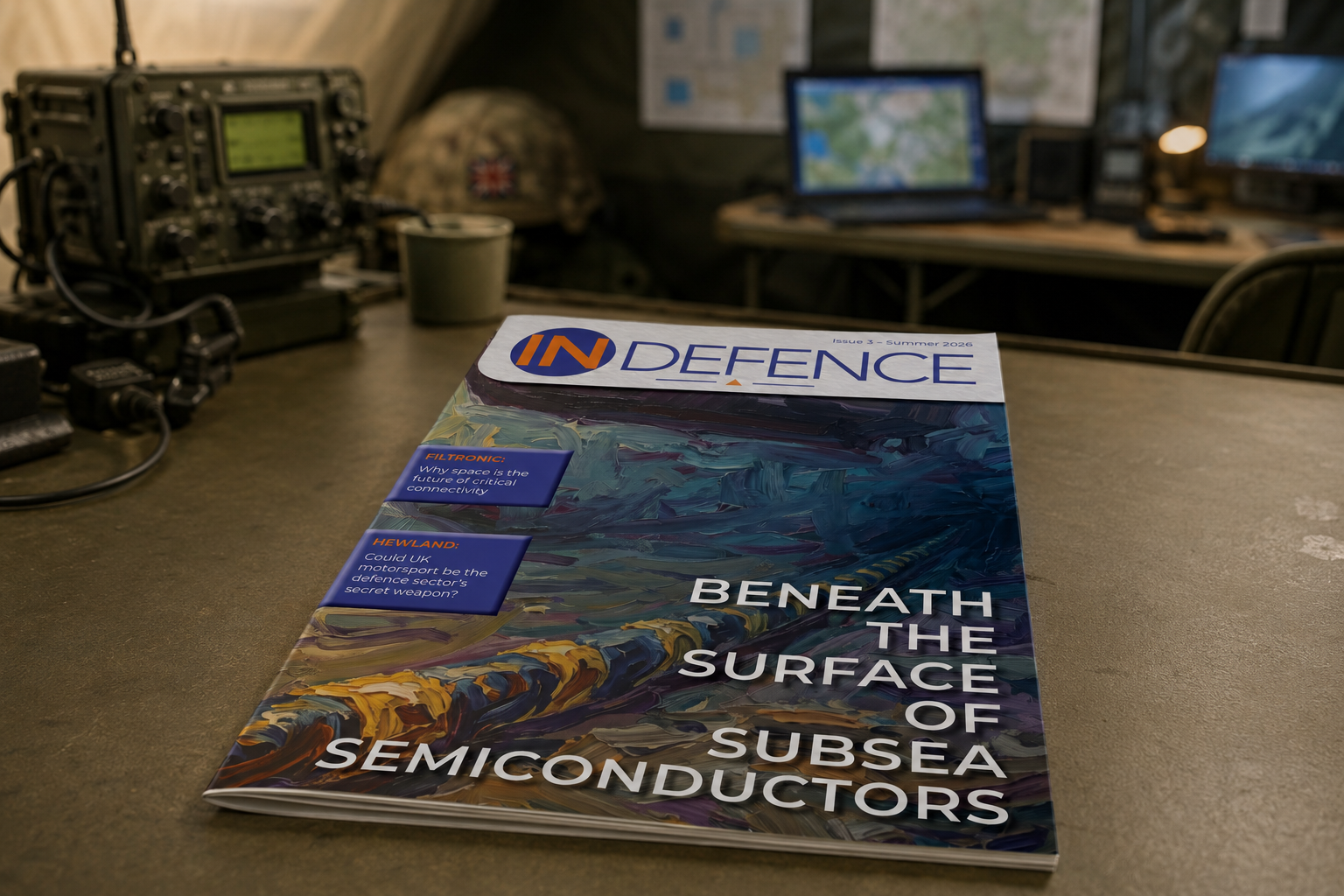
IN Brief:
- Subsea cables, maritime electronics, GNSS, and cyber systems face growing operational risks.
- The issue covers satellite communications, component reliability, international law, and AI-enabled threats.
- Further features examine certification, motorsport skills, border intelligence, and naval protection.
Defence equipment is easy to notice when it flies, sails, or enters trials. The systems that keep it working are easier to ignore. This issue of IN Defence focuses on those systems, including the cables, components, timing signals, and data tools behind operational capability.
The main section looks at subsea infrastructure. Filtronic sets out the case for using satellite links as a backup when undersea cables are damaged or attacked. Boies Schiller Flexner looks at the legal limits on how the UK can respond to sabotage. Swindon Silicon Systems explains what long service life means for electronics exposed to pressure, corrosion, vibration, and limited access.
Elsewhere, Plextek examines how forces and critical services can keep operating when GNSS is jammed or spoofed. e2e-assure considers the use of AI in cyber attack and defence. Hewland looks at whether UK motorsport suppliers can help defence shorten development and production times.
Fivecast looks at how public and commercial data can support border decisions, while ASL GRP discusses composite protection for critical equipment at sea. The issue also covers AS9100 certification. The reporting stays close to engineering and production. A concept only matters if it can be made, supported, and kept useful in service.