IN Brief:
- The framework covers PAC-3 MSE two-pulse rocket motors, attitude-control motors, and lethality enhancers.
- A definitive long-term contract is expected to be completed later in 2026.
- Dedicated processing bays and automated digital X-ray equipment are intended to increase throughput at Camden, Arkansas.
L3Harris has signed a seven-year framework with the US Department of War and Lockheed Martin intended to nearly triple production of propulsion products for the PAC-3 Missile Segment Enhancement interceptor.
The agreement is expected to lead to a definitive long-term contract later in 2026. It covers the interceptor’s advanced two-pulse solid rocket motor, attitude-control motors, and lethality enhancer.
As L3Harris’ largest PAC-3 propulsion commitment to date, the framework provides a longer demand horizon around which facilities, suppliers, workforce, and capital investment can be organised.
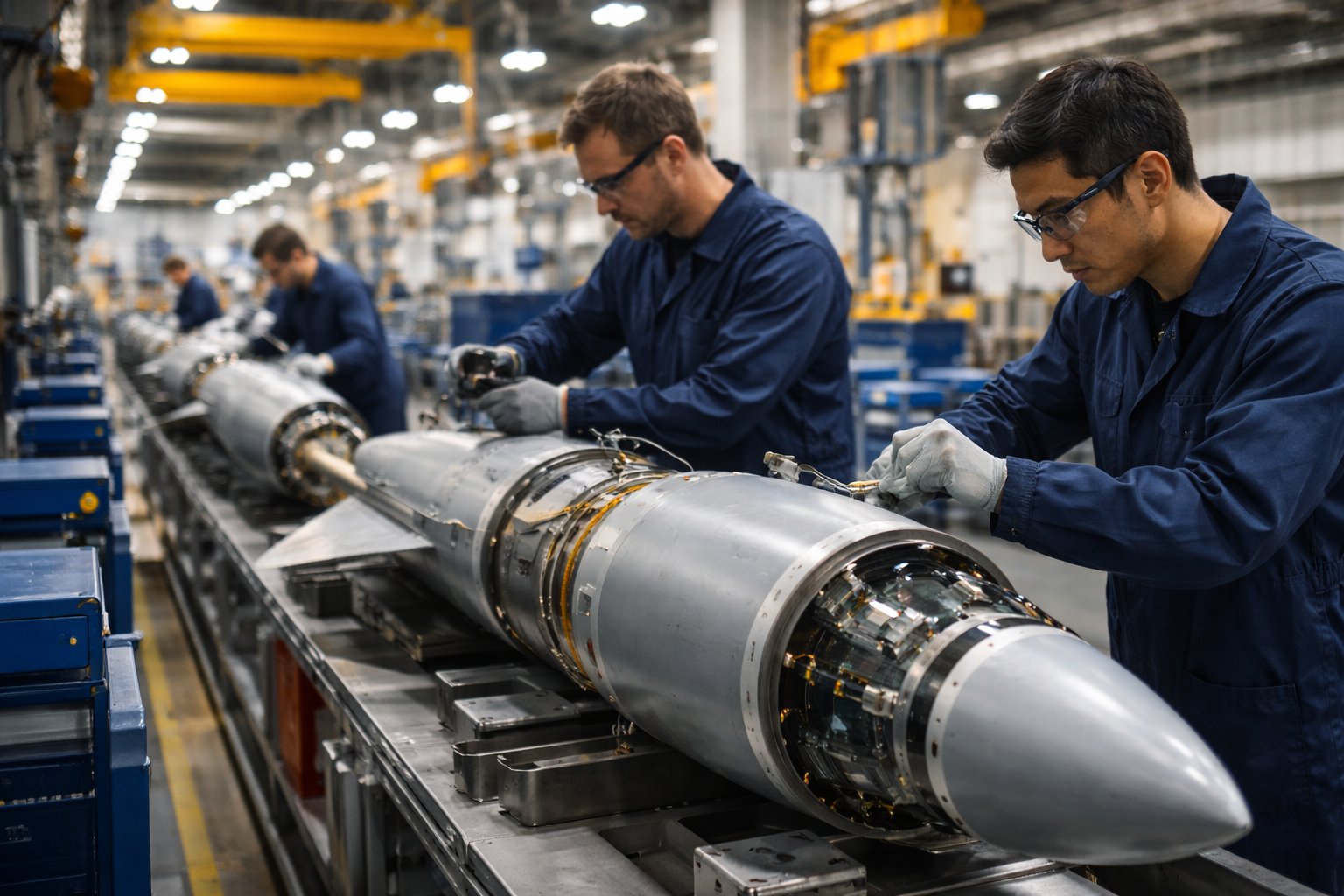
Production is centred on Camden, Arkansas, where dedicated processing bays and automated digital X-ray inspection equipment have been installed. L3Harris is also constructing or upgrading facilities across Arkansas, Alabama, and Virginia within a broader solid-rocket-motor expansion.
PAC-3 MSE uses a larger dual-pulse motor than earlier PAC-3 variants. Separate propulsion pulses allow the interceptor to manage energy during different portions of flight, supporting greater range and manoeuvrability.
Attitude-control motors provide rapid corrections during the final engagement. Their thrust and timing must remain highly consistent because small deviations can affect a hit-to-kill intercept at high closing speed.
Solid rocket motor output cannot be increased in the same way as general machining. Energetic-material sites require controlled buildings, separation distances, environmental systems, specialist handling, qualified processes, and trained personnel.
Propellant mixing, casting, curing, inspection, and integration also take fixed amounts of time. Some chemical and physical stages cannot be accelerated without changing the material or increasing risk.
Higher throughput therefore depends on parallel equipment, additional processing space, improved movement between operations, better yield, and fewer delays during inspection.
The motor case, insulation, propellant grain, igniter, nozzle, seals, and electronic interfaces must perform as one qualified system. Variation in chemistry, temperature, geometry, bonding, or trapped material can alter internal pressure and thrust.
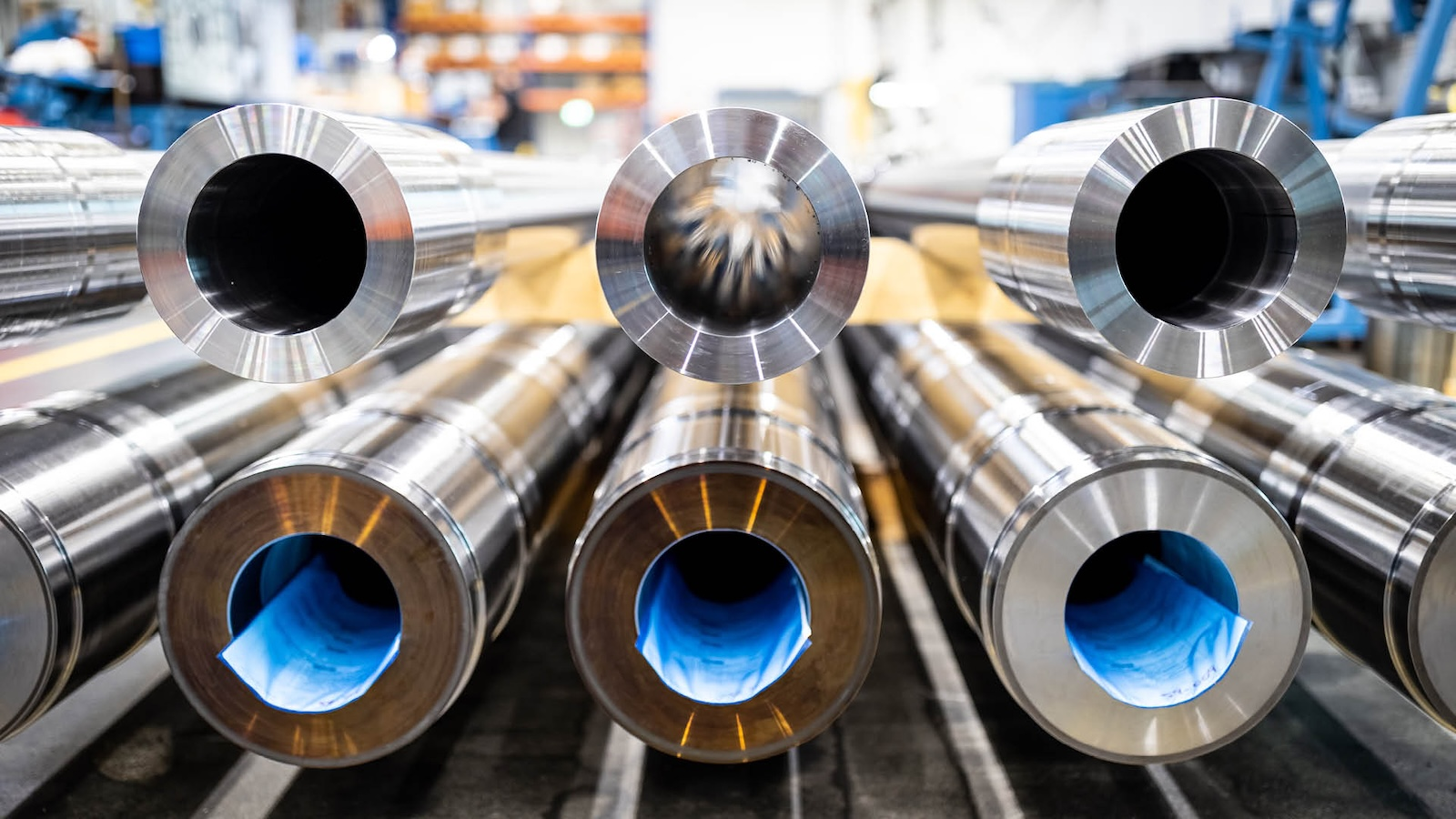
Non-destructive inspection is consequently a major production constraint. Digital X-ray equipment allows technicians to examine internal features and identify voids, cracks, contamination, or bonding defects without cutting into the motor.
Automation can reduce cycle time and improve consistency, although image interpretation remains a qualified task. Equipment needs calibration, inspection procedures must remain controlled, and indications have to be assessed against approved acceptance criteria.
A seven-year procurement horizon provides suppliers with greater confidence to invest in chemicals, cases, nozzles, energetic devices, electronics, tooling, and additional shifts.
Short annual orders have often discouraged capacity expansion because companies cannot be certain that demand will continue long enough to recover capital costs.
Longer commitments can also support second-source qualification. Missile programmes remain vulnerable to components available from one supplier or one facility, even when the prime production line has spare capacity.
Introducing an alternative source requires drawing transfer, process development, sample manufacture, destructive and non-destructive testing, and evidence that the new component behaves correctly inside the complete interceptor.
L3Harris has supplied propulsion to the programme for decades, providing substantial process knowledge. The planned rate increase will still challenge equipment, suppliers, quality systems, and workforce retention.
PAC-3 MSE production also intersects with the development of PAC-3 ACE as a lower-cost complementary interceptor. Air-defence forces require both sufficient numbers of high-performance MSE rounds and more affordable weapons for threats that do not justify the most capable interceptor.
International demand continues to expand as Patriot users replenish stocks and respond to ballistic missiles, cruise missiles, and complex air attacks. A higher propulsion rate can support more completed interceptors, but only where the rest of the missile chain keeps pace.
Seekers, guidance electronics, control surfaces, launch canisters, warheads, and final integration can become the next constraint when motor output rises. Increasing one subsystem may simply move unfinished inventory to another part of the factory.
Shared production plans across L3Harris, Lockheed Martin, government, and major suppliers will therefore be essential. Component rates, inspection capacity, storage, and final test need to converge around the same delivery target.
Workforce growth will be difficult to compress. Energetics technicians, chemists, process engineers, quality specialists, and non-destructive inspection personnel require lengthy training, security clearance, and practical experience.
Process knowledge is often held by teams familiar with the response of materials to humidity, temperature, equipment variation, and handling. Written instructions provide control, but cannot immediately replace accumulated judgement.
New facilities must also be qualified before their output enters operational missiles. Equipment installation, trial batches, inspection comparison, and process validation can consume months before production contributes to deliveries.
Safety remains inseparable from throughput. Pressure to increase output cannot weaken controls around energetic materials, worker exposure, storage, transport, or waste handling.
Yield improvement may provide some of the fastest gains. Preventing defects removes repeated handling and inspection, while data from automated equipment can identify recurring process variation before it affects a larger batch.
The framework shifts PAC-3 propulsion from episodic procurement towards sustained capacity planning. Buildings, inspection systems, training, supplier development, and raw-material agreements can be treated as parts of one production enterprise.
Nearly tripling output remains demanding. The Camden expansion must deliver qualified motors while suppliers increase at compatible rates and automated inspection reduces cycle time without weakening defect detection.
Demand is no longer uncertain. The challenge lies in turning multiyear procurement into safe, repeatable energetic-material throughput — an area where physical process times and specialised labour remain resistant to rapid acceleration.