IN Brief:
- Farnborough International Airshow 2026 recorded commercial deals valued above US$84.7 billion.
- The event generated 353 firm aircraft orders and 904 firm engine orders.
- Delivery will test engine output, aerostructures, electronics, certification, supplier finance, and skilled labour.
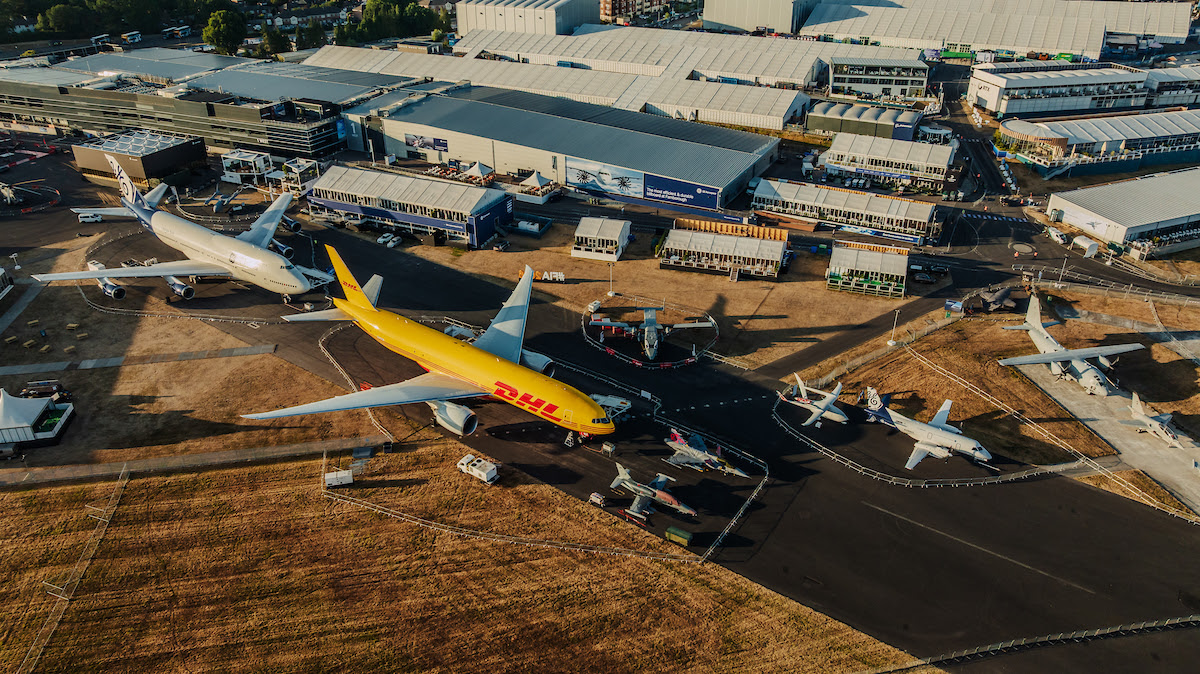
Farnborough International Airshow 2026 closed after recording commercial deals valued at more than US$84.7 billion, adding another substantial block of demand to the global aerospace production system.
The event welcomed 141,580 trade and public visitors, an increase of 41% compared with the previous show and nearly twice the attendance recorded in 2022. Participants from 136 countries attended across five days in Hampshire.
Commercial announcements included 353 firm aircraft orders and 904 firm engine orders. Boeing, Airbus, Embraer, CFM International’s LEAP programme, and Pratt & Whitney led much of the commercial activity, while BAE Systems, MBDA, Anduril Industries, and other defence businesses presented new programmes and technologies.
Vertical Aerospace completed a public electric vertical takeoff and landing flight that transitioned between helicopter and aeroplane modes. The demonstration gave the emerging eVTOL industry a visible technical milestone, although certification, production, and support remain the longer route to commercial service.
Orders announced at an airshow must still pass through contracting, scheduling, supplier allocation, manufacture, certification, acceptance, and delivery. Their value is distributed over several years and depends on the production system sustaining the rates assumed when customers selected delivery positions.
Large civil aircraft programmes already face constraints across engines, castings, forgings, aerostructures, cabin equipment, avionics, landing gear, and skilled labour. Final assembly can increase only when suppliers at every tier deliver compatible quantities.
The 904 engine orders place particular weight on propulsion manufacturing. Modern turbofans rely on high temperature alloys, complex castings, precision forgings, ceramic and composite materials, coatings, machined rotating components, control electronics, and extensive test capacity.
A shortage in one turbine component can delay a complete engine even when most of its parts are available. Engine manufacturers also have to serve new production, spare engine demand, and maintenance networks supporting aircraft already in service.
Aerostructure suppliers face similar rate pressure. Wings, fuselage sections, control surfaces, nacelles, and composite structures require large tools, approved materials, controlled processes, inspection, and skilled labour that cannot be expanded instantly.
Supplier finance can become restrictive during a ramp. Smaller manufacturers purchase material, recruit personnel, hold additional inventory, and carry unfinished work before receiving payment, so a growing orderbook can consume cash even when long term revenue appears secure.
Commercial and military aerospace are drawing on overlapping resources. Engineers, machinists, electronics specialists, composite technicians, forgings, castings, processors, and test equipment serve both markets, although the programmes operate under different certification and security structures.
Farnborough’s expanding defence content reflects that competition. Governments want more missiles, aircraft, sensors, autonomous systems, and electronic warfare equipment while commercial manufacturers are also attempting to increase output.
The Aerospace Global Forum programme placed investment, space, defence, technology, and workforce alongside conventional aircraft business. Those themes now sit directly within production planning rather than at the edge of the exhibition.
Britain’s aerospace sector will seek to turn the show’s commitments into domestic work across wings, engines, landing gear, electronics, interiors, maintenance, materials, and design services. Orders do not guarantee UK content, since multinational manufacturers allocate work according to programme agreements, capacity, cost, and supplier performance.
Defence announcements create additional questions around sovereign capacity and surge output. A line optimised for efficient low rate production may be unable to respond when several governments seek accelerated delivery at once.
Raising output requires approved facilities, qualified tooling, trained staff, secure information systems, reliable sub tier suppliers, and confidence that higher demand will last long enough to repay the investment. Short bursts of urgent purchasing can leave manufacturers carrying cost when budgets move elsewhere.
Pioneers of Tomorrow sold out before the show, bringing thousands of young people into contact with aerospace employers and educators. The workforce emphasis reflects a persistent industrial constraint, since experienced manufacturing engineers, certifying personnel, software specialists, technicians, and inspectors take years to develop.
The airshow returns in July 2028, by which point delivery performance will provide a stronger measure of the 2026 orderbook. Monthly aircraft rates, completed engines, supplier health, certification progress, and backlog movement will show how much of the announced demand has become physical output.
Farnborough demonstrated confidence across civil and defence aerospace. Its production legacy will be recorded less visibly in accepted aircraft, completed engines, solvent suppliers, trained workers, and delivery schedules that remain credible after the exhibition stands have been dismantled.