IN Brief:
- India’s Ministry of Defence says it has initiated concerted efforts to co-join the French-led FCAS programme.
- Parliamentary scrutiny is now focused on a roadmap and timetable for India’s wider sixth-generation combat-air strategy.
- Any eventual agreement will have to define Indian design authority, industrial workshare, technology access, and its relationship with AMCA.
India’s Ministry of Defence has confirmed that it has begun concerted efforts to join the French-led Future Combat Air System programme, giving India’s sixth-generation combat-air planning a defined international route alongside its domestic fighter development work.
The position appears in the Twenty-Fifth Report of the Parliamentary Standing Committee on Defence, tabled on 7 August as an action-taken response to earlier committee recommendations. The ministry told the panel that it had initiated efforts to co-join the FCAS sixth-generation fighter aircraft development programme spearheaded by the French government.
The committee has asked for considerably more detail before that intention can be treated as a settled programme. It wants a clear status report, development and acquisition roadmap, and tentative timeline for sixth-generation aircraft, reflecting the gap between opening partnership discussions and establishing a funded aerospace programme.
No Indian workshare, financial commitment, intellectual-property arrangement, technology package, production location, or formal membership terms have been disclosed. Those details will decide whether India eventually joins as a genuine development partner with design responsibility or enters through a narrower industrial and procurement arrangement.
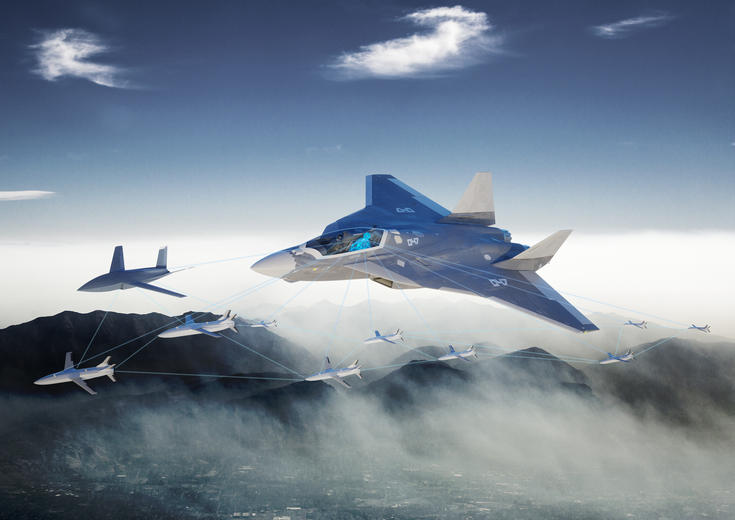
FCAS is conceived as more than a replacement fighter. Its established architecture combines a New Generation Fighter with uncrewed Remote Carriers and a connected combat cloud intended to share information and coordinate effects across multiple airborne platforms.
That systems approach matches the direction identified by India’s own parliamentary scrutiny of future combat aircraft. Earlier evidence to the committee described sixth-generation fighters as network-centric platforms connected to other aircraft and ground systems, able to integrate sensor information and operate alongside uncrewed platforms rather than functioning as isolated aircraft.
Joining such a programme is therefore considerably more complicated than buying an existing fighter under licence. Industrial responsibility can extend into propulsion, low-observable structures, mission computing, electronic warfare, sensors, communications, artificial intelligence, weapons integration, autonomous systems, software architecture, power management, and test infrastructure.
India already has domestic programmes in many of those areas, most visibly the Advanced Medium Combat Aircraft. AMCA remains the country’s indigenous fifth-generation fighter project, and the government’s sixth-generation discussions are being pursued alongside rather than formally in place of that programme.
The relationship between the two will become an important industrial question. If FCAS participation brings access to technologies that reinforce Indian propulsion, sensors, software, materials, and systems-integration capability, the programmes could support overlapping parts of the aerospace base. A poorly defined division of responsibilities could instead leave Indian companies manufacturing hardware while critical design authority remains elsewhere.
Workshare percentages alone would provide an incomplete measure. Aerospace programmes create the greatest long-term industrial value when participating organisations control defined subsystems, own engineering data, understand interfaces, and can support subsequent modifications without returning every design change to an overseas authority.
The same applies to software. Future combat aircraft will depend heavily on mission systems, sensor fusion, secure networking, electronic warfare, autonomy, and rapid software updates. Access to source code, interface definitions, simulation environments, development tools, and certification processes can be as strategically important as responsibility for manufacturing wings or fuselage sections.
India’s defence industry also has to consider the supply chain beneath the major aerospace groups. A sixth-generation programme can create demand for compound-semiconductor devices, high-performance processors, radio-frequency modules, actuators, thermal-management equipment, optical sensors, precision structures, advanced coatings, propulsion components, and specialist test equipment.
Domestic participation at those levels would reinforce capabilities usable across missiles, uncrewed aircraft, radar, electronic warfare, space systems, and civil aerospace. Concentrating localisation largely on final assembly would generate employment and production experience, but much less control over the technologies that determine future upgrades.
Programme timing adds another constraint. India must continue funding current combat-air requirements, Tejas production, AMCA development, weapons, engines, sensors, and support infrastructure while sixth-generation systems remain a longer-term proposition. FCAS discussions therefore need an industrial and financial boundary clear enough to prevent future ambitions from destabilising programmes required much sooner.
The parliamentary committee’s request for a roadmap puts those questions back on the ministry. A credible plan will need to define what India expects to design, what it expects to manufacture, what technologies it wants access to, how much programme authority it seeks, and how the effort will complement rather than duplicate AMCA.
The 7 August disclosure establishes that India has moved beyond merely comparing international sixth-generation programmes and is pursuing the French route directly. It does not yet establish the terms on which India would enter. For an aerospace programme likely to run for decades, those terms will carry more industrial weight than the initial declaration of interest.