IN Brief:
- The US Army is reported to be preparing a LOCUST order worth at least $400 million covering dozens of systems.
- AeroVironment has designed the third-generation LOCUST X3 around modularity, scalable production, and 20–35+ kW laser output.
- A production-scale order would shift the challenge from proving laser lethality to manufacturing, sustaining, and upgrading a fielded fleet.
The US Army is reportedly preparing to buy at least $400 million of LOCUST counter-drone laser systems from AeroVironment, potentially moving a directed-energy capability that has spent years in prototype and operational testing into a substantially larger production phase.
Bloomberg Government reported on 7 August that the proposed contract would cover dozens of LOCUST systems and would represent the Pentagon’s first production contract for a directed-energy counter-UAS system beyond the prototype stage. AeroVironment declined to comment on the reported agreement, and no corresponding public Army award notice had been identified when this article was refined.
That distinction matters. The reported value and quantity indicate a potentially substantial production commitment, but until the Army publishes the contract, details such as exact system numbers, configuration, delivery schedule, funding profile, support package, and whether the order contains options remain unconfirmed.
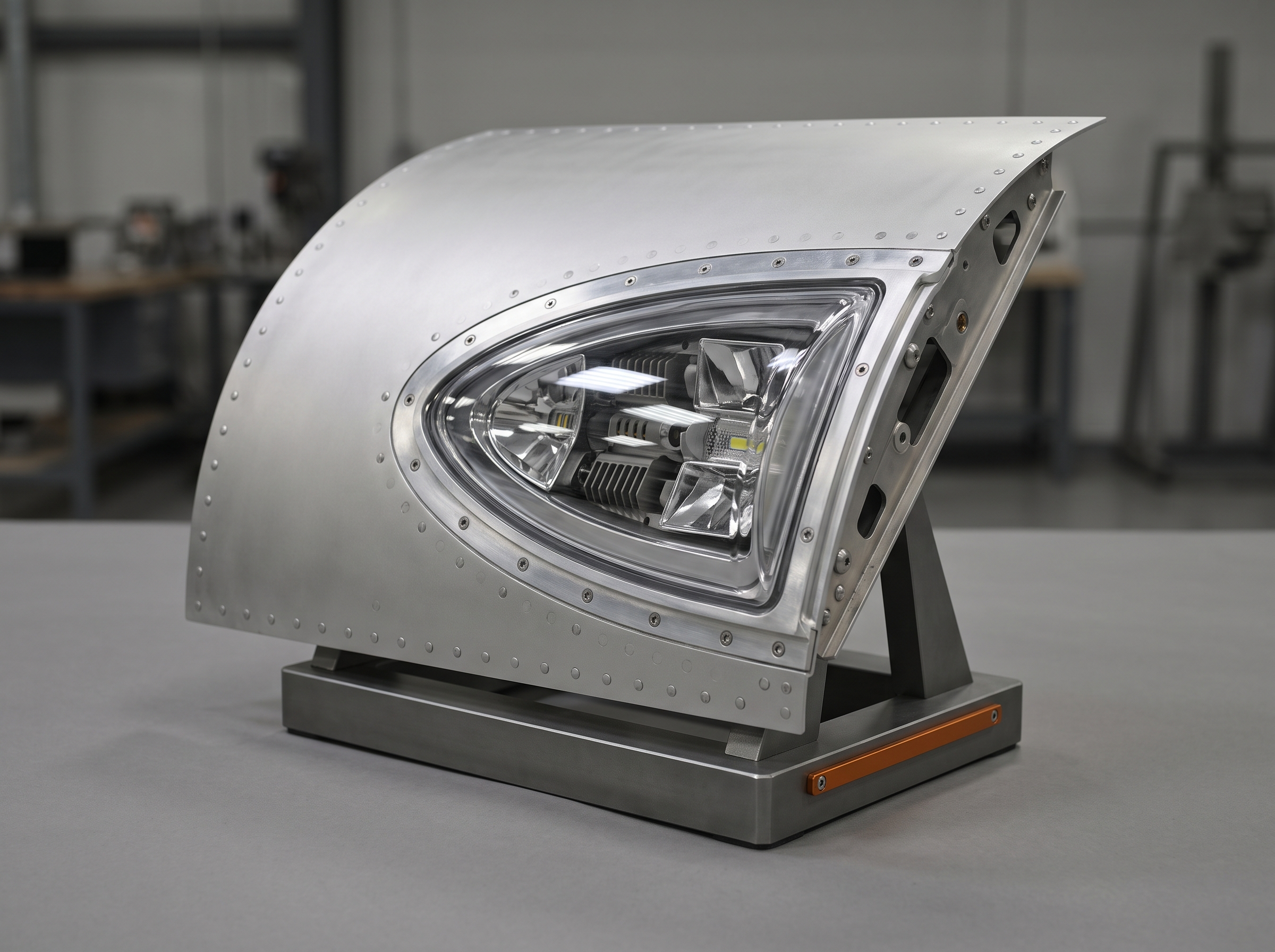
AeroVironment has nevertheless been positioning LOCUST for precisely this transition. Its third-generation LOCUST X3 is a 20–35+ kW directed-energy laser weapon designed for Group 1–3 uncrewed aircraft threats, using a modular beam director and the company’s AV_Halo Pinpoint tracking and fire-control software.
The company says X3 was developed with producibility in mind, using modular subsystems and commercially mature components to support repeatable manufacturing, faster production increases, and lower costs at greater scale. That emphasis separates the industrial problem from the earlier question of whether a high-energy laser can defeat a small drone under controlled conditions.
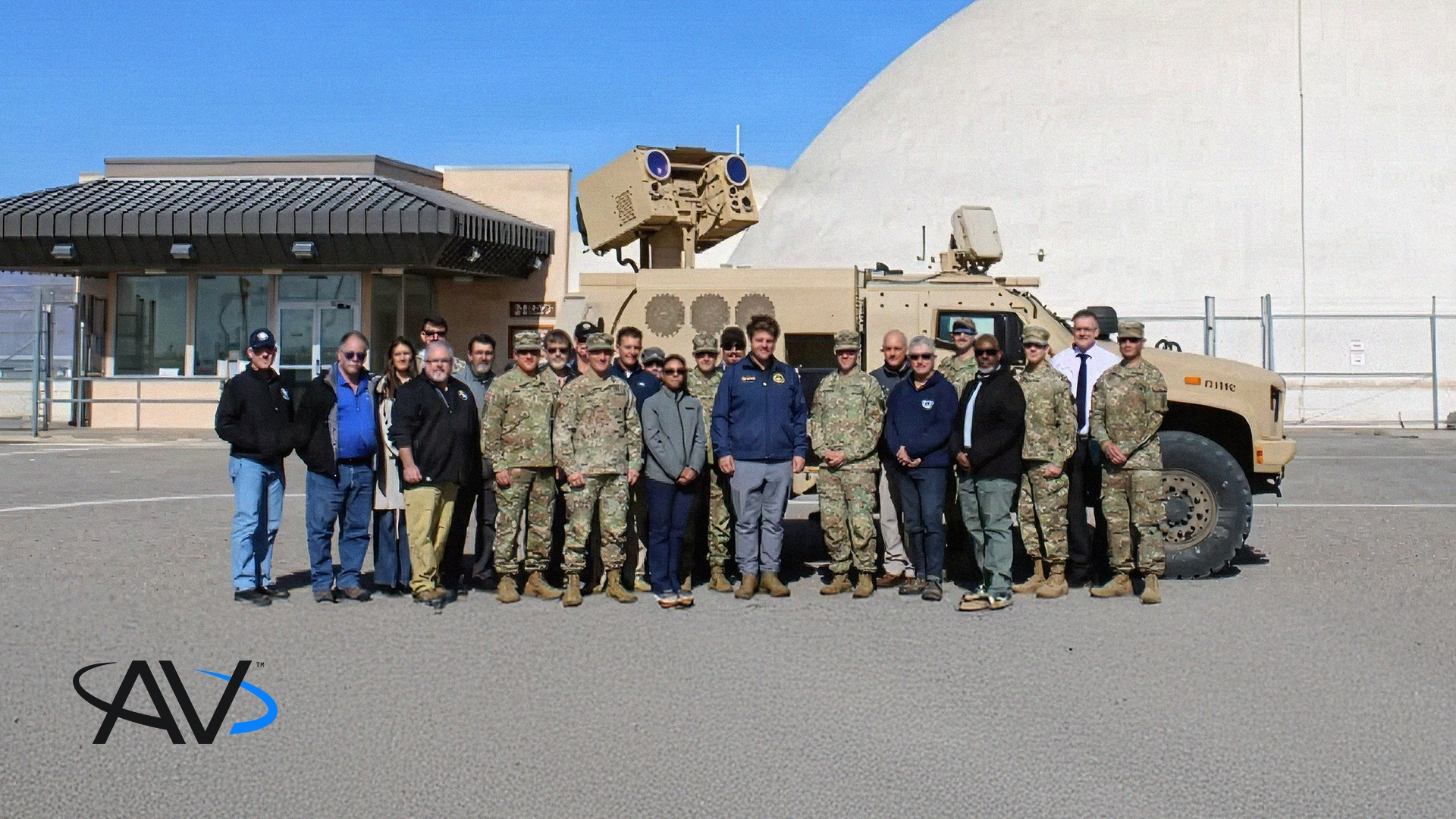
LOCUST has already accumulated an extensive test and deployment history. Earlier systems have been fielded through the Army’s Multi-Purpose High Energy Laser and Palletized High Energy Laser programmes and integrated on vehicles including the Joint Light Tactical Vehicle. AeroVironment has also used White Sands Missile Range to demonstrate controlled engagements in coordination with the Department of War and Federal Aviation Administration.
Those trials addressed a problem peculiar to high-energy lasers: the weapon has to destroy a hostile drone without creating an unacceptable hazard to legitimate aircraft or other objects beyond the target. At White Sands, the system demonstrated automated safety functions intended to prevent firing unless engagement conditions had been validated, alongside tracking and engagements against stationary and airborne targets.
Moving from such demonstrations to a fleet measured in dozens of systems changes the engineering emphasis. Beam quality, optical alignment, tracking accuracy, thermal management, electrical power, cooling, sensor performance, software, and mechanical stability all have to remain consistent across production units rather than one carefully supported test article.
High-energy lasers also impose a sustainment burden that can be obscured by the familiar claim that they avoid the cost of firing an interceptor missile. An individual engagement does not consume a missile, but the system still depends on generators or stored electrical power, cooling equipment, optical surfaces, precision mounts, sensors, software, maintenance personnel, and replacement parts.
Repeated engagements make thermal management particularly important. A laser converts only part of its input energy into the beam, leaving waste heat that has to be removed before performance degrades. A system that works during a short demonstration must still prove that it can manage that heat during sustained operations against several targets.
Atmospheric conditions remain another constraint. Dust, smoke, rain, cloud, turbulence, and other obscurants can reduce the energy reaching a target, while line-of-sight restrictions prevent a laser from engaging threats hidden by terrain or structures. Directed energy is therefore more likely to become one effector within layered counter-UAS systems than a wholesale replacement for guns, missiles, or electronic warfare.
Production scale also exposes supply-chain questions. Specialist optics, high-power laser modules, processors, thermal equipment, sensors, power electronics, precision mechanical assemblies, and ruggedised components have to arrive at a sufficient rate and with tightly controlled performance. A prime contractor can design a modular architecture, but its production line still moves at the pace of the slowest qualified component.
The use of commercially mature hardware can improve availability and cost, although it creates a different problem where commercial component lifecycles are shorter than military service lives. Production and sustainment teams need a controlled method for replacing obsolete parts without forcing repeated qualification of the entire weapon.
Software will evolve even faster. Counter-UAS systems have to recognise and track platforms whose size, flight behaviour, communications, and autonomy can change rapidly. Maintaining a common hardware architecture while updating detection, classification, tracking, and engagement software will be central to keeping a fielded laser relevant.
For the Army, the attraction of a larger order would be the opportunity to test those industrial assumptions across an operational fleet rather than a handful of prototypes. Reliability data from dozens of systems can reveal recurring component failures, maintenance burdens, environmental weaknesses, and software problems that small demonstrations rarely expose.
The reported contract has therefore reached an important but still provisional point. If the Army confirms a $400 million-plus production award, LOCUST will face a more demanding measure of maturity than another successful drone engagement. AeroVironment will have to demonstrate that a directed-energy weapon can be manufactured repeatedly, supported in the field, upgraded across a common fleet, and kept available when operators need more than a demonstration shot.