IN Brief:
- ePropelled plans to expand its Laconia manufacturing footprint from 20,000 to 80,000 square feet.
- The company says $60 million in government funding will support more than fourfold growth in propulsion-system production capacity.
- New capability will include automated assembly, precision motor production, electronic speed controllers, environmental testing, and integrated quality assurance.
ePropelled plans to expand its New Hampshire manufacturing operation from 20,000 to 80,000 square feet, with the company saying $60 million in US government funding will support a more than fourfold increase in production capacity for electric propulsion systems used in uncrewed aircraft and other dual-use platforms.
The Laconia expansion targets one of the less visible constraints in efforts to increase domestic drone production: sufficient manufacturing capacity for electric motors, electronic speed controllers, and complete propulsion assemblies. Aircraft production can only increase as quickly as the critical components feeding final assembly, making propulsion manufacturing part of the wider industrial-base challenge rather than a secondary equipment purchase.
ePropelled says the funding is being provided through the Industrial Base Analysis and Sustainment programme and will support increased manufacturing for government, allied, and commercial customers. The company plans to expand production of motors, electronic speed controllers, and complete propulsion systems while adding equipment intended to improve manufacturing throughput and qualification capacity.
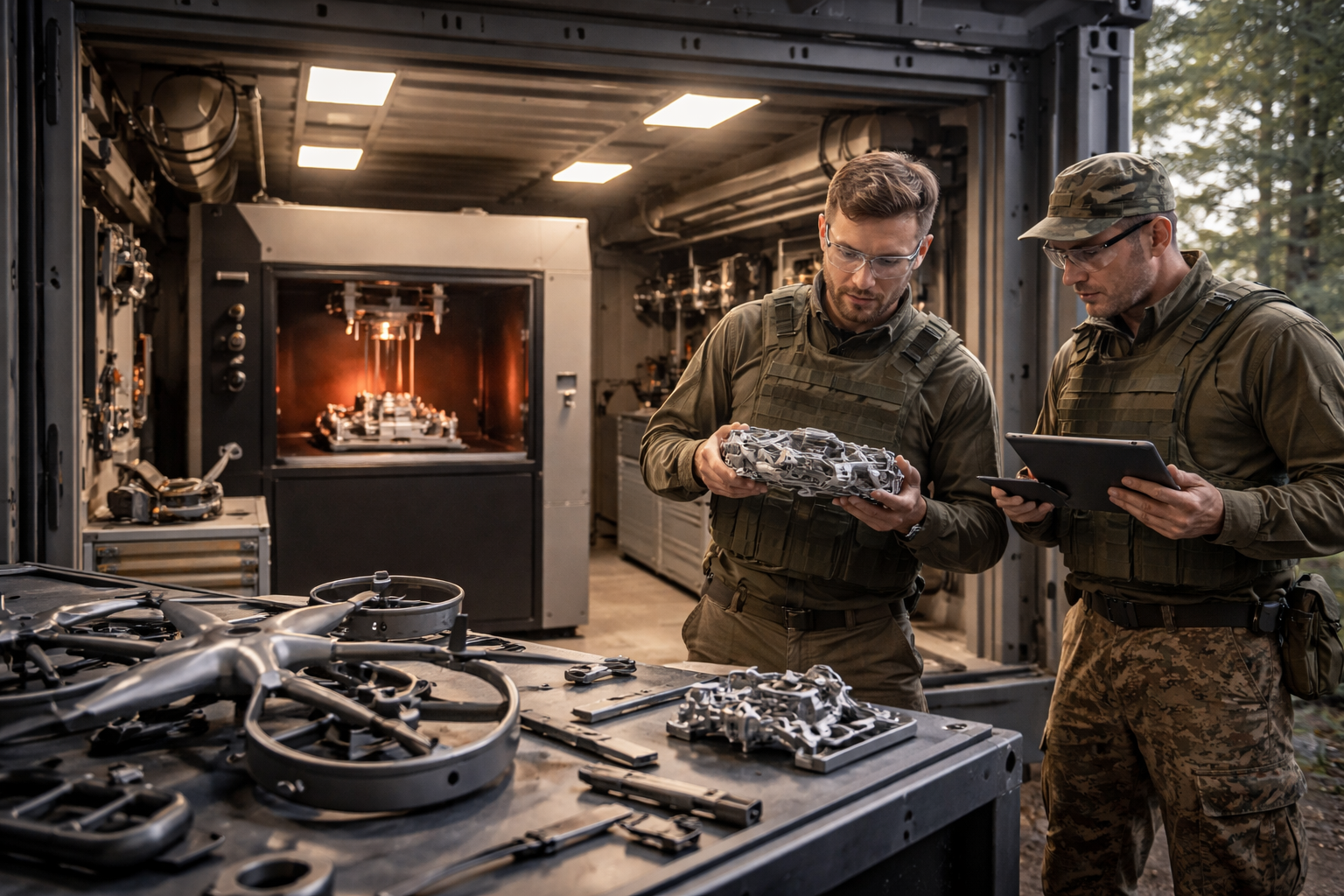
The enlarged facility is expected to include automated production lines, precision motor manufacturing, controller assembly, automated testing, environmental test capability, and integrated quality assurance. Additional engineering resources and production cells are also planned to support new platforms moving from development into higher-volume manufacturing.
That combination matters more than the fourfold increase in floor area alone. Additional space allows more equipment and workstations to be installed, but production scale depends on whether processes can deliver consistent components without a corresponding increase in rework, inspection, and labour. Automation and end-of-line testing become increasingly important as manufacturers move from prototype quantities to repeatable series output.
Electric propulsion systems place several tightly connected technologies inside a relatively compact package. Motor efficiency affects endurance and thermal load, electronic speed controllers govern how electrical power is delivered to the motors, and software determines how those components respond to commands from the flight-control system. Poor consistency in any one area can reduce aircraft performance even when the rest of the platform remains unchanged.
Motor production also brings its own manufacturing constraints. Winding, magnet placement, balancing, insulation, bearings, adhesives, and tolerances all affect efficiency and reliability. A motor that performs correctly as a hand-built engineering unit still has to deliver the same characteristics when production rises into hundreds or thousands of units, making process control as important as the original design.
Electronic speed controllers add another potential bottleneck. They have to manage high electrical loads reliably while remaining compact and lightweight, and their performance is closely tied to switching electronics, firmware, thermal management, and component quality. Defence customers may also impose additional traceability and assurance requirements around electronics compared with purely commercial applications.
ePropelled describes its products as dual-use systems serving both government and commercial markets. That gives the company the possibility of spreading manufacturing investment across a wider customer base than defence procurement alone, while retaining production processes capable of meeting more demanding aerospace and government requirements.
The New Hampshire project also complements ePropelled’s expansion in Coventry, where the company has been growing engineering and propulsion-production capability. Taken together, the two developments give the company manufacturing and development capacity on both sides of the Atlantic while increasing the amount of physical production available for US programmes.
That US footprint is increasingly relevant as defence customers place greater emphasis on trusted domestic sources for drone components. A platform assembled in America can still carry imported propulsion, flight-control, communications, or power electronics, leaving critical portions of its supply chain exposed to overseas availability. Increasing domestic motor and controller production addresses one portion of that dependency.
The company says the expansion will also create additional skilled manufacturing and engineering employment in New Hampshire. No firm date has been given for full operation beyond completion of facility upgrades and equipment installation, so the present milestone remains a funded capacity-expansion plan rather than evidence that production has already increased fourfold.
That distinction is important as investment in uncrewed systems accelerates. Announced manufacturing capacity is only useful once machinery is installed, operators are trained, suppliers are qualified, production yield is stable, and customers provide enough sustained orders to keep the line working. The eventual measure of the Laconia expansion will therefore be qualified propulsion systems delivered rather than square footage added.
For ePropelled, the investment creates room to scale several potential bottlenecks together. Motors, controllers, assembly, testing, and quality assurance can expand inside the same manufacturing system, reducing the risk that increased demand simply moves the constraint from one component to the next.
If the planned capacity becomes fully operational, ePropelled will have a substantially larger US base from which to serve defence and commercial drone manufacturers. The harder industrial task now begins: turning government-backed infrastructure into repeatable, qualified output at the volumes emerging uncrewed-aircraft programmes increasingly require.