IN Brief:
- Lockheed Martin is making a multimillion-dollar internal investment in its Modular Payload Delivery System.
- MPDS reuses flight-tested hypersonic technology while allowing different payloads and mission configurations around a common framework.
- The company is targeting lower non-recurring engineering, simpler integration and testing, greater automation, and shorter production cycles.
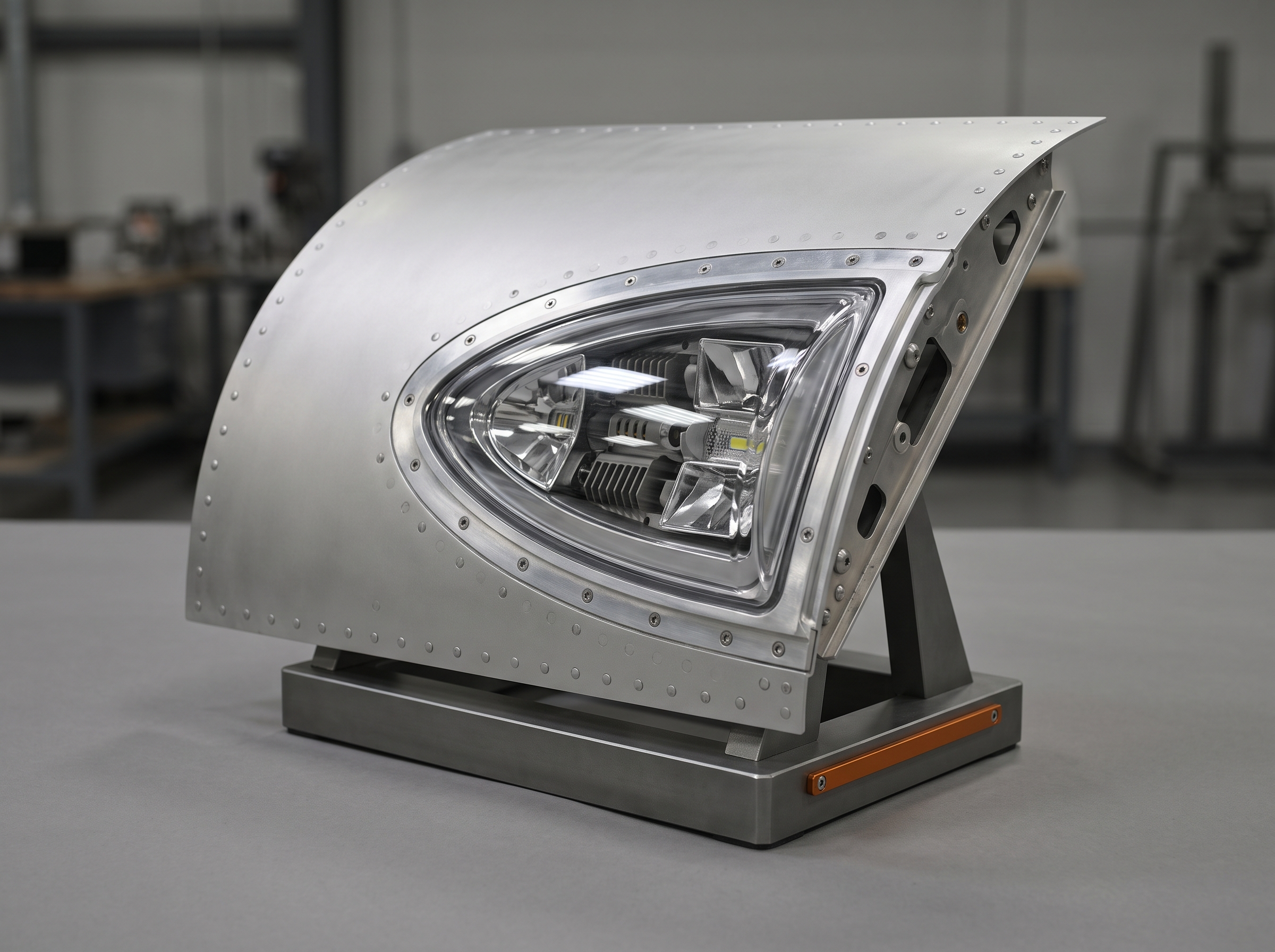
Lockheed Martin is making a multimillion-dollar internal investment in a Modular Payload Delivery System intended to turn flight-tested hypersonic missile-body technology into a reusable architecture supporting different payloads, ranges, and offensive or defensive missions.
The programme, known as MPDS, addresses a recurring cost inside advanced weapons development: redesigning substantial portions of a missile every time a new payload or mission is introduced. Lockheed Martin wants to retain more of the existing vehicle and manufacturing architecture, allowing engineers to alter mission-specific equipment without recreating the entire system around it.
The company says the concept could use a common technology base for several configurations. One version could prioritise deep long-range strike, another could carry a larger payload where less range is needed, while the architecture could also support missile-defence applications. MPDS is therefore being presented as a family-of-systems approach rather than one new weapon with a fixed mission.
That has significant engineering implications because hypersonic vehicles operate in conditions where apparently small design changes can propagate through the rest of the system. Payload mass affects centre of gravity and range, external geometry can alter aerodynamic heating, and internal changes may affect structural loads, power, cooling, guidance, and control.
A modular framework attempts to isolate more of those consequences by defining stable interfaces between the payload and the surrounding missile. Mechanical attachments, electrical power, software, communications, thermal management, and data connections have to be sufficiently standardised that new equipment can be introduced without triggering redesign across every other subsystem.
The approach only saves time if those interfaces prove broad enough to accommodate future requirements. A standard interface that works for one seeker or warhead but cannot support the power, cooling, mass, or data demands of the next payload simply moves redesign work to a later programme.
Lockheed Martin says MPDS is built on flight-tested hypersonic technologies rather than a completely new missile body. Reusing proven hardware allows designers to retain qualification evidence and manufacturing knowledge accumulated on earlier programmes, while concentrating engineering effort on the changes required for the new mission.
The company has not identified the exact missile body that will form the final operational baseline, nor has it announced a customer production contract. The current investment should therefore be understood as internally funded architecture development rather than procurement of a new fielded hypersonic weapon.
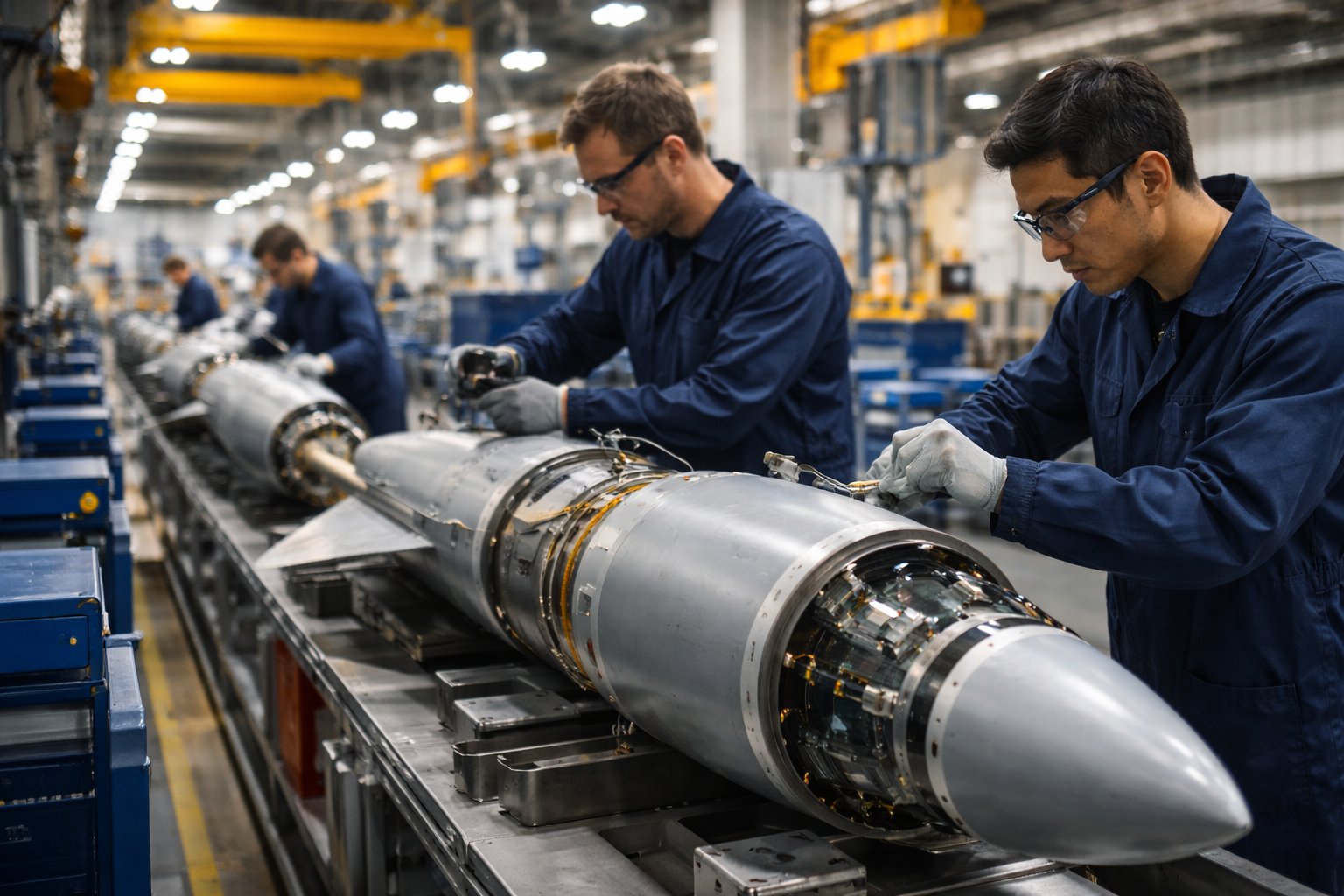
Manufacturing sits prominently in the programme. Lockheed Martin says MPDS is intended to reduce non-recurring engineering, streamline assembly, integration, and testing, and use greater automation to cut labour hours. Those objectives reflect a shift in hypersonic development from demonstrating that high-speed weapons can fly towards proving they can be produced repeatedly and at economically useful rates.
That transition is difficult because hypersonic systems can depend on specialised thermal materials, complex structures, exacting tolerances, advanced propulsion, and inspection processes originally developed around relatively small development quantities. A manufacturing approach that produces a handful of test vehicles successfully may be unsuitable when customers want operational inventories.
Common architecture can reduce some of that pressure. If several mission variants share the same missile body, tooling, manufacturing processes, supplier base, workforce training, inspection methods, and test equipment can be reused. The production system gains repetition rather than starting again each time the payload changes.
There are limits to that commonality. A missile designed primarily for long-range strike may not naturally provide the manoeuvrability or terminal-control characteristics required for missile defence. Larger payloads alter mass fractions, while different seekers and effectors may impose completely different requirements on power, cooling, communications, and internal space.
The technical value of MPDS will therefore depend on how much of the vehicle remains genuinely common once those different missions move beyond conceptual diagrams. A family of systems with a shared name but substantially different structures, propulsion, control systems, and production lines would deliver much less industrial benefit than the modular model implies.
Lockheed Martin is attempting to address that issue by developing the product architecture and manufacturing architecture together. Digital engineering, qualified designs, automation, standard interfaces, and streamlined test are intended to reduce the time between introducing a new payload and reaching useful production.
The timing reflects wider US pressure to increase munitions output while accelerating new technologies into service. Hypersonic programmes have historically been judged through individual flight-test successes because stable flight at extreme speed was itself a significant technical hurdle. As that knowledge base grows, cost, production rate, reliability, and the ability to integrate new payloads quickly become harder measures of industrial maturity.
MPDS is an attempt to move that maturity upstream into the architecture. Rather than designing another bespoke missile around every mission, Lockheed Martin wants a repeatable vehicle and production baseline onto which new payloads can be added with less engineering disruption.
The company still has to prove that its modular interfaces can tolerate the differences between strike and defensive missions without eroding the advantages of commonality. If they can, the benefit will be less dramatic than another hypersonic speed milestone but potentially more consequential for production: fewer unique designs, shorter integration cycles, and a manufacturing system able to turn new payload requirements into deliverable weapons more quickly.