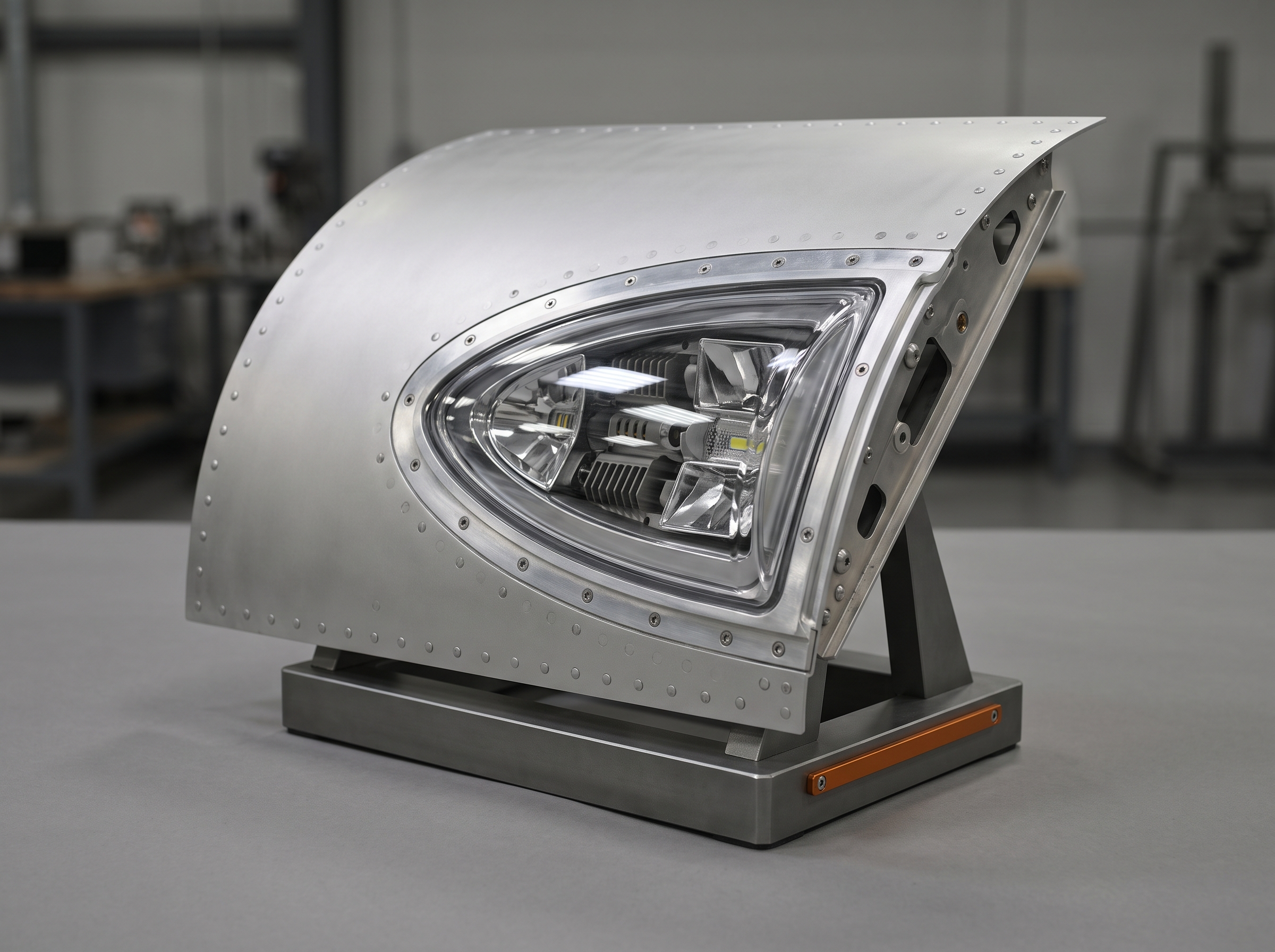
IN Brief:
- Kodiak completed its first integrated live-fire using a Reduced-Range Practice Rocket.
- Each container can accommodate up to 12 GMLRS-family rockets.
- Lockheed Martin is developing containerised offensive and defensive launch options around more flexible deployment architectures.
Lockheed Martin has completed the first integrated live-fire test of its Kodiak containerised launcher, firing a Reduced-Range Practice Rocket to demonstrate an offensive-fires architecture intended for deployment across air, land, and maritime platforms. The 12 August test moves Kodiak beyond launcher development and handling work into live firing, while leaving qualification, customer adoption, and platform-specific integration as the more demanding stages ahead.
The demonstration used a Reduced-Range Practice Rocket, or RRPR, which is employed by HIMARS and M270A2 Multiple Launch Rocket System crews for live-fire training. Using an established training round allowed Lockheed Martin to exercise the loading, fire-control, and launch sequence without consuming an operational GMLRS round, providing a controlled first test of the containerised system as an integrated launcher.
Lockheed Martin said the system completed its mission requirements on the first attempt and that the live-fire milestone was achieved within six months. The company has not disclosed the test location, a launch customer, a procurement quantity, or a fielding timetable, so the firing should be treated as a development milestone rather than evidence of an operational system entering service.
Kodiak is designed to accommodate up to 12 GMLRS-family rockets in a single container. The proposition therefore relies less on introducing another missile than on changing how an established family of precision fires can be transported, concealed, positioned, and brought into action. A container that can move through existing logistics systems and operate from several types of host platform potentially widens the number of places from which a force can generate missile fires.
That flexibility comes with an engineering bill. A rocket launcher has to manage structural loads, exhaust, blast, electrical power, fire-control connections, communications, environmental protection, ammunition handling, and safe separation. Packaging those functions inside a container can make the launcher more modular, but it does not make the platform carrying the container irrelevant.
A land vehicle, ship, or other carrier will expose the launcher to different vibration, stability, corrosion, power, and safety conditions. Each configuration therefore needs a convincing technical case before the same container can move between platforms as easily as the concept suggests. Container dimensions may be standard; launcher certification rarely is.
Kodiak follows earlier Lockheed Martin work around its GRIZZLY containerised launcher, which the company has used to explore defensive fires. By developing offensive and defensive systems around comparable container concepts, Lockheed Martin is trying to make deployment architecture itself part of the capability rather than tying every weapon to a recognisable purpose-built launcher vehicle.
There is an operational logic behind that approach. Dedicated launcher vehicles are valuable but finite assets, and their appearance, movement, and support arrangements can make them easier to identify. A containerised launcher could complicate surveillance and targeting by allowing firing units to make greater use of common transport infrastructure and more dispersed operating locations.
The term low-observable nevertheless deserves restraint. Lockheed Martin describes containerisation as offering a lower-observable weapon option, but the public announcement does not provide a quantified signature assessment. Concealment will depend on the complete operating pattern, including communications, supporting vehicles, ammunition movements, thermal output, launch preparation, and what happens after a rocket leaves the container rather than the shape of the launcher alone.
The relationship with GMLRS gives Kodiak an advantage over programmes trying to mature a new launcher and a new munition simultaneously. RRPR is already part of the MLRS training ecosystem, while GMLRS has an established production and support base. The launcher programme can therefore concentrate more heavily on container design, interfaces, fire control, transportability, and host-platform integration.
That does not guarantee a straightforward route into service. Acquisition authorities will still need evidence that loading procedures, safety systems, software, communications, maintenance, environmental protection, and repeated firing can be managed reliably. If Kodiak is intended genuinely to operate across air, land, and sea, those requirements become a family of integration problems rather than one launcher qualification campaign.
The first live-fire settles one useful question: the container can load and launch the RRPR as an integrated system. It does not yet establish operational qualification or prove that the architecture can move between host platforms without extensive bespoke engineering.
That distinction will define Kodiak’s next phase. Containerised launchers are attractive because they promise flexibility, distributed firepower, and simpler transport, but those advantages survive only if the interfaces remain sufficiently common once safety cases and platform-specific requirements are imposed. Repeated firings and integration trials will show whether Kodiak becomes a genuinely portable launcher architecture or another capable system whose flexibility narrows as qualification work accumulates.