IN Brief:
- The GEK800 turbofan has received the US military designation F143-ZZ-100.
- The US Air Force has awarded an engineering, manufacturing, and development contract for a second-source JASSM engine.
- The programme has completed more than 50 ground starts and altitude testing during technology maturation.
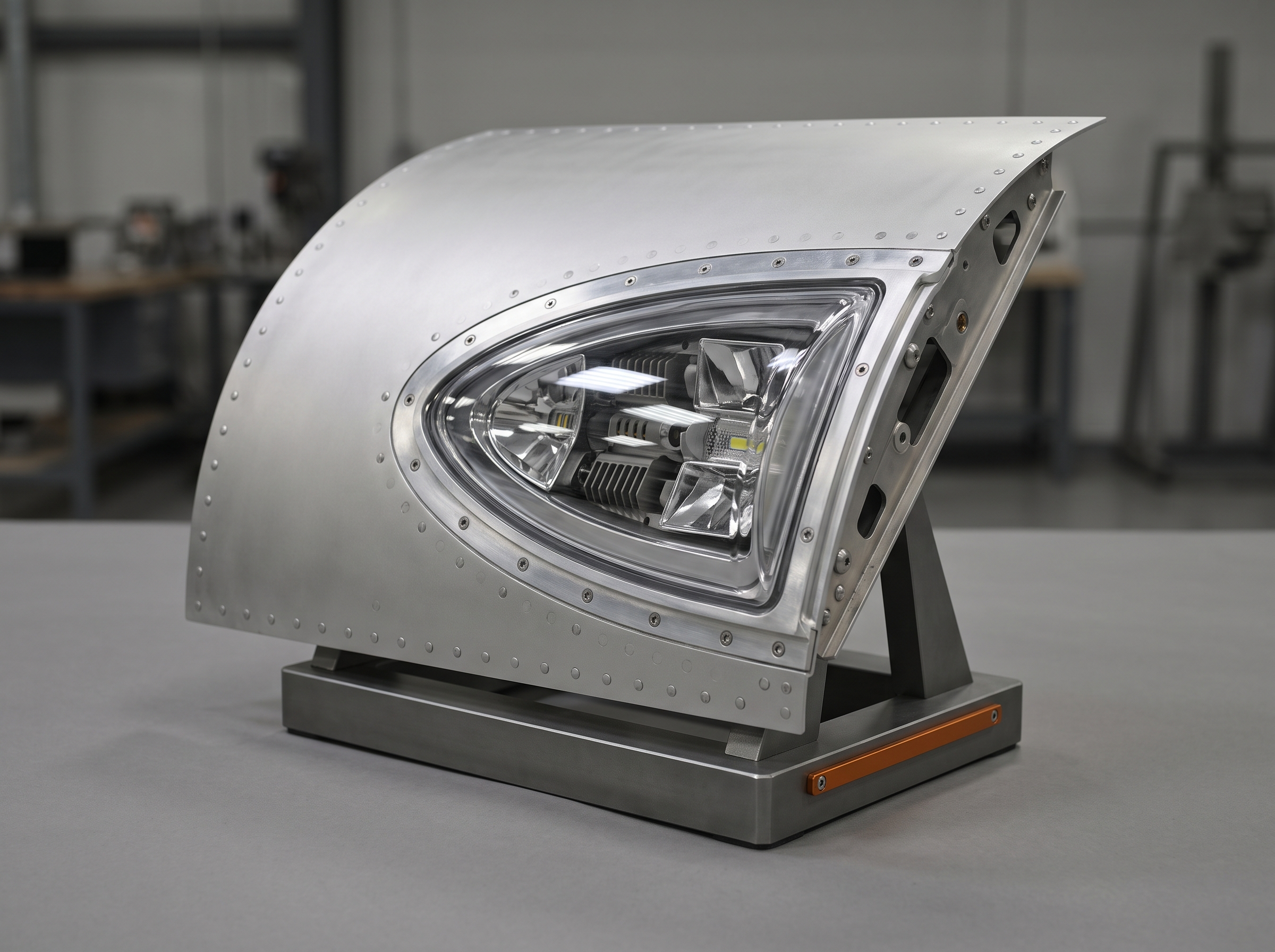
Kratos Defense & Security Solutions and GE Aerospace have moved their GEK800 small turbofan into engineering, manufacturing, and development for the US Air Force after its selection as a second-source propulsion system for the Joint Air-to-Surface Standoff Missile.
The 800lb-thrust engine has received the US military designation F143-ZZ-100, marking a transition from technology maturation into a formal development programme tied to an operational missile family. The current award covers engineering, manufacturing, and development rather than full-rate production, leaving qualification and production decisions to later programme stages.
Kratos and GE Aerospace began work on the engine together in 2023, combining internal investment with Air Force Research Laboratory support. The programme subsequently completed more than 50 engine starts during ground testing at company facilities and conducted altitude testing at Purdue University’s Maurice J. Zucrow Laboratories in 2025.
The development addresses a propulsion market that is changing as militaries seek larger inventories of cruise missiles and uncrewed aircraft. Small turbine engines for those applications face a different set of requirements from propulsion designed for crewed combat aircraft: they need sufficient thrust and reliability, but their cost, production rate, size, and manufacturing complexity can matter as much as very long service life.
A cruise-missile engine may operate for only one mission, yet it still has to start reliably after storage, tolerate handling and launch conditions, maintain combustion across altitude and temperature changes, and deliver predictable thrust throughout the weapon’s flight envelope. A cheaper or shorter-life engine therefore cannot simply accept uncontrolled variation in manufacturing.
The F143’s significance within JASSM lies partly in its second-source role. An additional qualified propulsion system can reduce reliance on a single production chain and potentially create more manufacturing headroom if missile demand rises beyond the capacity available from the incumbent supply base.
Second sourcing is not as simple as installing another engine with a similar thrust rating. The alternative unit has to meet the missile’s physical envelope, mass properties, fuel requirements, electrical and control interfaces, inlet conditions, thermal constraints, vibration environment, and mission-performance requirements.
Those integration demands explain the importance of the EMD phase. Technology-maturation testing can demonstrate that an engine runs and meets selected performance objectives, while engineering and manufacturing development has to produce a configuration that is stable enough for qualification, integration, and repeatable manufacture.
That last point is central to the programme’s industrial case. Kratos and GE have described the GEK800 family around low cost and rapid manufacture in larger quantities, reflecting a wider US effort to increase the number of small military jet engines available for missiles, drones, and other uncrewed systems.
Increasing engine output requires more than a scalable core design. Turbine machinery depends on precision components, high-temperature materials, bearings, fuel systems, castings or forgings, machining, balancing, controls, inspection, and test equipment. Any one constrained process can limit the number of complete engines leaving the production line.
GE Aerospace contributes a large established military propulsion engineering and manufacturing base, while Kratos has focused heavily on lower-cost propulsion and uncrewed systems. The partnership combines those different industrial models in an engine intended for weapons where the customer’s demand could ultimately be measured in substantially larger quantities than many traditional military engine programmes.
The companies are also positioning the underlying propulsion technology for applications beyond JASSM, including other cruise missiles and uncrewed aircraft. Those markets may benefit from common design and manufacturing investment, but they remain prospective applications rather than additional production awards under the current contract.
For JASSM, the confirmed step is narrower and more concrete: the F143 has been selected for EMD as a second-source engine. That creates a route into an established missile programme while providing the Air Force with an opportunity to test whether an additional supplier can meet performance, integration, and production requirements.
The more-than-50 ground starts provide maturity data before formal development, while altitude testing is particularly relevant because turbine performance changes with inlet temperature, pressure, and air density. Successful operation on the ground does not by itself demonstrate that the engine will behave correctly across the missile’s complete altitude and speed envelope.
EMD will therefore have to close the gap between a promising tested engine and a production-ready propulsion system. That includes finalising the design baseline, validating manufacturing processes, completing integration work, and demonstrating that successive engines can be produced with sufficiently consistent performance.
If the programme progresses successfully, the Air Force will gain another propulsion source for JASSM and the Kratos-GE partnership will establish a qualified small-turbofan manufacturing base with potential application beyond one missile. The current milestone is important precisely because it begins that formal engineering process rather than pretending the production problem has already been solved.