IN Brief:
- QZS-7 carried the second US Space Force space-domain-awareness hosted payload into orbit.
- The mission completes the two-payload QZSS Hosted Payload programme agreed by Japan and the United States.
- Mission Delta 2 will operate the sensor and feed surveillance data into the wider US Space Surveillance Network.
The United States and Japan have completed the second deployment in their bilateral QZSS Hosted Payload programme, placing a US Space Force space-domain-awareness sensor aboard Japan’s Quasi-Zenith Satellite 7.
QZS-7 launched on a Japanese H3 vehicle from the Tanegashima Space Center on 10 August. The US Space Force subsequently confirmed successful deployment of the second hosted payload, completing the programme’s planned two-sensor architecture.
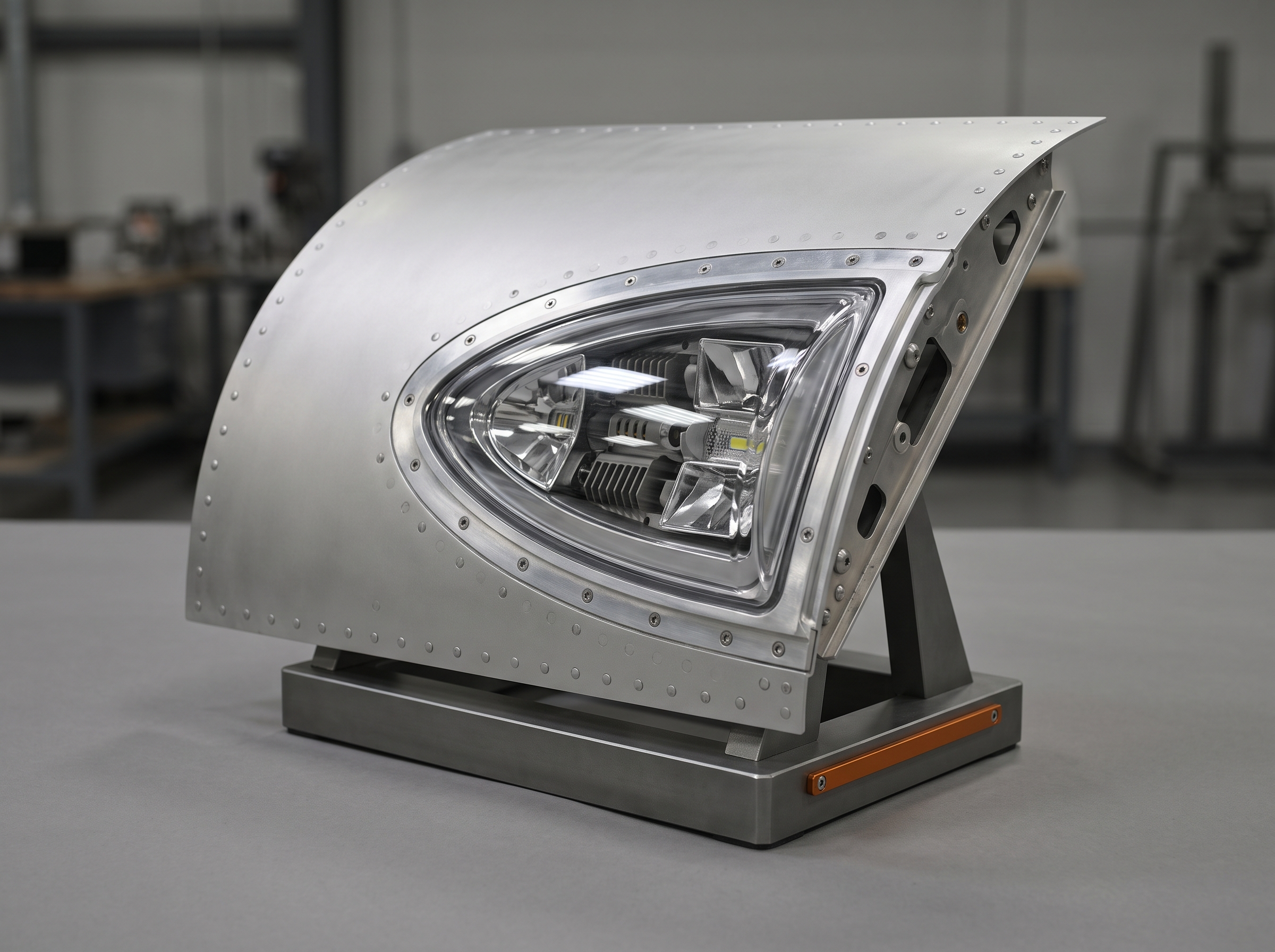
United States Space Force says Combat Forces Command’s Mission Delta 2 will operate the sensor and provide near-real-time information to the wider Space Surveillance Network. MIT Lincoln Laboratory designed and built the payload, which was integrated and tested alongside its Japanese host satellite before launch.
The programme originated from a 2020 US-Japan agreement. Its first payload launched aboard QZS-6 in February 2025, giving the United States a paired space-domain-awareness capability hosted on Japanese navigation satellites rather than on dedicated US spacecraft.
Hosted payloads offer an attractive acquisition route because they allow a customer to place a sensor or communications package on a spacecraft already being developed for another mission. That can avoid the cost of procuring a complete satellite bus and dedicated launch, although the payload must accept limits imposed by the host spacecraft.
Power, thermal control, pointing, communications, mass, schedule, and orbital design are all determined partly by the host platform. A defence payload therefore has to be engineered around another programme’s primary mission rather than optimised independently.
Those interface requirements make integration one of the most demanding parts of the QZSS programme. A payload developed by a US laboratory has to function within a Japanese satellite architecture, survive launch on a Japanese rocket, and operate without interfering with the spacecraft’s navigation role.
Testing consequently extends beyond proving that the sensor itself operates. Engineers must validate electrical interfaces, data exchange, electromagnetic compatibility, thermal behaviour, mechanical loading, software interaction, security boundaries, and operating procedures across organisations working under different national rules.
The completed deployment provides another space-domain-awareness observation point for a region where the number and complexity of military, civil, and commercial spacecraft continue to grow. Space-domain awareness involves detecting, tracking, characterising, and maintaining custody of objects in orbit so operators can distinguish routine movement from potentially threatening or anomalous behaviour.
Geosynchronous orbit is particularly important because it hosts communications, missile-warning, and other strategic spacecraft positioned roughly above the same part of Earth. Objects at that altitude are considerably more distant than low-Earth-orbit satellites, making persistent observation and accurate characterisation technically demanding.
The Indo-Pacific position of the Japanese host constellation gives the sensor useful geometry for observing parts of the geosynchronous belt. The Space Force intends to feed its data into a wider surveillance architecture, meaning the payload will operate as one sensor in a network rather than as a standalone bilateral capability.
The programme also represents a deeper form of allied space integration. Defence cooperation on terrestrial systems often centres on compatible equipment, joint exercises, or shared communications standards. A hosted national-security payload requires one country to accept another’s sensor physically within its satellite programme.
That creates dependencies in schedule, technical information, launch planning, operations, and long-term support. If the host spacecraft changes, the payload programme may have to change with it; if a launch is delayed, both national missions move together.
For Japan, the arrangement adds a security dimension to the QZSS architecture while preserving its core positioning and navigation functions. For the United States, it provides additional orbital capacity and regional geometry without procuring another dedicated satellite bus.
The model may become increasingly relevant as military space organisations seek to distribute sensors across more platforms. Dedicated national-security spacecraft will remain necessary where missions demand specialised or highly classified configurations, but hosted payloads can provide supplementary coverage more quickly where allied or commercial buses are compatible.
The trade-off is reduced independence. Payload developers must align with another programme’s technical limits and launch timetable, while bilateral missions create additional requirements around protected data, command authority, anomaly resolution, and long-term configuration control.
With the second payload now deployed, the programme’s engineering emphasis shifts from integration and launch towards commissioning and sustained operation. Mission Delta 2 must establish sensor performance, maintain calibration, manage data delivery, and integrate observations with other surveillance sources.
The programme will ultimately be judged by the persistence and quality of the information it contributes to the wider Space Surveillance Network. Completing the second launch closes the hardware-deployment phase; the operational test is whether allied-hosted sensors can deliver sufficiently reliable data to justify the additional complexity of placing national-security capability aboard another country’s spacecraft.