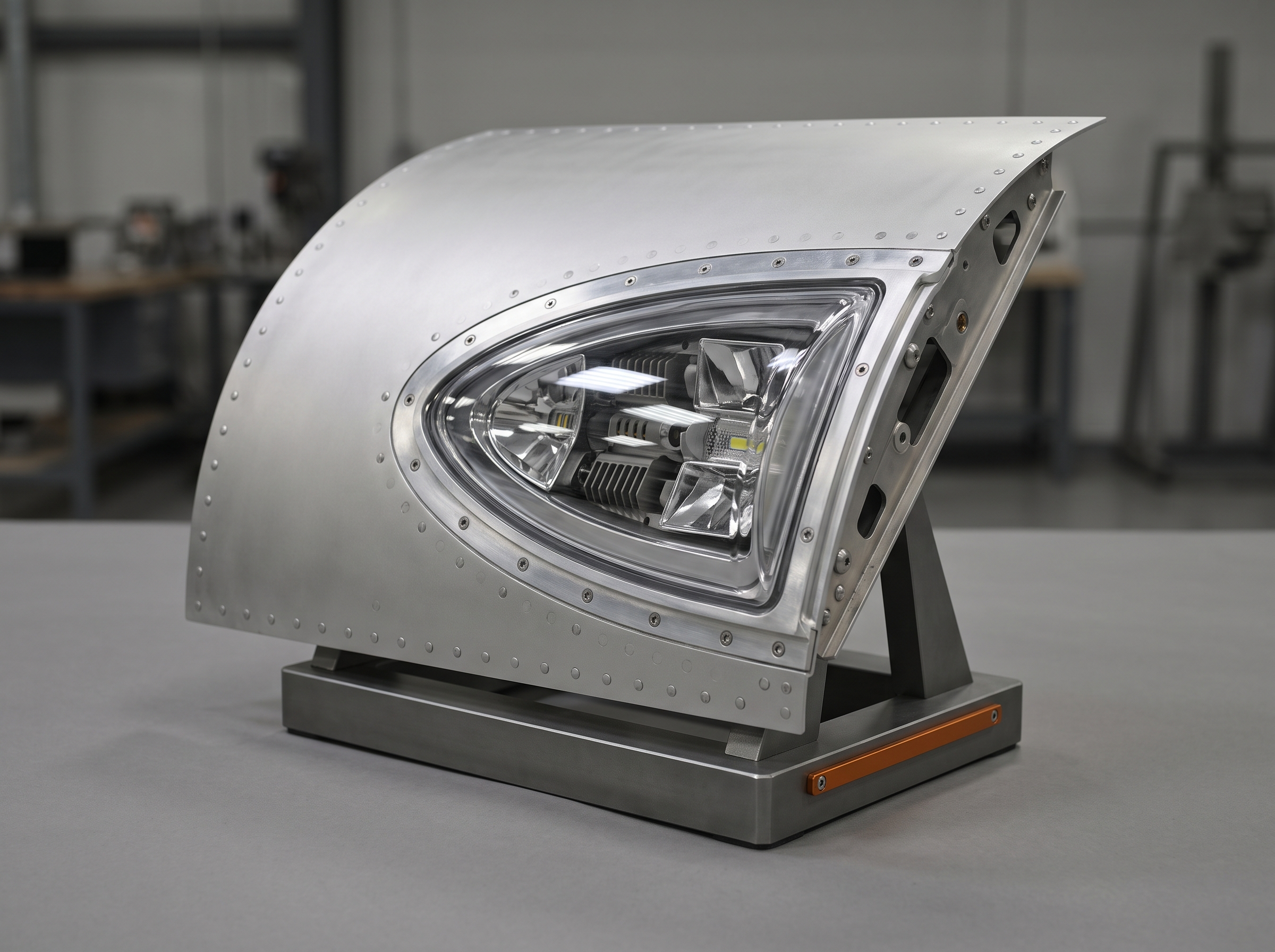
IN Brief:
- Kratos has allocated TDI-J85 Spartan engine capacity to Boeing's JDAM Long Range production programme.
- The engines are manufactured at the company's 22,500 sq ft propulsion facility in Auburn Hills, Michigan.
- Long-lead components are already being procured for a larger multi-customer Spartan production run in 2027.
Kratos Defense & Security Solutions is allocating expanded TDI-J85 Spartan engine production capacity to Boeing’s Joint Direct Attack Munition Long Range programme as work begins to turn the powered weapon into a repeatable production system. Kratos has already started buying long-lead components for a larger multi-customer Spartan engine run planned for 2027, with JDAM LR identified as one of its key applications.
The US Air Force awarded Boeing a $75 million Undefinitized Contract Action during August to acquire the BSU-111/B Payload Delivery Unit for JDAM LR. Kratos says its J85 has been selected as the propulsion source for the weapon, which is intended to travel more than 300 nautical miles while carrying a 500lb-class payload.
Production will draw on Kratos’ 22,500 sq ft propulsion manufacturing facility in Auburn Hills, Michigan. The company describes the site as fully operational and configured for sustained full-rate production, while a separate three-phase infrastructure programme is intended to expand manufacturing capacity further as demand develops.
Those investments are important because a powered JDAM changes the industrial requirements behind an otherwise familiar weapon family. Boeing retains the established JDAM guidance architecture and aircraft interface while adding a wing kit and compact turbine engine, allowing existing elements of the production and integration base to be carried forward rather than starting with an entirely new missile.
The propulsion system nevertheless brings requirements that a conventional glide weapon does not have. A compact turbojet has to start reliably after carriage and release, operate across the required altitude and temperature envelope, provide predictable thrust, and remain within strict limits on weight, diameter, fuel consumption, and cost. It also has to be inexpensive enough to manufacture in quantities appropriate for an expendable munition.
That combination places unusual pressure on the engine supply chain. Components that would be relatively minor in a reusable aircraft engine programme can become production constraints when demand moves into hundreds or thousands of expendable systems. Bearings, cast or machined parts, fuel-system equipment, controls, specialised materials, inspection processes, and test capacity all have to scale with final assembly.
Kratos’ decision to order long-lead material ahead of the wider 2027 production run reflects that reality. Extra floor space or assembly stations provide little benefit if a small group of constrained components still determines how many finished engines can leave the plant. Early procurement gives suppliers more time to increase output and allows the engine maker to build inventory before final demand peaks.
The company has not disclosed the number of J85 engines included in Boeing’s initial production requirement, nor has it published a specific annual rate for the JDAM LR programme. The 2027 run will support several customers and applications, so the disclosed capacity should not be read as a JDAM-only production allocation.
Economies of scale are part of the attraction. A larger common production run can spread tooling, procurement, test, and overhead costs across more engines, while reducing the risk that one relatively small customer programme has to carry the entire cost of maintaining a propulsion line. The approach works best where several applications can use sufficiently common engine hardware without creating a proliferation of bespoke variants.
Kratos is developing that wider small-turbine base across several programmes. Earlier this month, its joint GE Aerospace GEK800 programme entered engineering and manufacturing development for JASSM after receiving the US military designation F143-ZZ-100. That F143 programme is technically separate from the J85 and JDAM LR, but both address the same industrial pressure: the US defence sector needs more production depth in compact propulsion for missiles and uncrewed systems.
Increasing the number of engine designs is not enough on its own. Each additional propulsion source still has to demonstrate manufacturing consistency, establish qualified suppliers, maintain test throughput, and support configuration control as components or processes change. For an expendable engine, affordability cannot come at the expense of reliable ignition or predictable thrust because a unit that fails after weapon release has no second mission in which to make amends.
Manufacturing quality also has to survive higher rates. Processes that work acceptably when experienced technicians build a limited number of units can become fragile once production accelerates, particularly if knowledge is held informally rather than captured in tooling, work instructions, inspection criteria, and automated test. Kratos’ shift from development towards higher-rate manufacture will therefore depend on production engineering as much as on the J85’s underlying design.
The Undefinitized Contract Action means Boeing’s initial agreement still requires contractual details to be settled, and neither Boeing nor Kratos has published the longer-term procurement profile. The current work is nonetheless more concrete than a propulsion demonstration: Boeing has an initial production action, Kratos has been selected as the engine source, and long-lead material is entering the supply chain.
The next indicators will be quantities, engine delivery rates, acceptance performance, and subsequent JDAM LR production lots. Kratos has positioned Auburn Hills to produce at greater scale before those numbers are public. If the weapon moves into sustained procurement, the useful measure will be whether that early capacity investment prevents propulsion from becoming another bottleneck in a missile production chain already being asked to grow quickly.