IN Brief:
- Pratt & Whitney has received a not-to-exceed $240.8m modification for further F135 engineering work.
- The award moves Engine Core Upgrade activity from risk-reduction design review into engineering and manufacturing development.
- Work also covers engine maturity, operational readiness, and long-lead hardware for a spare development test engine.
Pratt & Whitney has received a not-to-exceed $240.8 million contract modification for further F135 engineering work, including the transition of the Engine Core Upgrade from risk-reduction design review into engineering and manufacturing development.
The award also adds non-recurring engineering to mature the existing F135, address operational issues, improve readiness, and procure long-lead hardware for a spare test engine. Work is scheduled to continue through March 2028.
Pratt & Whitney will perform 53% of the work at East Hartford, Connecticut, with the remainder distributed across Indianapolis, Middletown, West Palm Beach, Windsor Locks, North Berwick, Rockford, and Aguadilla.
The modification supports the US Air Force, Marine Corps, Navy, and F-35 cooperative programme partners. Funding at award includes fiscal 2025 US Air Force and Navy research, development, test, and evaluation money alongside partner contributions.
Engine Core Upgrade is intended to provide the additional power and thermal-management capacity required by Block 4 and later F-35 capabilities while retaining the existing F135 architecture. Pratt & Whitney is developing ECU as a fleet-wide retrofit compatible with all three F-35 variants.
That decision places demanding limits on the engineering programme. Additional electrical generation and cooling capacity affect the core’s thermal behaviour, durability, control system, component life, and operating margins, but the finished upgrade must remain compatible with an aircraft, propulsion system, and sustainment network already operating at global scale.
Pratt & Whitney says more than 1,300 F135 engines now power the F-35 fleet, which has exceeded one million accumulated engine flight hours. That operational history supplies a large body of data on component life, maintenance burden, reliability, and recurring issues that can feed directly into engineering decisions.
The latest contract explicitly combines that maturity work with ECU development. The programme therefore has to improve the currently fielded engine while simultaneously preparing a revised core for later aircraft configurations, avoiding a development path that improves future capability at the expense of present fleet availability.
Moving into engineering and manufacturing development changes the evidence expected from the upgrade. Components and design changes that have survived modelling and risk-reduction work must be translated into producible hardware, assembled into complete engines, and subjected to representative endurance, thermal, structural, and performance testing.
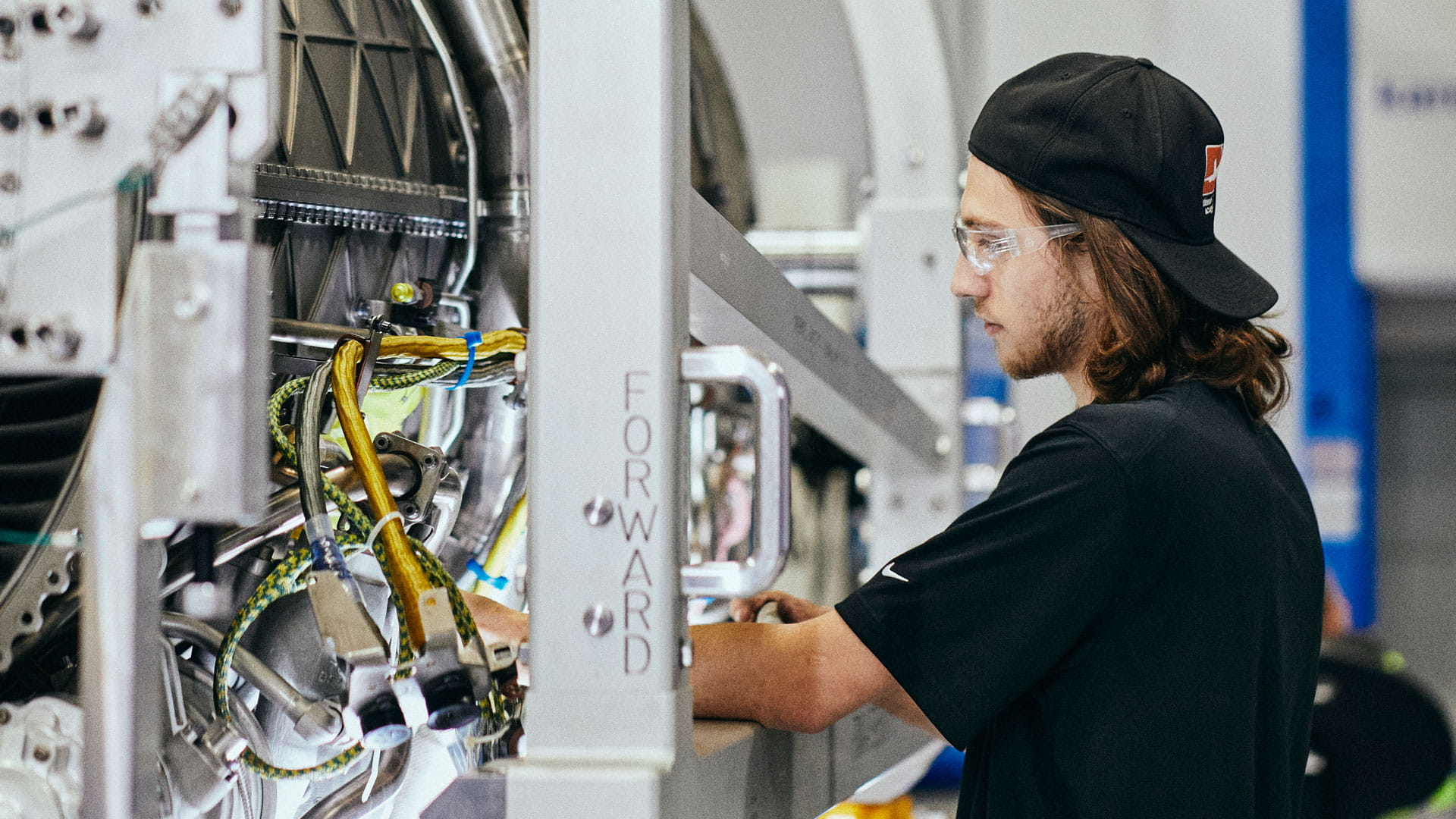
The long-lead hardware for a spare test engine is part of that transition. Propulsion testing consumes substantial hardware and test-cell time, particularly where durability limits and off-design conditions must be examined repeatedly, so castings, forgings, machined structures, and other components need to enter the manufacturing chain well before an assembled development engine is required.
Manufacturing development matters because technical performance alone is insufficient for a fleet retrofit. New parts must be made consistently in production quantities, with controlled processes, inspection routes, traceability, acceptable yields, and suppliers able to maintain delivery rates after development engineers move on to later tasks.
The existing F135 industrial base is one reason Pratt & Whitney has emphasised compatibility with the current architecture. Reusing established production and sustainment infrastructure can reduce the amount of new tooling, training, maintenance equipment, and depot infrastructure required compared with introducing an entirely separate propulsion system.
It does not remove qualification work. Any revised component that changes material, geometry, manufacturing process, or operating condition still needs evidence that it can meet the required life and safety margins, while software and engine-control changes have to remain synchronised with the hardware configuration installed in each aircraft.
Manufacturing methods within the F135 supply chain are also changing. GKN Aerospace has been developing an additive-manufacturing route for F135 hardware, showing how an established propulsion programme can adopt new production processes while retaining the qualification discipline demanded by flight-critical components.
The $240.8 million ceiling is therefore not a production order for completed upgraded engines. It funds the engineering work required to establish a configuration mature enough for later production and retrofit decisions while keeping current F135 readiness issues inside the same wider programme.
Pratt & Whitney has previously said ECU is intended to enable Block 4 requirements from the end of the decade. The March 2028 completion date for the latest modification leaves little room for engineering and manufacturing problems to remain unresolved if the upgraded core is to enter subsequent qualification and production activity on that schedule.
The next two years will be dominated less by headline performance claims than by test hours, component life, manufacturing repeatability, and configuration control. Those are the points at which an engine upgrade stops being a design proposal and begins to resemble something that can be installed across a fleet measured in more than a thousand engines.