IN Brief:
- NEC and Mitsubishi Heavy Industries have signed an MOU covering operational planning, command and control, and unmanned systems.
- The partnership combines digital, platform, cloud, data, and AI capabilities within Japan’s defence industrial base.
- Japan’s FY2026 budget allocates about ¥100.1 billion to establish its SHIELD unmanned-defence architecture by FY2027.
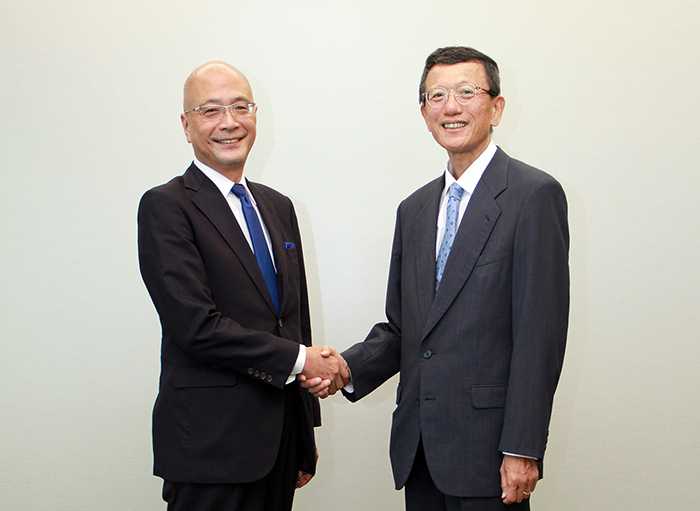
NEC Corporation and Mitsubishi Heavy Industries have signed a memorandum of understanding for a strategic defence partnership covering operational planning, command and control, unmanned assets, and the infrastructure required to maintain sovereign control over defence data and artificial intelligence.
The agreement brings together two of Japan’s largest technology and industrial groups as the country expands investment in unmanned systems, artificial intelligence, and faster defence-equipment improvement cycles. NEC and Mitsubishi Heavy Industries said the partnership will strengthen collaboration around new command-and-control systems and the integration of defence equipment with cloud operations and AI.
No procurement award, contract value, delivery schedule, or named platform has been announced under the MOU. It establishes a framework for combining the companies’ technology and domain expertise as Japan develops increasingly connected defence systems rather than committing either business to a defined production programme.
Command and control is becoming progressively harder to separate from the platforms, sensors, and unmanned systems it coordinates. An uncrewed aircraft, surface vessel, or ground system still requires reliable communications, tasking, identification, and integration into a wider operational picture. AI-supported functions carry the same dependency on trusted data, secure processing, and interfaces that allow information to move between sensors, headquarters, and effectors.
Japan’s Ministry of Defense has already established a substantial unmanned-systems funding line. Its FY2026 budget allocates approximately ¥100.1 billion to establish SHIELD — Synchronized, Hybrid, Integrated and Enhanced Littoral Defense — using combinations of UAVs, uncrewed surface vessels, and uncrewed underwater vehicles. The ministry is aiming to establish the architecture in FY2027.
The NEC-MHI partnership addresses several of the technical layers that such an architecture will require, although neither company has said that the MOU forms part of a specific SHIELD procurement. Their stated areas of collaboration include operational planning, command and control, unmanned assets, cloud integration, data sovereignty, and AI sovereignty.
Those functions determine whether separate unmanned platforms can operate as a coherent force rather than as isolated systems. Sensors need to feed information into a common picture, command software must turn that information into tasking, and communications links have to continue moving data as platforms cross between different operating areas and network conditions.
Japan’s defence policy is also placing greater weight on the production and technology base that supports those capabilities. Government material identifies unmanned assets, artificial intelligence, command-and-control functions, and cross-domain operations among the areas being strengthened, while domestic industry is expected to shorten equipment improvement cycles without surrendering control of sensitive data or integration expertise.
NEC brings communications, computing, security, and information-system capability to the partnership, while Mitsubishi Heavy Industries contributes experience as a major aerospace, missile, naval, and defence-platform manufacturer. Their collaboration therefore sits at the point where platform engineering increasingly meets software, cloud infrastructure, and data architecture.
Data and AI sovereignty have practical engineering consequences in this environment. Defence organisations can become dependent on software frameworks, external processing infrastructure, training data, or suppliers whose technology sits several layers away from the physical platform. Maintaining trusted national arrangements for critical processing and system integration can therefore affect operational resilience as directly as the choice of a sensor or communications terminal.
Integrating defence equipment with cloud operations also creates difficult configuration and assurance problems. Software can be updated much faster than a ship, vehicle, or aircraft can be replaced, but frequent changes have to remain compatible with security accreditation, communications protocols, sensor interfaces, and the behaviour expected by operators. A command system that evolves quickly but fragments into incompatible versions creates its own operational risk.
SHIELD gives some indication of the scale of the integration task Japan is preparing to address. The planned architecture is based on combining large numbers of comparatively inexpensive UAVs, USVs, and UUVs rather than fielding one autonomous platform type. That demands common methods for tasking, data exchange, communications, and software management across several domains.
The MOU does not define those standards or guarantee either company a future programme. Its immediate significance is organisational: two companies with complementary digital and platform capabilities are establishing a structure through which they can jointly pursue the command, control, and integration layer of Japan’s expanding unmanned and AI-enabled defence programmes.