IN Brief:
- Patria has completed the first F135 engine assembled at its Linnavuori facility in Nokia, Finland.
- Engine production is planned through 2030 before the site moves increasingly into maintenance, repair, overhaul, and lifecycle support.
- The domestic propulsion capability is intended to strengthen Finland's F-35 security of supply while remaining part of the multinational F135 support system.
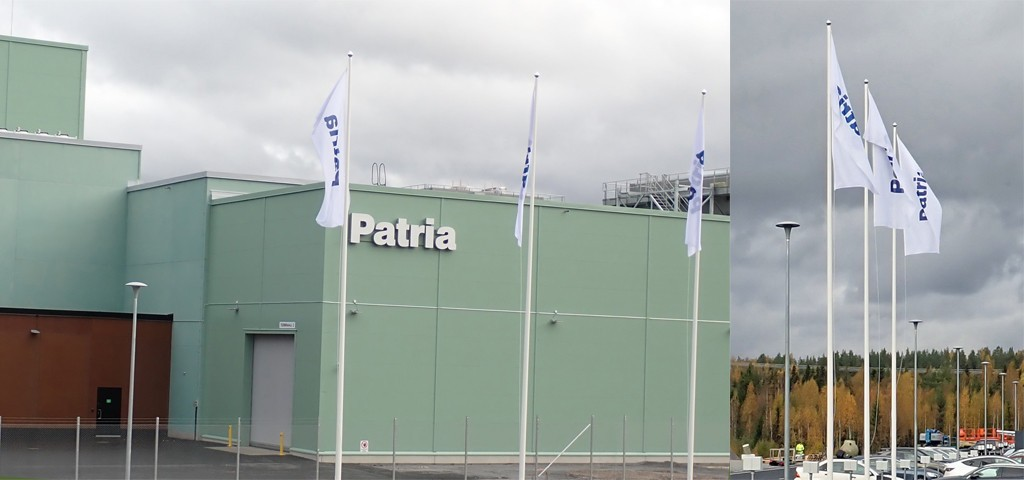
Patria has completed the first F135 fighter engine assembled in Finland at its Linnavuori facility in Nokia, establishing domestic production capability ahead of the arrival of Finland’s first F-35A aircraft at Lapland Air Wing. Engine assembly is planned to continue through 2030 before the site assumes a growing maintenance, repair, and overhaul role.
Patria and Pratt & Whitney agreed in February 2026 on final assembly of the first Finnish F135 engines. The work forms part of the industrial participation and security-of-supply structure attached to Finland’s F-35 programme rather than a separate propulsion acquisition.
The Linnavuori facility was completed in October 2025 and transferred to Patria by Defence Properties Finland. It was built to F-35 and Pratt & Whitney security and programme requirements, reflecting the controlled environment required for military propulsion work involving restricted technical data, specialised tooling, inspection, and traceable build processes.
Finland selected the F-35A in 2021 and authorised the procurement of 64 Block 4 aircraft together with weapons, training, and sustainment arrangements. Domestic industrial participation formed part of the procurement from the outset, making engine assembly one of the mechanisms through which Finland is retaining technical competence around a combat-air fleet expected to remain in service for decades.
Petri Hepola, Patria’s Chief Program Officer, F-35, said the company’s role “has now entered full-scale production”. Completion of the first engine confirms that enough tooling, training, process documentation, quality assurance, and technical support has been transferred for a complete propulsion unit to pass through the Finnish assembly operation.
Final assembly is only the opening phase of the site’s planned workload. Through-life propulsion support follows a different pattern, with engines returning according to flying hours, scheduled inspection, component life, and unscheduled faults. Maintenance and overhaul require stable access to approved repair data, parts, tooling, and specialist skills long after the initial production run has ended.
That requirement becomes more demanding as the F135 evolves. The wider F135 engineering programme is advancing Engine Core Upgrade work intended to support later Block 4 power and thermal-management requirements. A sustainment site operating for several decades will consequently have to manage changing hardware configurations, updated repair instructions, revised inspection criteria, and new component standards alongside routine maintenance.
Linnavuori gives Finland a domestic base for that work while remaining connected to the wider F135 support structure. The distinction matters: national security of supply does not imply complete independence from Pratt & Whitney or the multinational parts network. It provides qualified in-country capacity for defined assembly and maintenance tasks within the programme’s approved technical framework.
Linking production and future overhaul at the same facility also reduces the risk of losing specialist capability once initial engine assembly ends. Technicians trained around controlled build records, calibrated tooling, cleanliness, inspection, and propulsion-system handling can transfer that knowledge into sustainment as the fleet accumulates flying hours.
Workload planning will still need careful management. Assembly demand will decline once Finland’s initial engine requirement is complete, while substantial overhaul demand will develop later as the operational fleet matures. Retaining specialist staff and infrastructure through that transition is one of the less visible challenges in turning an industrial-participation commitment into a durable national capability.
The first completed engine also provides an early measure of process transfer. A factory can be built relatively quickly; reproducing an established military-aerospace manufacturing process requires trained personnel, controlled technical data, audited quality systems, accepted tooling, and repeatable inspection. Completion of the first F135 shows those elements have reached a working baseline at Linnavuori.
Repeatability now becomes the relevant production measure. Patria must continue engine assembly through 2030 while maintaining configuration and quality standards, then shift the facility towards lifecycle support without losing the competence developed during production. Finland’s first domestically assembled F135 is therefore less an endpoint than the first physical proof of a sustainment model intended to remain useful long after the country’s last new F-35 has been delivered.