IN Brief:
- Greece and Italy have signed the implementing arrangement for the transfer of Carlo Bergamini and Virginio Fasan.
- The 6,500-tonne FREMM ships are scheduled to transfer in the first halves of 2028 and 2029 respectively.
- Greek industry will participate in maintenance and system adaptation, with Fincantieri retaining a through-life support role.
Greece and Italy have signed the implementing arrangement for the transfer of two Italian Navy FREMM frigates to the Hellenic Navy, establishing the legal, financial and technical framework for deliveries in 2028 and 2029.
The agreement covers Carlo Bergamini, F-590, and Virginio Fasan, F-591, both currently in Italian service. Fincantieri will support the transfer process and remain involved through the vessels’ lifecycle, including initial support, maintenance activity and the integration of new systems.
Carlo Bergamini is scheduled for transfer during the first half of 2028, with Virginio Fasan following in the first half of 2029. The arrangement also provides for Greek industrial participation in maintenance and system adaptation before and after the vessels enter service.
The signing in Rome follows a memorandum of cooperation and declaration of intent agreed in La Spezia in September 2025. That earlier framework established the political direction of the programme; the implementing arrangement now sets the terms required for acquisition, transfer and through-life support.
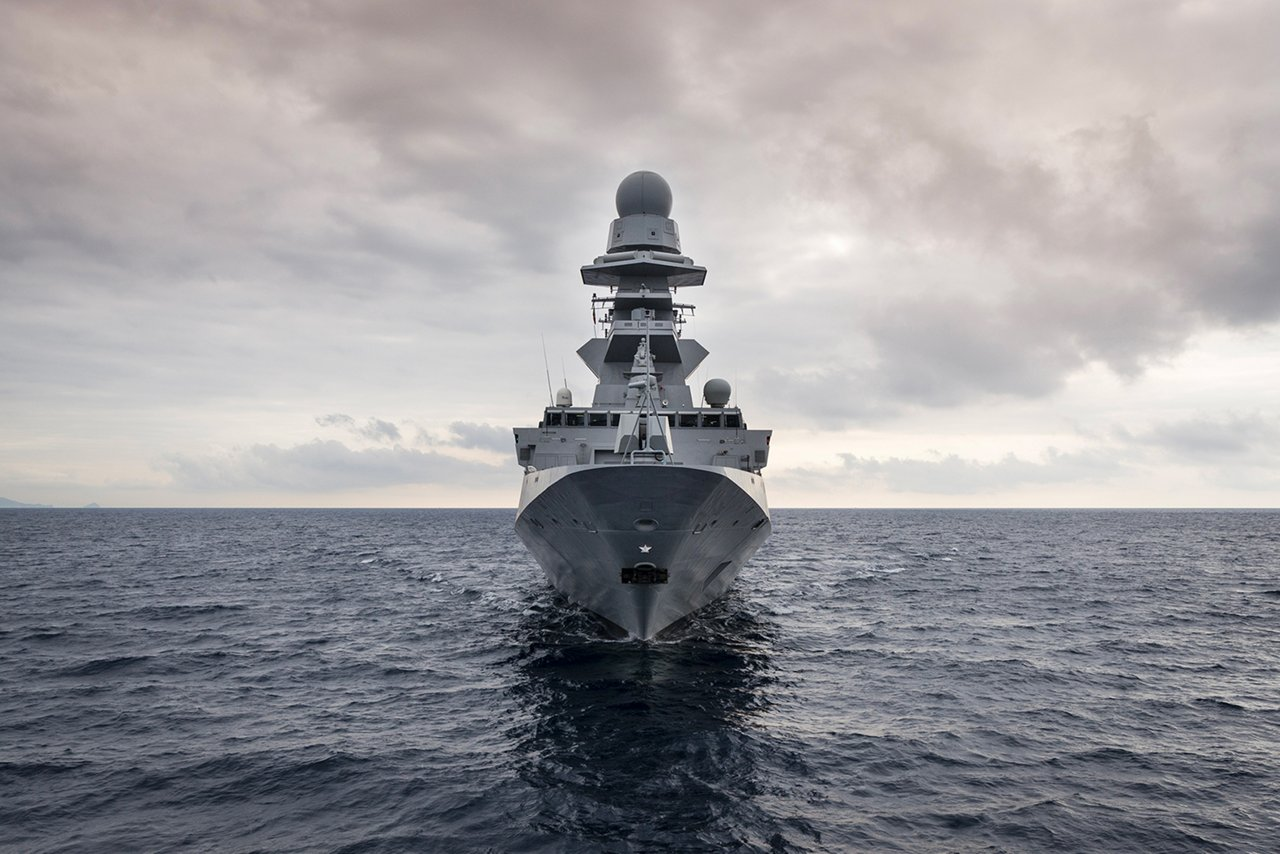
Both ships belong to the Bergamini class, Italy’s branch of the Franco-Italian FREMM programme. Fincantieri lists the class at about 144 metres long, with full-load displacement of roughly 6,500 tonnes, maximum speed above 27 knots, endurance of 45 days and a range of 6,000 nautical miles at 15 knots.
The design uses combined diesel-electric and gas-turbine propulsion and provides a flight deck with two helicopter hangars. Its combat-system baseline includes vertical-launch capacity, surface-to-surface missiles, radar, electronic warfare equipment, torpedo armament and aviation facilities.
The two vessels are related rather than identical. Carlo Bergamini is a general-purpose variant, while Virginio Fasan is configured for anti-submarine warfare, so Greece will inherit different mission emphases within a common hull, propulsion and support architecture.
That makes configuration management central to the transfer. Greece is acquiring mature ships, but communications, weapons, combat-management interfaces, cryptographic equipment and support systems may still require adaptation to fit Hellenic Navy standards and existing logistics.
Fincantieri’s continuing role reduces the risk of treating the transaction as a simple hull sale. Training, spares, software baselines, maintenance documentation, test equipment and qualified supplier access all influence whether a transferred warship can sustain availability once it changes operator.
The agreement explicitly covers initial and long-term support, while Greek industry is expected to participate in maintenance and the integration of new systems. That gives domestic shipyards and subsystem suppliers a route into the platform before the first handover rather than leaving industrial participation to later offset negotiations.
Pierroberto Folgiero, chief executive officer and managing director of Fincantieri, said the transfer creates “new opportunities for industrial synergies” between the company and the Greek industrial ecosystem. The commercial value of that cooperation will depend on the work packages ultimately assigned in Greece, particularly around upgrade integration, maintenance and long-term support.
The acquisition sits within a broader Hellenic Navy recapitalisation programme that includes four FDI frigates and modernisation of the existing MEKO fleet. Adding two FREMMs increases available surface-combatant capacity, but it also adds another class to a fleet already managing different combat systems, support chains and training requirements.
Commonality within the FREMM family can ease some of that burden, particularly because the platform has a substantial European user and supplier base. The transferred ships nevertheless retain their own Italian configurations, and every national modification introduced before Greek service will have to be documented and supported for the remainder of the vessels’ lives.
For Italy, the timetable provides space to manage the withdrawal of two active frigates alongside its own fleet renewal. The ships remain in service until transfer, while Fincantieri retains an industrial role on both sides of the transaction through preparation, adaptation and support.
The arrangement also shows a different route to naval expansion from a conventional new-build programme. Transferring mature allied ships can shorten the period needed to add frontline hulls, but much of the engineering burden moves into refit planning, configuration control, certification, training and sustainment.
Those activities will determine how quickly the ships become useful after handover. A vessel can change flag on a scheduled date, but operational availability depends on crews, spares, shore support, software and maintenance arrangements being ready at the same time.
The first fixed milestone is the transfer of Carlo Bergamini in the first half of 2028. Before then, Italy, Greece and Fincantieri will have to turn the framework agreed in Rome into detailed work packages for ship preparation, Greek industrial participation and system integration, providing the clearest measure of how far the deal develops beyond the transfer of two existing hulls.