IN Brief:
- WireMasters will showcase VG-standard wire, cable, connectors, and harness components at DVD 2026 on 16–17 September.
- Its supply model combines stocked inventory with access to multiple approved manufacturers to reduce exposure to shortages and changing lead times.
- Increasing electrical content and uncrewed-system adoption are placing additional emphasis on qualified interconnect availability across defence programmes.
Military interconnect specialist WireMasters will use DVD 2026 to focus on the supply resilience behind military vehicle electrical systems, highlighting VG-standard wire, cable, connectors, and harness components as defence manufacturers face long procurement cycles and increasingly electronics-heavy platforms.
The company will exhibit at UTAC Millbrook on 16–17 September, where it plans to discuss component availability, approved-source diversity, and long-term support with defence manufacturers, systems integrators, and procurement teams. The event appearance is centred on an established product portfolio rather than the launch of a new component family.
WireMasters supplies VG-standard wire, cable, connectors, heat-shrink tubing, and other harness components used in defence electrical systems. The German military specifications provide controlled requirements intended to support compatibility and repeatable performance across equipment that may remain in production or service for extended periods.
For a vehicle manufacturer, those components sit below the level of the major systems that normally dominate procurement announcements, but they connect almost every electrical function on the platform. Sensors, communications equipment, power distribution, displays, computers, and other electronic subsystems depend on wiring and connectors being available in the correct specification when harnesses are manufactured.
That makes interconnect supply a configuration-management problem as much as a purchasing problem. A programme can identify an apparently similar replacement component during a shortage, but changing an established electrical interface may introduce additional engineering, documentation, testing, and approval work before the alternative can be accepted.
Long defence procurement cycles amplify the issue. Vehicle programmes can move from development through production and support over many years, creating demand for the same or compatible components long after the original harness architecture was designed. Suppliers consequently have to manage continuity against changing commercial manufacturing priorities and fluctuating component lead times.
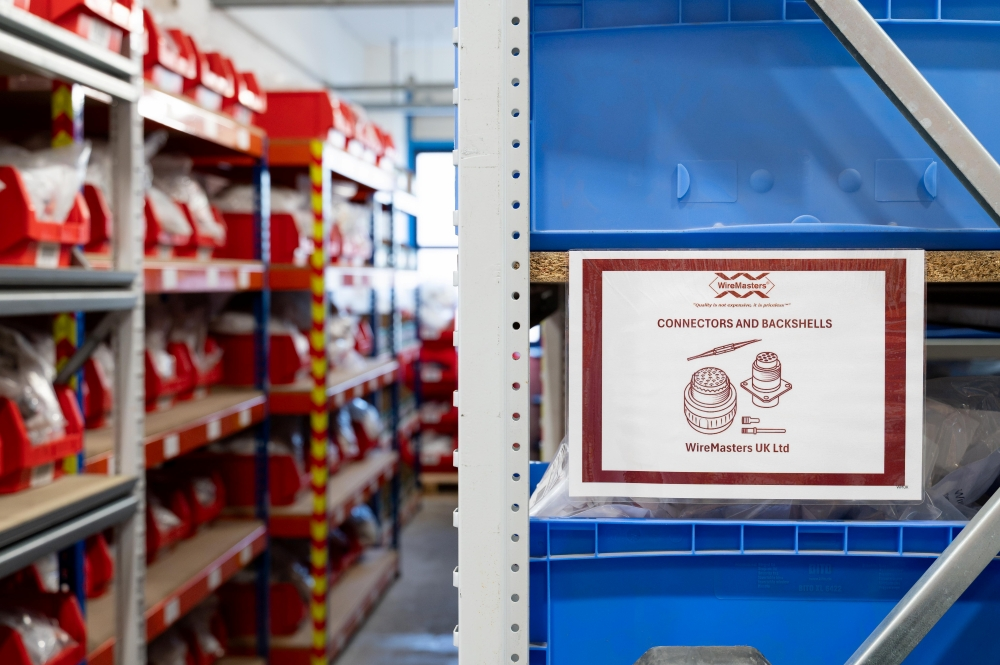
WireMasters says its response is to combine inventory with an established network of approved manufacturers. Maintaining access to several supply routes can give customers more flexibility when an individual manufacturer encounters a shortage, although defence qualification and programme requirements still determine whether a particular alternative can be used.
“Customers are looking for suppliers that can offer dependable stock availability, stable pricing and confidence that the components they need will be there when they are needed most,” said Darren Scott, sales executive at WireMasters. “By maintaining stock and working with multiple approved manufacturers, we’re helping customers build greater resilience into their supply chains.”
The issue is particularly relevant where a low-value component can interrupt production of a much more expensive assembly. A vehicle can have major mechanical structures, sensors, and electronic equipment available while still being held up because the specified parts needed to build or complete a wiring harness have not arrived.
Inventory therefore acts as a buffer, but stockholding alone is not a complete resilience strategy. Suppliers also need visibility of customer demand, manufacturer availability, specification changes, and procurement lead times if components are to be positioned before shortages affect an assembly line.
The company expects uncrewed systems to feature prominently in discussions at DVD. Those platforms can increase the importance of electrical connectivity because remote and autonomous operation depends heavily on sensors, communications, computing, and power distribution working together within a constrained vehicle architecture.
Greater electronic content means more interfaces have to remain reliable while the platform is exposed to vibration, movement, maintenance, and demanding operating conditions. The interconnect supply chain therefore has to support both the original manufacturing requirement and the replacement components needed through service.
That through-life requirement is particularly significant for military equipment because procurement does not end once the production contract is completed. Harnesses can be replaced during repairs and upgrades, electronic systems can be changed, and additional equipment may be integrated during the vehicle’s service life, creating recurring demand for compatible interconnect hardware.
Standardised components can make that work easier by providing known interfaces and performance requirements, but standardisation only provides an operational advantage if conforming products remain available. A technically interchangeable part that cannot be sourced within the programme schedule solves little.
DVD gives WireMasters access to the vehicle manufacturers and integrators responsible for managing those trade-offs at platform level. The exhibition is dominated by complete land systems and major subsystems, but production reliability ultimately depends on a much larger population of less conspicuous parts moving through the supply chain at the required time.
WireMasters’ proposition is consequently more about industrial continuity than a new piece of defence technology. Its VG-standard portfolio is already established, and the company is using the event to argue that stock availability, multiple approved sources, and long-term supplier relationships should be treated as part of programme resilience rather than left as a purchasing problem after a shortage emerges.
As land platforms incorporate more electronics and uncrewed systems expand the demand for sensors and computing, that argument becomes harder to separate from equipment readiness. The connectors and cable inside a vehicle will rarely determine why it was bought; they can still determine whether the vehicle is completed, maintained, and upgraded on schedule.