IN Brief:
- The Spanish Navy has signed a framework agreement for three SIMBAD RC ship self-defence systems.
- The remotely operated system uses MISTRAL missiles and is designed for missiles, aircraft, drones, and other short-range threats.
- The contract is MBDA’s first direct agreement with the Spanish Navy, although vessel assignments and delivery dates remain undisclosed.
The Spanish Navy has signed a framework agreement for three SIMBAD RC ship self-defence systems, adding a remotely operated MISTRAL-based layer intended to protect active naval units against missiles, aircraft and unmanned aerial systems.
The deal is the first direct agreement between the Spanish Navy and MBDA. The company has not disclosed the contract value, delivery timetable or the ships selected for installation, but it has confirmed that all three systems will be integrated into active naval units.
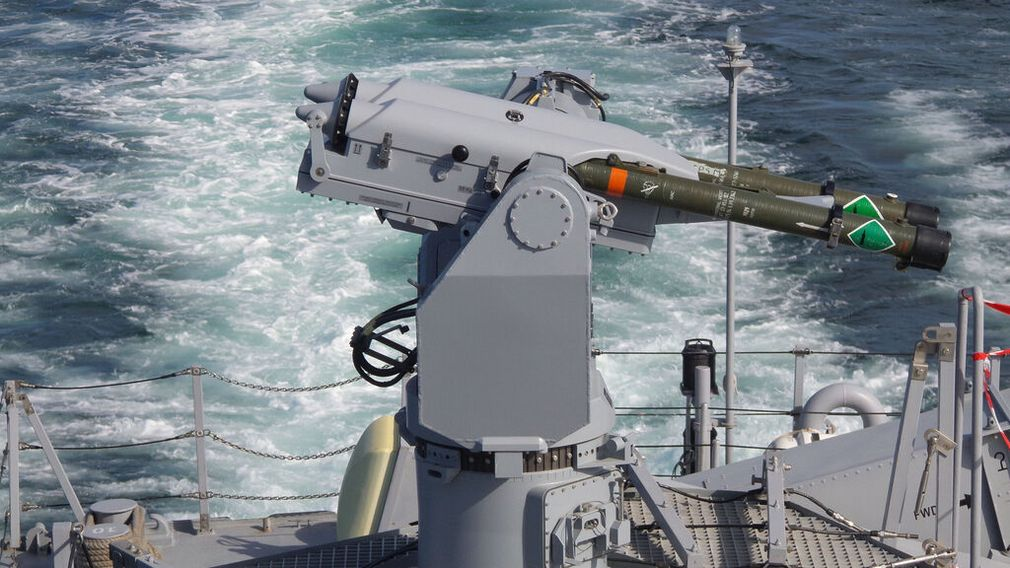
SIMBAD RC is a compact naval launcher built around the MISTRAL family of short-range surface-to-air missiles. It is remotely controlled by a single operator from within the vessel and can provide a ship’s primary point-defence capability or operate as an inner layer beneath longer-range air-defence systems.
MBDA lists the system as suitable for anti-ship and sea-skimming missiles, aircraft, helicopters, drones and asymmetric surface threats. Its relatively small footprint allows installation on a range of vessel types, including platforms that do not have the space, power or combat-system architecture for larger vertical-launch weapons.
The launcher uses MISTRAL 3, the latest version of the missile family. MBDA gives the weapon a mass below 20kg and a length of 1.88 metres including the launch motor, with an imaging seeker, image processing and laser proximity and impact fuzing.
For Spain, the acquisition adds a dedicated close-range defensive layer rather than another area-defence weapon. That is particularly relevant to patrol, support and other secondary vessels which may still face missile or drone threats but cannot justify the weight, cost and integration burden of a larger missile battery.
Remote operation also changes the exposure of the crew. An operator can control the launcher from inside the vessel rather than remaining at a deck-mounted weapon during an engagement, while all-weather operation and single-person control reduce the manpower burden compared with manually operated mounts.
The industrial work lies in integration as much as missile supply. Deck reinforcement, electrical power, data connections, firing arcs, combat-system interfaces, safety cases, software configuration and crew training all have to be completed for each ship class before the launcher becomes an operational capability.
MBDA has not identified the vessels involved, so the scale of that work remains unclear. The reference to active naval units indicates retrofit rather than installation on a future class, but the engineering requirement will depend heavily on the ships selected and on how deeply SIMBAD RC is connected to their existing sensors and combat-management systems.
The order extends MBDA’s position in Spain, where the company maintains an operation in Madrid covering systems integration engineering, research and development, programme management and in-service support. The new agreement gives those activities a direct Spanish naval programme rather than leaving them centred on multinational weapons and other customer work.
Eric Béranger, chief executive officer of MBDA, described the contract as a “historic milestone” for the company and linked it to a longer-term Spanish presence. No local production share has been announced, however, and the current agreement does not establish how much installation or support work will be carried out by Spanish industry.
That distinction will become important as the programme develops. A framework agreement can support follow-on orders, but the industrial value for the customer depends on the detail of integration, maintenance, training, spares and eventual replenishment rather than the number of launchers in the initial announcement.
The order also arrives as European navies are reassessing layered short-range defence. Conventional anti-ship missiles remain a central threat, but uncrewed aircraft and other lower-cost systems have increased the number and variety of targets that ship protection systems may have to handle.
That creates pressure to use different effectors at different ranges and price points. Long-range interceptors remain necessary against demanding targets, while compact short-range missiles can preserve those magazines for threats that require them and add another opportunity to engage an attacker that penetrates the outer layers.
MISTRAL 3’s use across land, naval and airborne force-protection roles also gives MBDA a common missile family across several launch environments. For operators, missile commonality can simplify parts of procurement and support, although launcher, sensor and command arrangements still differ between applications.
Spain’s programme will therefore be judged on integration milestones as much as on delivery of three launchers. The Navy needs the mounts, missiles and operator stations to work reliably with the selected ships’ power, sensors, combat-management systems and maintenance arrangements before the new layer can contribute to fleet protection.
The framework agreement defines the acquisition route but leaves several operational details open. Vessel assignments, delivery dates and any Spanish industrial workshare remain undisclosed, making those the next useful indicators of how quickly SIMBAD RC moves from a signed contract into a deployed naval capability.