IN Brief:
- Anduril has completed ground fit checks with several air-to-ground weapon types on the YFQ-44A Fury prototype.
- Demonstrated stores include 500lb guided bombs, Small Diameter Bombs, and 2.75in rocket pods, with cruise-missile integration work also under way.
- The air-to-ground weapons have not yet been flight-tested from Fury, keeping the work at an integration stage.
Anduril has begun expanding the YFQ-44A Fury collaborative combat aircraft beyond its initial air-to-air configuration, carrying out ground integration and fit checks with several classes of air-to-ground weapon.
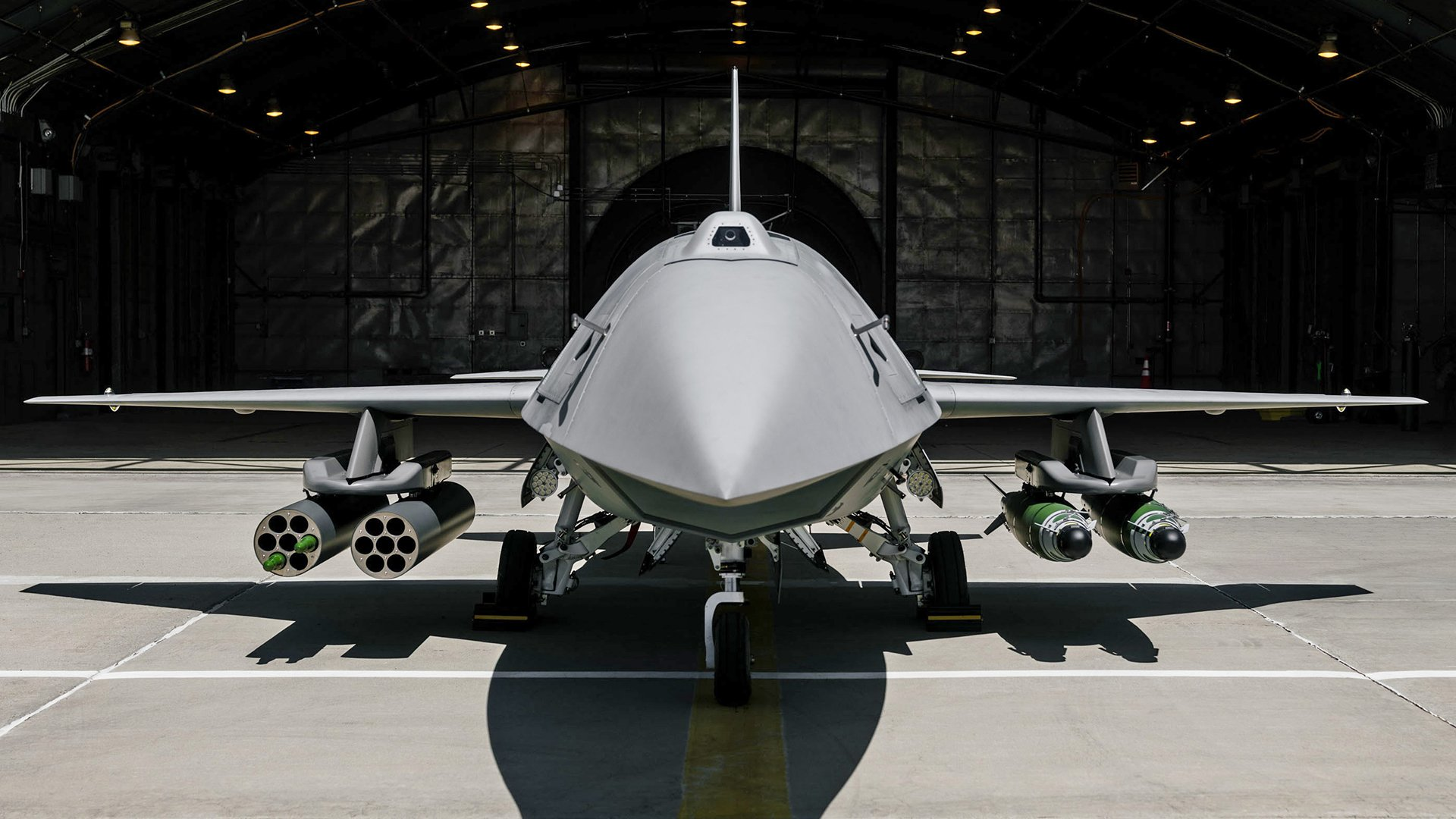
Anduril has worked with 500lb guided bombs, 250lb Small Diameter Bombs, low-cost cruise missiles, and other stores, while the YFQ-44A has also been shown carrying 2.75in rocket pods on its external stations. The air-to-ground weapons have not yet been flight-tested from Fury, leaving the current work at the engineering and physical-integration stage.
A ground fit check establishes only part of the path towards an operational weapon clearance. Engineers can verify mounting arrangements, mechanical clearances, rack geometry, servicing access, basic electrical interfaces, and possible conflicts with landing gear, control surfaces, sensors, or neighbouring stores. The activity does not demonstrate safe carriage across the flight envelope, successful weapon separation, guidance performance, or live release.
The YFQ-44A has been shown with GBU-39/B Small Diameter Bombs mounted on twin adaptor racks, while other configurations use pods for 2.75in guided or unguided rockets. Anduril has also completed fit checks with 500lb guided bombs and started engineering work around integration of its Barracuda 500 low-cost cruise missile.
Fury entered the US Air Force Collaborative Combat Aircraft Increment 1 programme around an air-dominance requirement. The prototype YFQ-44A currently uses two external underwing stations, while Anduril says the production FQ-44 configuration is intended to have four hardpoints capable of carrying four AIM-120 AMRAAM air-to-air missiles.
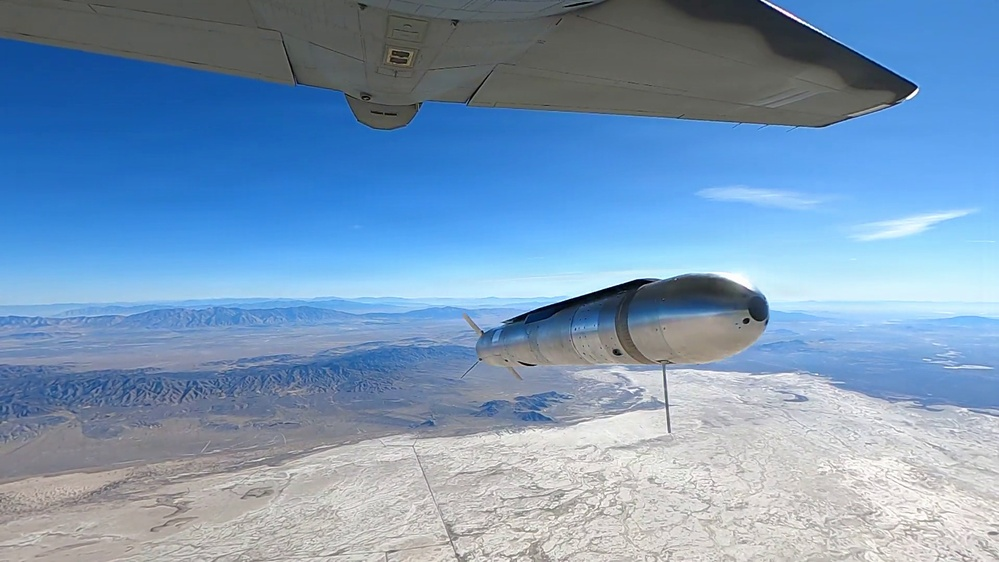
The established air-to-air test programme has progressed further than the new strike work. Fury has already fired an AIM-120 during Air Force testing, giving the programme live weapons evidence in its original mission area. The ground fit checks should therefore be treated separately from that flight-test activity rather than interpreted as proof that Fury has already demonstrated an air-to-ground engagement.
Integrating a guided bomb against a predetermined target does not require the aircraft to become a fully equipped strike platform, but it still creates a substantial engineering task. The aircraft needs compatible mechanical racks, power and data interfaces, stores-management functions, mission-planning support, release-authorisation logic, and software able to provide the information required by the weapon.
Flight clearance would add aerodynamic and structural work. Engineers must examine loads, vibration, flutter, aircraft handling, temperature, safe separation, and the effect of different store combinations across the permitted envelope. Each weapon and rack combination may create different airflow and separation behaviour, particularly when several stores are carried close together on an adaptor.
Twin racks add another layer because the aircraft hardpoint is supporting an adaptor and multiple weapons rather than one directly mounted store. Structural loads pass through additional interfaces, while release from each rack position has to remain clear of the aircraft, the other weapon, and the adaptor over the approved conditions.
Fury’s architecture has been developed around modular payloads and rapid reconfiguration. That provides a basis for extending the weapons catalogue, but modularity does not eliminate weapon-specific qualification. Mechanical compatibility, data interfaces, mission software, structural limits, and safe-release evidence still have to be established for every configuration that progresses beyond a ground demonstration.
The aircraft has simultaneously been moving through operational experimentation with the Air Force’s Collaborative Combat Aircraft Experimental Operations Unit. During a summer exercise at Creech Air Force Base, operational personnel conducted high-tempo sorties and mission-autonomy activity while taking on a larger share of launch, recovery, mission execution, and sustainment tasks.
Those exercises also examined the ground footprint needed to operate collaborative aircraft from dispersed locations. A broader weapons catalogue only adds useful flexibility if stores can be transported, loaded, configured, and supported without creating a maintenance and logistics structure approaching that of a conventional crewed fighter.
The production FQ-44’s planned four hardpoints increase the number of possible load combinations but also increase configuration-management work. Structural, electrical, software, and aerodynamic limits have to remain controlled across each approved combination, while maintainers need clear loading instructions and test equipment capable of confirming that the correct interfaces and software baseline are present.
Anduril is also working towards integration of other air-to-air weapons and targeting pods. A targeting pod would widen the sensing options available to a strike configuration, but no operational targeting-pod capability or dynamic air-to-ground engagement has been demonstrated on Fury through the current integration work.
The Air Force has not established air-to-ground capability as a confirmed Increment 1 requirement. Service leadership has discussed strike, sensor, cost, range, and other characteristics while considering later CCA increments, but decisions on the next requirement remain under development. Anduril’s present work therefore creates engineering options rather than demonstrating a formal change to the current Air Force procurement baseline.
Early integration can still reduce later programme risk. Mechanical fit, rack interfaces, structural analysis, wiring, and software requirements can expose design constraints before the production configuration is fully mature. The same work could also support customers whose mission requirements differ from the initial US Air Force air-dominance focus.
As Fury moves towards production, every additional weapon option becomes part of the manufacturing and support baseline. Wiring standards, hardpoints, stores-management software, loading equipment, test procedures, documentation, and aircraft configuration records have to remain consistent across successive airframes if payload flexibility is to survive the transition from prototypes to higher-rate output.
Captive-carry flying, separation tests, live releases, software qualification, and formal customer requirements will provide the next milestones. The current fit checks show that Fury’s physical integration envelope is being widened; they do not establish an operational air-to-ground capability.