IN Brief:
- The MQ-4C Triton and MC-55A Peregrine have both achieved initial operational capability.
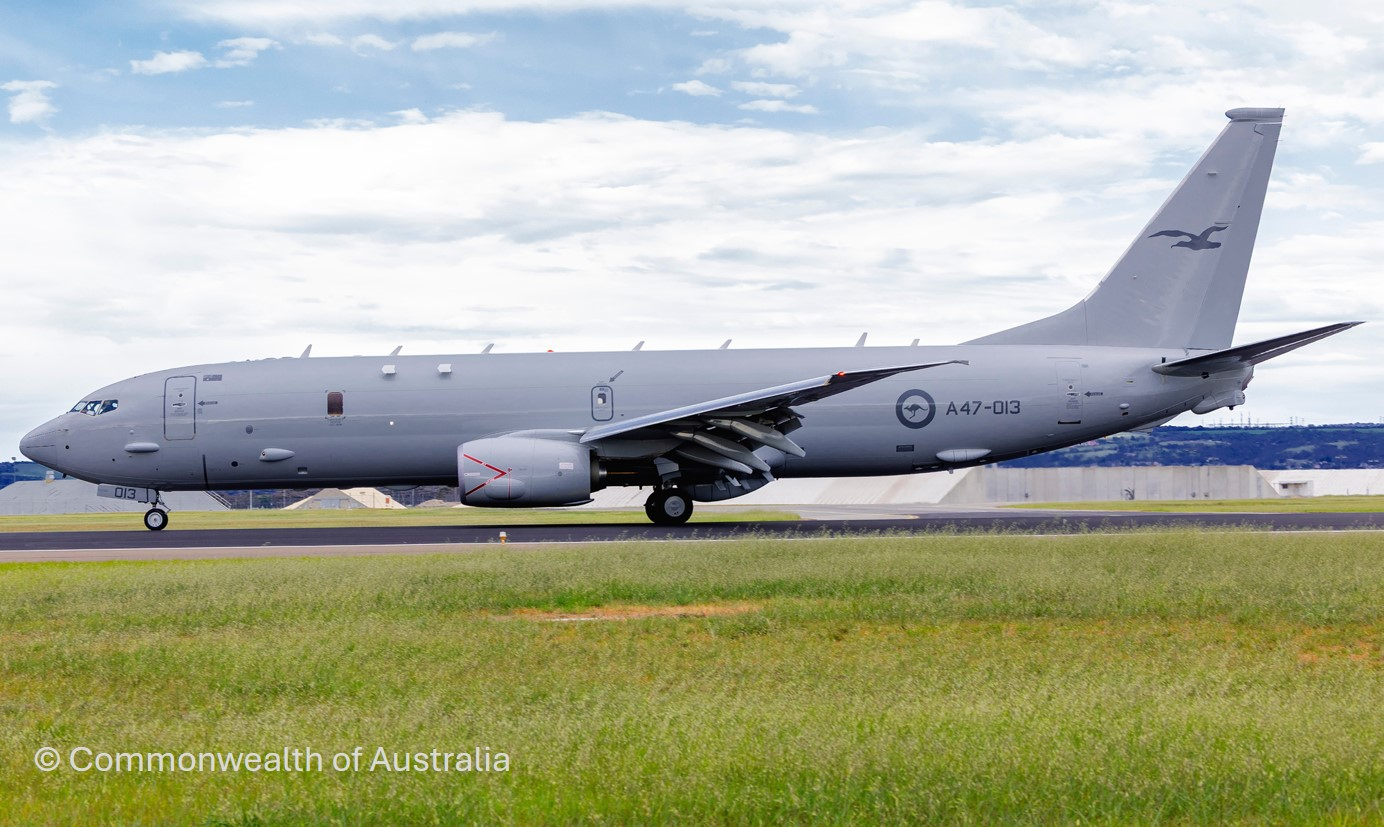
- Australia has completed its 14-aircraft P-8A fleet, with Increment 3 Block 2 upgrades now entering domestic modification.
- Twelve P-8As will be modified at the A$200 million Edinburgh deep maintenance facility.
Australia has moved three airborne intelligence, surveillance, and reconnaissance programmes into a more mature phase, with the Royal Australian Air Force declaring initial operational capability for the MQ-4C Triton and MC-55A Peregrine while completing delivery of its 14-aircraft P-8A Poseidon fleet.
The milestones bring together three different parts of the surveillance architecture. Triton provides long endurance uncrewed maritime surveillance, the P-8A remains the RAAF’s principal crewed maritime patrol and antisubmarine warfare aircraft, and Peregrine adds airborne intelligence and electronic warfare capability. Much of the operating, maintenance, and upgrade activity is centred on RAAF Bases Tindal and Edinburgh.
The MQ-4C fleet reached initial operational capability after operational testing and evaluation. The aircraft are based at Tindal and operated by No. 9 Squadron from Edinburgh, with Northrop Grumman Australia supporting the capability. Three Tritons are operating and a fourth is planned for 2028, giving Australia a persistent high altitude surveillance system for wide maritime areas.
The P-8A programme has reached a different milestone. The 14th and final aircraft arrived in May, completing the planned fleet, while the first of two aircraft upgraded in the United States to Increment 3 Block 2 standard has returned to Australia. The configuration introduces revised sensors, antennas, communications, processing, and mission software while preserving interoperability with the US Navy fleet.
The remaining 12 aircraft are due to be modified in Australia. Boeing Defence Australia and local industry partners will carry out the work at the recently opened A$200 million Deep Maintenance and Modification Facility at Edinburgh. Australia is the first international P-8A customer to receive Increment 3 Block 2, turning the domestic programme into a sustained test of whether a complex US mission system baseline can be maintained and modernised locally.
Training infrastructure is being changed in parallel. A recent P-8A Increment 3 training systems programme covers software, hardware, courseware, and readiness system changes for US Navy and Australian users. The aircraft modification therefore reaches beyond physical installation: maintenance trainers, technical material, and readiness systems have to represent the same configuration that crews and technicians will meet on the fleet.
The MC-55A Peregrine has also reached initial operational capability after testing and evaluation. Three of the four aircraft have been delivered, with the final aircraft expected later this year. The Gulfstream G550-based platform has been modified for intelligence, surveillance, reconnaissance, and electronic warfare work, adding a separate mission system and support chain to the Edinburgh-based enterprise.
Concentrating the three fleets around South Australia provides opportunities for common infrastructure and specialist workforce development, but the aircraft remain technically distinct. A remotely piloted high altitude aircraft, a missionised business jet, and a maritime patrol aircraft bring different certification paths, software release cycles, maintenance requirements, and supplier relationships. Shared geography does not remove the need to control each configuration separately.
The domestic P-8A modification programme adds the clearest industrial component. Deep maintenance and mission system upgrades require tooling, secure technical data, qualified personnel, test equipment, and access to approved software and hardware baselines. Bringing that activity into Australia reduces reliance on overseas modification capacity, but it also transfers more responsibility for configuration control and engineering assurance to the local support system.
The same issue applies across the wider ISR enterprise. Sensors and communications equipment can be improved during an aircraft’s life, but each change has to remain aligned with training devices, mission data, cyber controls, spares, and maintenance documentation. Divergence between operational aircraft and the systems used to train or support them can erode availability even when the aircraft themselves remain serviceable.
South Australia’s defence industry generated A$2 billion in economic activity in the last financial year, according to the Australian government, while approximately A$5.5 billion is planned over the decade for air ISR and maritime patrol and response capability. Those figures place the current milestones inside a longer programme of sustainment and upgrade work rather than a single delivery cycle.
The next phase will be measured by fleet availability and modification throughput. Triton and Peregrine have crossed the threshold into initial operational use, the P-8A fleet is complete, and most of its next major upgrade will be performed domestically. Keeping those systems aligned across software, sensors, training, maintenance, and secure communications is now the engineering task that will determine how much capability the three programmes deliver in routine service.