IN Brief:
- NAVAIR has awarded Bell Boeing a $29.7 million V-22 engineering data order.
- The work covers loads and dynamics model data for every V-22 variant.
- The data will support repairs, mishap investigations, future sustainment decisions, and transition to post-production support.
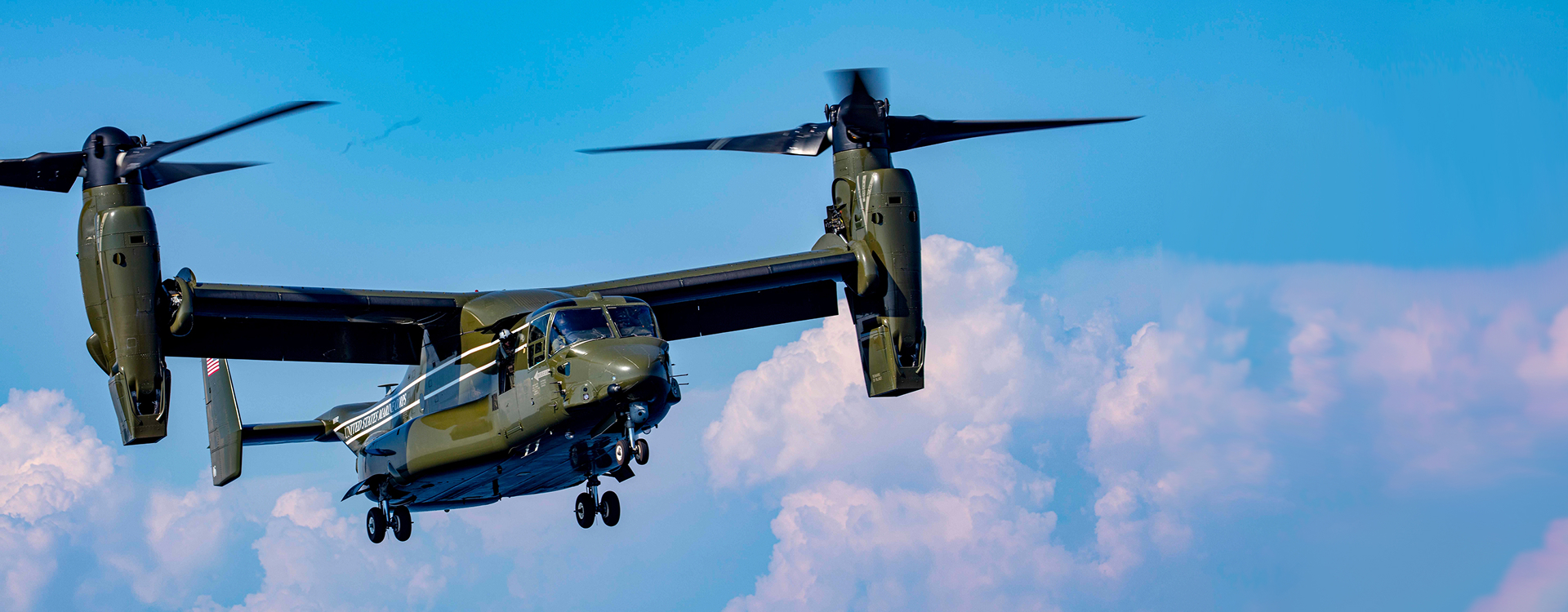
Bell Boeing has received a $29.7 million US Navy order to provide loads and dynamics model data for every V-22 variant, preserving engineering information needed as aircraft production gives way to long-term fleet sustainment.
Bell Boeing was awarded a $29,674,990 cost plus fixed fee order by Naval Air Systems Command against an existing basic ordering agreement. The work is specifically scheduled before and alongside V-22 production cessation and is expected to continue until March 2030.
The technical data will support future sustainment decisions, mishap investigations, transition into post-production support, and Fleet Support Team repair and maintenance activity. Sixty per cent of the work will take place in Ridley Park, Pennsylvania, 30 per cent in Fort Worth, Texas, and 10 per cent in Amarillo, Texas.
Approximately $10.3 million in FY2025 Navy procurement funding and $19.4 million in FY2026 procurement funding will be obligated when the order is awarded. Unlike a contract for aircraft or spare components, the principal deliverable is engineering information describing how the V-22 behaves structurally and dynamically.
Loads models represent the forces acting on an aircraft during different phases of operation, while dynamics work describes how structures and systems respond to vibration and changing loads over time. For the V-22, that analysis is particularly complex because the aircraft combines large rotating proprotors, tilting nacelles, helicopter-like vertical flight, aeroplane-mode operation, and conversion between the two.
The data provides a technical reference for engineers examining structural damage, designing repairs, evaluating modifications, or investigating an abnormal event. A repair that restores the visible shape of a component is not enough; engineers need evidence that the repaired structure can withstand the loads expected during the aircraft’s approved operating envelope.
Mishap investigations create a similar requirement. Investigators may need to determine whether observed damage occurred before or during an event, whether structural loads exceeded expected limits, and whether a component behaved consistently with its design assumptions. Authoritative analytical models can remain important even when physical evidence is incomplete.
The timing of the order reflects a change in the programme’s industrial phase. During active production, engineering knowledge is distributed through design teams, manufacturing organisations, suppliers, software tools, and employees working with the aircraft every day. Production cessation gradually breaks up that environment as specialists move to different programmes, suppliers close production lines, and computing tools become obsolete.
Capturing and organising model data before that transition is complete reduces the risk that future engineers will have to reconstruct essential design information years later. Preserving the model itself is only part of the problem: inputs, material assumptions, boundary conditions, validation evidence, software versions, and configuration applicability also need to remain intelligible.
The task covers every V-22 variant, meaning the data has to remain useful across aircraft operated by the Marine Corps, Air Force, and Navy. Those fleets share the fundamental tiltrotor architecture but have different equipment, mission profiles, and modifications, making it important to identify which analytical models and assumptions apply to each configuration.
The fleet will continue to require substantial engineering after production ends. Aircraft already in service will accumulate fatigue, corrosion, accidental damage, and component obsolescence, while upgrades may alter weight, structure, wiring, avionics, or mission equipment. Each significant change can require engineers to return to the original structural and dynamic baseline.
Post-production sustainment also changes the economics of support. During manufacturing, engineering work can be spread across new aircraft deliveries and an active production system. Once the line closes, expertise and tooling have to be retained specifically for a fleet whose requirements become less predictable and more focused on individual repairs, modifications, and ageing-aircraft issues.
The latest order therefore complements physical sustainment programmes already under way across the V-22 enterprise. Nacelle modifications, avionics work, component improvements, training, maintenance, and fleet-support contracts all address the availability of aircraft already delivered. Loads and dynamics data underpins some of those decisions without being a visible component on the aircraft itself.
The workshare also illustrates the distributed industrial structure behind the Osprey. Ridley Park has longstanding Boeing engineering and fuselage involvement, Bell maintains major programme activity in Texas, and Amarillo has supported final assembly. The new order keeps all three locations involved in transferring production-era technical knowledge into the sustainment phase.
The contract does not announce a new aircraft capability, nor does it by itself change V-22 availability. Its value lies in retaining the information needed when an unusual structural problem, repair, modification, or investigation occurs after the manufacturing organisation has changed.
That is a familiar problem for long-lived military aircraft. Airframes can remain operational for decades beyond the end of production, while the people and software tools that created them have much shorter working lives. The $29.7 million order treats engineering knowledge as part of the V-22 support system, preserving a reference that future Fleet Support Teams will need when keeping ageing aircraft safe and usable becomes more difficult than building another one on an active production line.