IN Brief:
- Dassault Aviation has flight-tested two sovereign AI algorithms aboard Rafale.
- One was developed internally and the second with Thales through the cortAIx initiative.
- Both are mature enough to be considered for future Rafale upgrades.
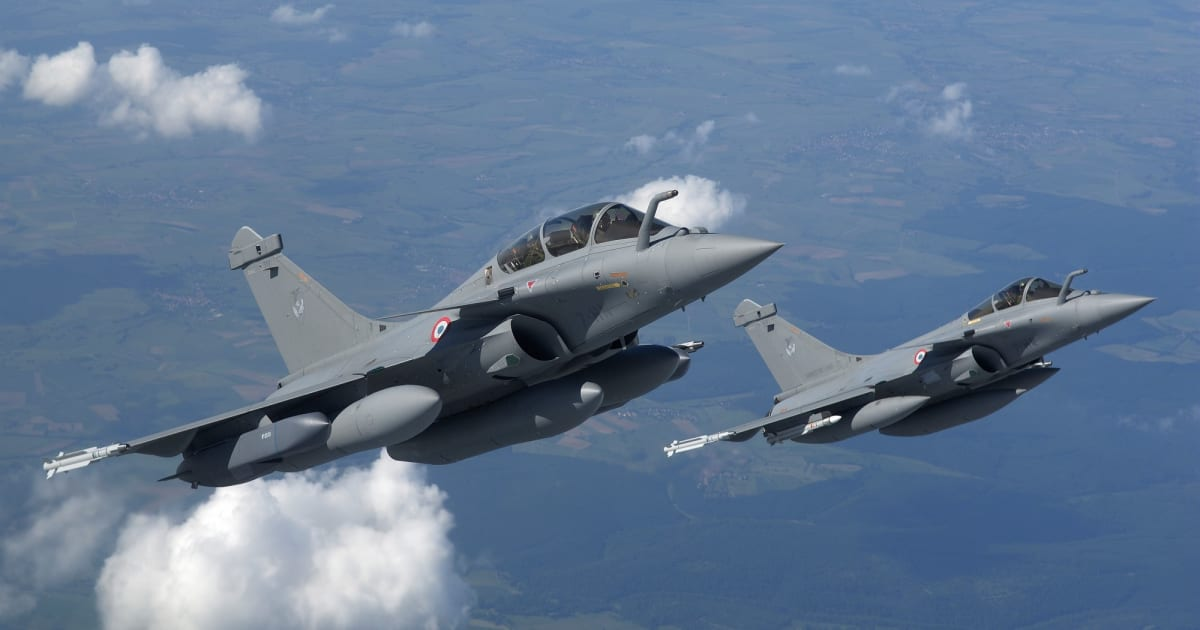
Dassault Aviation has flight-tested two sovereign artificial intelligence algorithms aboard a Rafale fighter, moving its work on supervised airborne AI from development activity into the aircraft itself as France prepares for a more software intensive generation of combat aviation.
Dassault Aviation says one algorithm was developed by its own engineers and the second in cooperation with Thales through the cortAIx artificial intelligence initiative. The company has not disclosed the individual functions performed by either algorithm, but says both have reached sufficient maturity to be considered for future Rafale upgrades.
That distinction matters. The flights do not represent the introduction of a defined operational capability, nor has Dassault attached either algorithm to a particular Rafale standard. The milestone instead shows that software developed through two different routes can be hosted and evaluated inside the constrained computing environment of a front-line combat aircraft.
Dassault describes its approach as controlled, sovereign, and supervised AI intended to assist the human crew. The emphasis places the work within a wider model of decision support and collaborative combat rather than suggesting an unsupervised replacement for the pilot. Human oversight remains a stated part of the company’s architecture for both artificial intelligence and future autonomous systems.
Running AI aboard a fighter creates engineering problems that differ substantially from operating the same software on unconstrained computing infrastructure. Dassault identifies the availability and quality of operational data, whether real or simulated, as a central issue, alongside the need to combine specialist operational knowledge with data science and to optimise processing for an embedded platform.
Combat aircraft provide finite electrical power, cooling, processing capacity, and physical space. New software must coexist with established mission systems and safety critical functions while producing repeatable behaviour under operating conditions that can vary sharply from laboratory testing. Any function eventually selected for an operational standard will also require configuration control so that the software installed on aircraft matches the hardware, sensors, and mission system baseline against which it was validated.
Dassault has spent the past two years building the industrial structure around that work. It entered a partnership with the French Ministry of the Armed Forces’ AI agency, AMIAD, in June 2025 and followed that with cooperation involving Thales and cortAIx later that year. A further partnership with Harmattan AI was announced in January 2026 to accelerate the integration of supervised autonomy and AI into future aviation systems.
The current tests sit against a Rafale roadmap already moving towards greater connectivity and collaborative operation. The F4 standard continues to introduce new networked functions, while development activity around F5 is intended to prepare the aircraft for a future operating environment in which the crewed fighter works alongside an uncrewed combat aircraft.
Dassault says increasingly capable AI algorithms are expected to assist pilots in managing that collaborative combat environment. The company has not said whether either of the two algorithms just tested performs that particular function, and the current announcement should not be stretched into a claim that an autonomous wingman control system has entered service.
The broader architecture nevertheless explains why embedded AI is becoming relevant. A Rafale operating alongside an uncrewed aircraft will have to manage sensor information, communications, mission planning, electronic warfare data, and the allocation of tasks across multiple platforms. Software may reduce part of that workload, but every additional decision support function introduces its own verification, cyber assurance, processing, and human-machine interface requirements.
France has already begun placing early contracts associated with the future F5 standard. The Direction générale de l’armement said this month that preliminary work has been ordered from Dassault Aviation, MBDA, Safran, and Thales ahead of the planned launch of the main F5 development phase. The standard is intended to represent a substantial mid-life evolution of Rafale rather than a minor software update.
Dassault is also drawing on its earlier nEUROn unmanned combat air vehicle work as it develops the future combat drone intended to accompany Rafale. That places the latest AI flight tests alongside a wider collection of programmes involving autonomy, electronic warfare, and collaborative mission systems. Earlier this year, a Rafale also participated in a collaborative flight involving the NAMIB autonomous electronic warfare payload.
The next useful milestone for the two AI algorithms will be less dramatic than their first flight. A function selected for an operational aircraft standard must move through requirement definition, repeatable testing, qualification, computing integration, configuration management, and continuing software support. It must also demonstrate that human crews understand when to rely on its output and when to disregard it.
Flight testing shows that Dassault has moved sovereign AI out of the laboratory and onto Rafale hardware. Turning those experiments into fleet capability will depend on whether the algorithms can remain predictable, supportable, and certifiable as the aircraft itself evolves towards F5 and collaborative combat. In embedded military systems, making software work once is only the beginning; proving that it can be trusted across thousands of sorties is the more difficult engineering task.