IN Brief:
- Taiwan says its new F-16V Block 70 aircraft have reached the point at which deliveries can proceed.
- Lockheed Martin is operating two production shifts as the delayed 66-aircraft programme moves through acceptance and delivery activity.
- The first two aircraft left the continental United States in August but had not completed their journey to Taiwan by late September.
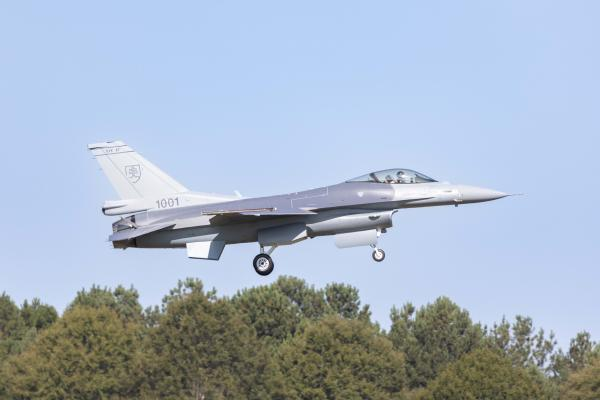
Taiwan says its new F-16V Block 70 fighter programme has reached the point at which aircraft can be delivered, although completion of the 66-aircraft acquisition will extend beyond its original timetable.
The latest programme status shifts attention towards acceptance, delivery preparation and the rate at which completed aircraft can reach Taiwan. Production has been affected by the relocation and restart of the F-16 line at Greenville, South Carolina, together with disruption across the supporting supply chain.
Lockheed Martin is operating two shifts as it works through the order, with production running for up to 20 hours a day. Taiwan’s defence authorities have said preparations for receiving the aircraft are continuing under plans coordinated with the US programme office.
The acquisition covers 66 new-build Block 70 fighters under Taiwan’s Peace Phoenix Soaring programme. Taiwan allocated NT$247.2 billion to the procurement between 2020 and 2026, with the complete fleet originally scheduled for delivery by the end of this year.
The first two aircraft left the continental United States in August and subsequently reached Hawaii, but had not resumed their journey to Taiwan by 29 September. Moving combat aircraft across the Pacific involves tanker support, staging locations, maintenance, aircrew planning and weather considerations, meaning completion at Greenville does not translate immediately into arrival at an operational base.
Taiwan has also been discussing measures associated with the delayed programme with the United States. The military sales arrangement does not contain a direct financial penalty mechanism for late delivery, although additional technical support, spares or other measures have been discussed as possible responses to the schedule slippage.
Block 70 represents the latest new-production F-16 configuration. The aircraft combines the APG-83 active electronically scanned array radar with updated avionics, a modernised cockpit, conformal fuel tanks, Automatic Ground Collision Avoidance System and a structural service life rated at 12,000 hours.
Those systems also increase the amount of configuration, software, test and acceptance activity that has to remain aligned with production. Early aircraft in a new build standard frequently carry a heavier test burden because findings from flight testing and acceptance work can feed back into aircraft already moving through the factory.
Greenville itself represents an important part of that production challenge. New F-16 manufacture was transferred there after earlier assembly activity at Fort Worth, requiring tooling, processes, skilled labour and the supporting supply chain to be established around the relocated line.
A combat aircraft production restart extends well beyond the final assembly hall. Engines, radar equipment, avionics, structures, wiring, landing gear and hundreds of other controlled items have to arrive in the correct sequence, while inspectors, flight crews and acceptance facilities must keep pace with the physical build rate.
Longer factory hours can raise throughput only where those supporting flows remain available. A shortage in a comparatively small qualified component can hold an otherwise advanced aircraft outside final assembly, while limited flight test or acceptance capacity can create another queue after manufacturing work has finished.
Lockheed Martin’s wider Block 70 and 72 programme gives Greenville a production base serving several international customers. That spreads factory and supplier investment across a larger backlog, although Taiwan’s programme is competing for the same industrial resources used to support other aircraft moving through the line.
Taiwan already operates an extensive F-16 fleet. Its existing F-16A/B aircraft were upgraded to the F-16V configuration in a separate programme completed with domestic aerospace participation, while the new Block 70 aircraft add newly manufactured airframes rather than another upgrade batch.
Introducing the 66 aircraft will therefore involve more than delivery flights. Training, maintenance capacity, spares, support equipment, software management and weapons integration all have to expand alongside the fleet, while existing aircraft remain operational.
The programme now has a clearer production path than during the earlier restart period, but the delivery backlog remains the measure that matters. The next milestone will be the arrival of the first new aircraft in Taiwan followed by a repeatable flow of accepted jets from Greenville through Pacific transit and into operational service.