IN Brief:
- Construction has begun on a Leopard 2A8 assembly and repair plant in the Kaunas Free Economic Zone.
- The wider industrial project represents around €50 million of planned investment, with a production building of roughly 13,000 square metres.
- Construction is scheduled to finish in November 2027, with the first Lithuanian-assembled tank targeted for late 2028.
Lithuania has started construction of a Leopard 2A8 assembly and repair plant in the Kaunas Free Economic Zone, placing physical infrastructure behind plans to establish domestic heavy armoured vehicle manufacturing and sustainment capability.
The site is being developed around Lithuania Defense Services, the industrial venture established by KNDS Deutschland and Rheinmetall Landsysteme. Construction was formally marked by a ceremony on 1 October.
Lithuanian government figures put planned investment in the wider project at around €50 million. The production building will cover approximately 13,000 square metres and is expected to be completed in November 2027.
That date marks only the end of the construction phase. The factory will still require production equipment, specialist tooling, test systems, materials handling, controlled documentation, and trained staff before it can move into armoured vehicle assembly.
The first Leopard 2A8 assembled in Lithuania is currently targeted for late 2028. Reaching that milestone will require the plant to move through commissioning and production qualification during the year after the building itself is finished.
KNDS has previously linked the Lithuanian operation to assembly of up to 41 Leopard 2A8 tanks. The associated industrial agreement also provides for manufacturing and maintenance training and logistical support over five years from delivery of the first system.
That structure makes the plant more than a temporary final assembly operation. Heavy armoured vehicles create long-term demand for overhaul, inspection, mechanical repair, electronics support, component replacement, and configuration updates throughout their service lives.
Building repair capability beside the assembly operation gives Lithuania a route to retain more of that work domestically. Large tracked vehicles are costly and slow to move between countries for major maintenance, making local heavy repair capacity valuable even after the initial production run has ended.
The industrial model will nevertheless remain connected to the established German Leopard supply chain. Major structures, propulsion equipment, running gear, protection systems, weapons, sensors, communications equipment, and electronics come from specialist producers whose output has to be coordinated before final integration can take place in Kaunas.
Local supplier participation will therefore develop only where Lithuanian companies can meet the required manufacturing standards. Qualified welding, machining, electronics production, coatings, inspection, materials processing, and traceability can all become entry points, but defence vehicle work generally requires suppliers to demonstrate repeatable quality before production responsibility is transferred.
That qualification process can take longer than building the physical factory. A company may have appropriate machinery yet still need new documentation, inspection routines, security arrangements, or specialist training before its components can enter a controlled military vehicle programme.
The same applies to the workforce inside the new plant. Armoured vehicle manufacture is low-volume compared with commercial automotive production and relies heavily on skilled technicians rather than large numbers of repetitive production workers.
A relatively modest headcount can therefore support substantial manufacturing value if personnel are responsible for final assembly, integration, test, inspection, and repair of complex vehicles. Lithuanian authorities expect the project to create around 80 jobs, with other estimates placing the likely employment range slightly higher as operations mature.
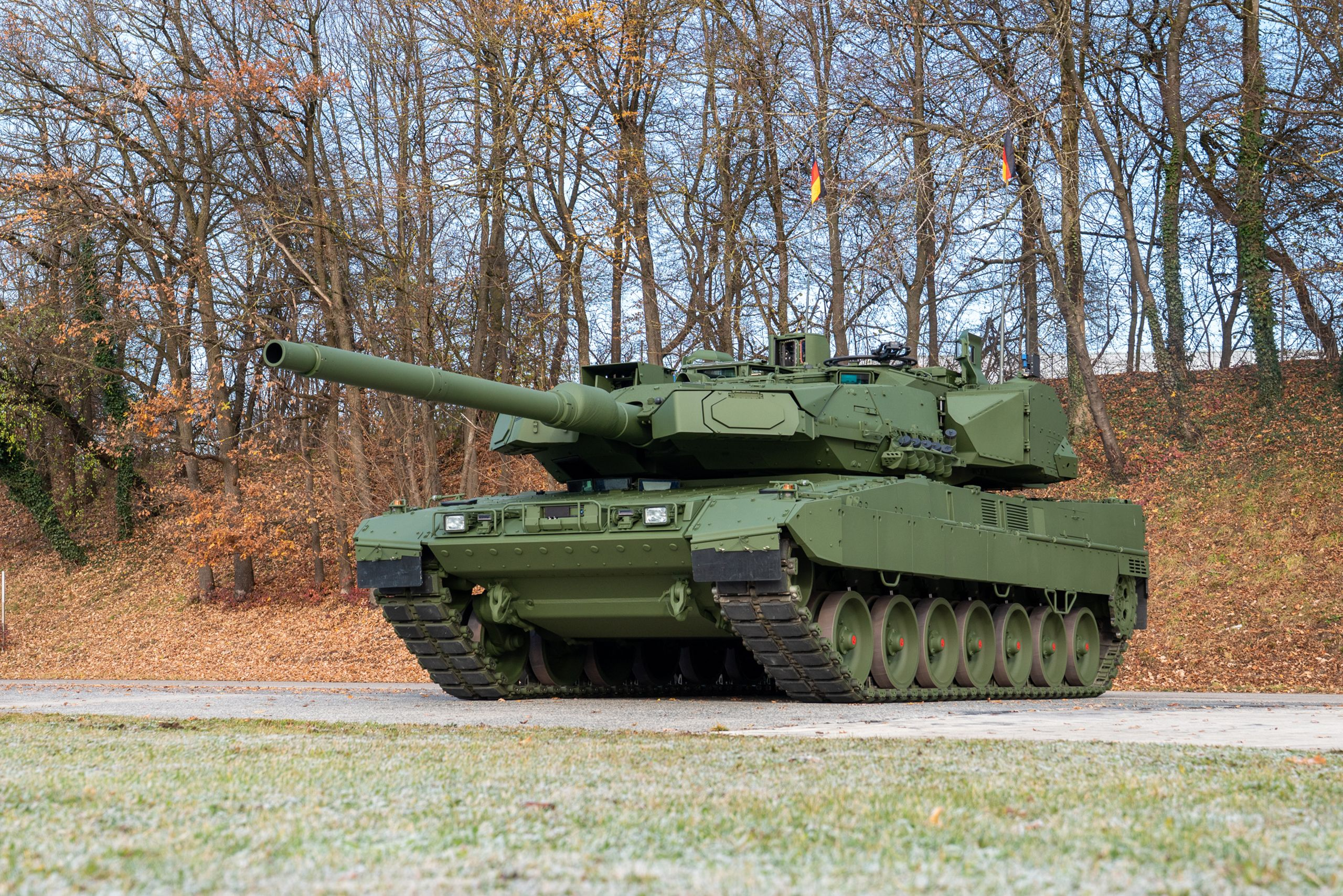
The Leopard 2A8 is the latest production standard of the Leopard 2 family and combines the established tank architecture with upgraded survivability and modernised systems. Final assembly has to coordinate heavy mechanical structures with propulsion, weapons, protection, electronics, communications, and vehicle software.
That mix places configuration control at the centre of the factory. A tank may appear mechanically complete while still waiting for electronics, sensors, software, or customer-specific equipment, meaning production planning has to sequence several industrial disciplines rather than treat the vehicle as a conventional fabrication project.
The Kaunas site is also intended to contribute to support of the wider regional heavy vehicle fleet, including equipment associated with the German brigade in Lithuania. If that workload materialises, the plant could retain specialist staff and repair capacity beyond the national Leopard assembly schedule.
Lithuania is also moving towards a direct state position in the operating company through EPSO-G Invest, which is set to take a 25.1 per cent stake in Lithuania Defense Services. That links the industrial project directly to the country’s wider defence procurement and infrastructure policy.
The programme now has a series of concrete milestones against which progress can be measured. The production building must be completed in 2027, equipment then installed and qualified, staff trained, and assembly processes proven before the first locally assembled Leopard is expected in late 2028.
The larger question is how much industrial work remains in Lithuania once that first vehicle leaves the line. Final assembly provides the visible milestone, but the longer-term effect will depend on supplier participation, maintenance workload, regional support, and whether the site becomes a permanent node within the European Leopard production network.