IN Brief:
- ForceField was demonstrated in Israel for representatives of an unnamed US defence contractor using FPV drone targets.
- The system combines passive day and night sensing, Edge AI threat analysis and an integrated kinetic response while retaining operator engagement authority.
- Axon Vision is preparing a larger US demonstration as it develops the system for future counter UAS programmes and platform requirements.
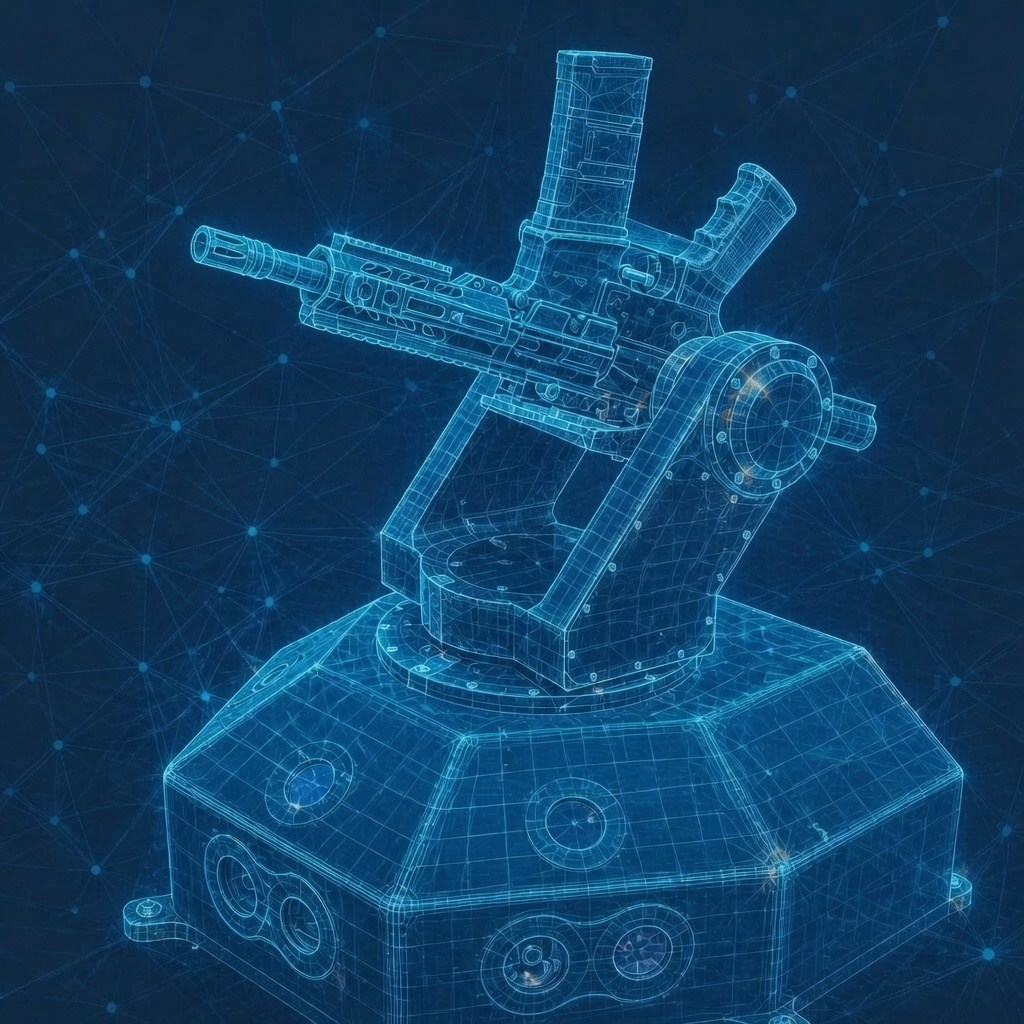
Axon Vision has completed a live fire demonstration of its ForceField counter UAS system in Israel for an unnamed US defence contractor, carrying out multiple kinetic engagements against FPV drone targets while exercising the platform’s detection, classification and response functions.
Representatives of the US company travelled to Israel for the demonstration, which was conducted under operationally representative conditions. The activity covered passive detection, Edge AI based threat classification and decision support before progressing to kinetic engagement, with the operator retaining authority over the final response.
The trial extends work that began before ForceField was publicly launched in July. Axon Vision developed the system around a three-stage process of detect, understand and respond, combining 360-degree electro-optical sensing with onboard processing and an integrated weapon system rather than relying on separate detection and defeat products connected through an external command architecture.
The company is positioning ForceField primarily against small FPV aircraft, including fibre optic controlled drones that do not depend on a conventional radio command link. Those targets create a particular problem for electronic warfare because jamming cannot disrupt a control signal that is being carried through a physical fibre between the aircraft and its operator.
ForceField therefore uses passive day and night cameras as its principal sensing layer. The system does not need to transmit radar or radio frequency energy to search for targets, reducing the electronic signature created by the detector itself, while Edge AI software classifies, tracks and prioritises objects locally.
Axon Vision says the architecture can operate without continuous communications or dependence on an external detection network. That design is intended to support manoeuvring forces and vehicles where access to fixed infrastructure, remote processing or high-bandwidth communications cannot be assumed throughout an operation.
Passive electro-optical sensing brings its own engineering constraints. Performance depends on lighting, weather, obscuration, background clutter, target size and line of sight, while small drones can be difficult to distinguish from other objects at useful engagement ranges. Classification software therefore has to operate alongside optical hardware capable of maintaining sufficient image quality for the system to make timely targeting decisions.
The latest demonstration tested that chain through to a live kinetic response rather than stopping at detection and tracking. The originating report says multiple FPV targets were defeated, although Axon Vision has not disclosed target ranges, engagement distances, ammunition expenditure or the number of simultaneous threats involved.
Those details will become more important as ForceField moves from controlled trials towards customer integration. Counter UAS systems have to handle more than a single approaching aircraft: operators increasingly face mixed target profiles, rapid changes in direction and the possibility of several low-cost drones arriving within a short period.
Axon Vision’s design uses standard weapons and ammunition rather than a dedicated interceptor. The company says the system can be integrated onto existing military platforms without deep modification of the host vehicle’s core systems, while customers can procure either the complete ForceField configuration or the detection and Edge AI layer for integration with another weapon system.
That modular approach gives the programme several possible industrial routes. A customer with an established remote weapon station may require only sensing, processing and targeting functions, while another programme could adopt the full detection and kinetic architecture. Integration work will therefore vary considerably between platforms even if the underlying software and sensor suite remain common.
The use of existing ammunition can also simplify logistics compared with a system dependent on dedicated interceptors, but it transfers more of the performance requirement onto fire control. Small drones present limited engagement windows and small target areas, so detection accuracy, tracking quality, weapon cueing and shot placement have to work as a combined system if conventional ammunition is to provide a repeatable response.
The software element is equally important because FPV aircraft and their operating methods continue to change. New airframes, flight profiles and control arrangements can appear more quickly than a complete military hardware development cycle, giving systems with updateable classification and targeting software a route to adapt without replacing the full installation.
Software flexibility does not remove the need for qualification. Changes to detection algorithms can alter classification behaviour and engagement recommendations, while updates to platform interfaces or weapon control have to be tested against safety constraints and customer rules of engagement. As ForceField moves into more configurations, software control and configuration management will become part of the production burden rather than a separate development activity.
Axon Vision secured an initial ForceField order from an unnamed Israeli defence organisation in September, following earlier live fire trials. The agreement carried an initial value of about NIS 6 million, with options that could increase the total to approximately NIS 15 million, and deliveries are expected within 12 months.
That order begins the move from development hardware towards repeatable systems, while the US demonstration opens a separate route into a much larger defence market. Axon Vision already works with Leonardo DRS on AI based sensing and counter UAS technology, and the company has said ForceField is central to the continued expansion of that relationship in the United States.
The latest demonstration was not attributed to Leonardo DRS, however, and Axon Vision has not named the US contractor involved or identified a specific procurement programme. The activity should therefore be treated as an evaluation and integration step rather than evidence of a US production award.
A larger demonstration is planned in the United States later this year. That provides an opportunity to test the architecture under different platform, range and operating requirements, particularly if the event covers multiple targets, alternative host vehicles or integration with US sensors and weapons.
Axon Vision will also present ForceField at AUSA in Washington from 12 to 14 October. Customer demonstrations and exhibition activity can expand the programme’s commercial pipeline, but the more useful indicators will be integration contracts, qualification activity and production orders that establish which ForceField configurations are moving towards fielded use.
The Israeli trial shows that the complete detection and engagement chain has now been demonstrated for a prospective US industry customer. The next stage will test whether the same architecture can be transferred into customer platforms while preserving passive detection performance, operator control and repeatable kinetic engagement across configurations that may differ substantially from the system used during development.