IN Brief:
- The $500 million technology collaboration contract covers manufacture, licensing and distribution of the Sceptre 155mm precision munition.
- An ITAR Technical Assistance Agreement enables authorised UK engineering, technology development and industrial participation.
- Tiberius plans to use GRAIL to coordinate engineering data, qualified suppliers, compliance and distributed manufacturing.
Tiberius Aerospace has announced a $500 million technology collaboration contract covering manufacture, licensing and distribution of Sceptre, its ramjet powered 155mm precision guided munition, as the company moves the programme towards a distributed production model spanning the United States and United Kingdom.
The company describes the agreement as the first scaled deployment of its Defense-as-a-Service model. It has not identified the contracting counterparty, disclosed a production quantity or set out a delivery schedule, leaving the industrial structure clearer than the eventual output of the programme.
The collaboration is supported by an International Traffic in Arms Regulations Technical Assistance Agreement between Tiberius Aerospace and a consortium of UK technology partners. That framework allows authorised cooperation across engineering, technology development and industrial participation, providing a route for British companies to contribute while controlled technical data remains subject to export authorisations.
Tiberius intends to manage the wider industrial network through GRAIL, its software platform linking requirements, engineering data, suppliers, compliance and manufacturing. The company says the platform will allow qualified participants to work against a controlled engineering baseline while access to technical information is governed by the applicable authorisations.
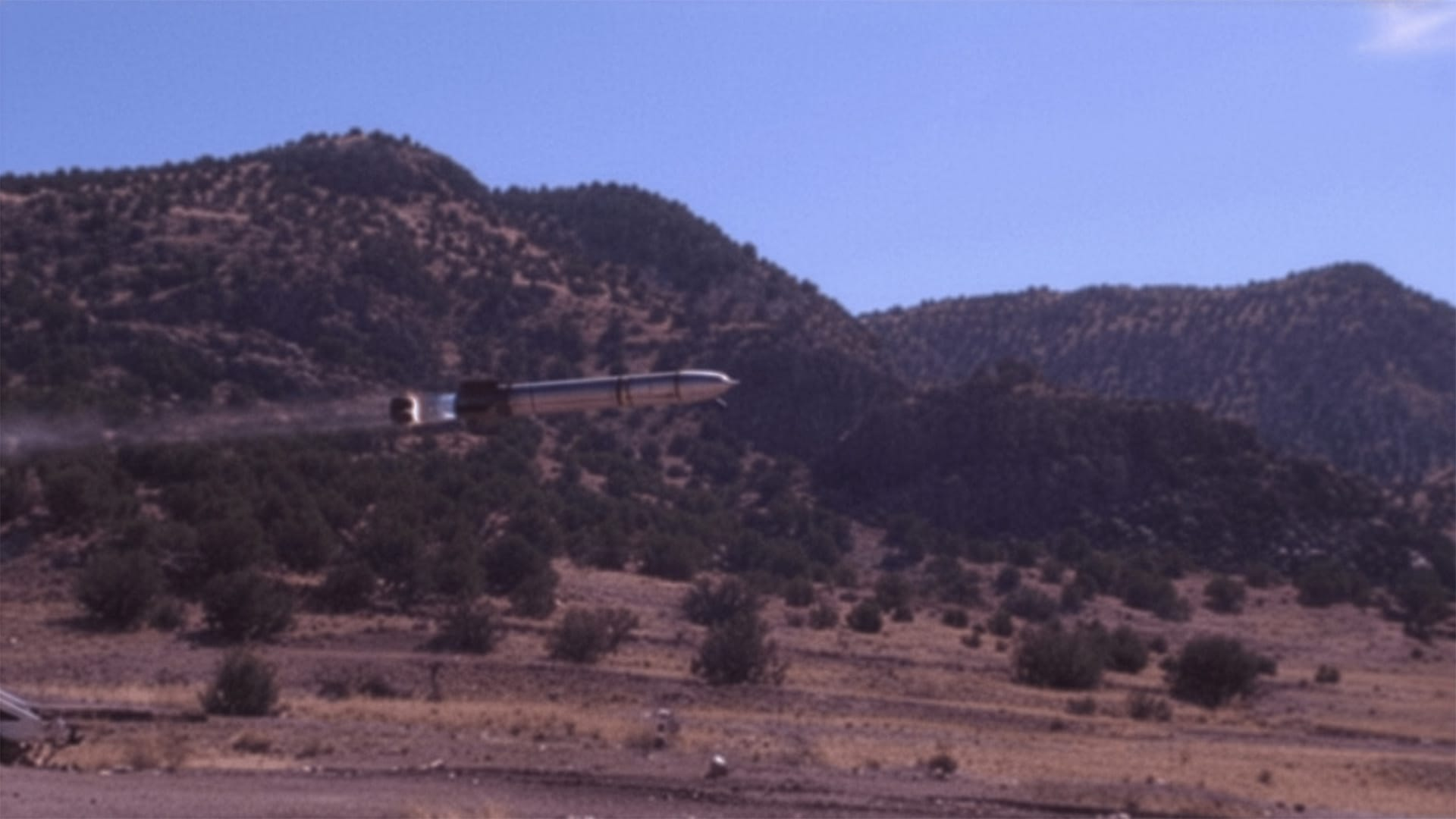
Sceptre is designed for existing NATO standard 155mm artillery systems and uses a liquid fuelled ramjet. Tiberius lists a launch mass of 47.5kg, a range greater than 140km and a velocity above Mach 3 for the current configuration. Test firings in New Mexico have demonstrated launch from a NATO standard howitzer followed by ramjet ignition in flight.
The munition has already passed through UK and US development activity. Tiberius previously secured a UK Ministry of Defence contract for rapid trials and development, while the US Defense Innovation Unit has supported independent verification work. In August, the company also signed a Cooperative Research and Development Agreement with the US Army Combat Capabilities Development Command Armaments Center.
Those steps established government backed routes for testing and technical development. The new contract moves attention towards manufacturing, licensing and configuration control, which become progressively harder as a complex weapon is produced across more than one industrial site.
A guided ramjet projectile has to combine a structure able to survive artillery launch loads with propulsion, navigation, control, electronics and a payload inside a 155mm form factor. Tiberius says its April test campaign subjected the round to launch forces of about 18,000g while validating ramjet ignition, stable flight and in-flight stabilisation.
Transferring such a design between qualified manufacturers requires more than reproducing external dimensions. Materials, tolerances, electronics, fuel handling, assembly procedures and test requirements have to remain inside an approved configuration if rounds built at different locations are to perform consistently.
Tiberius is presenting its modular architecture as a way to introduce new components and technologies without redesigning the complete weapon. That can reduce the disruption created by individual upgrades, but it places more weight on systems engineering because changes in one module can affect mass, thermal behaviour, aerodynamic performance or qualification elsewhere in the munition.
The same issue applies to GRAIL. A digital platform can coordinate suppliers, requirements and engineering changes, but distributed production still depends on physical process control, inspection, acceptance testing and traceable manufacturing records at each participating site. Those controls will determine whether the proposed model can expand capacity without creating configuration drift.
The UK element remains only partly defined. The Technical Assistance Agreement creates the legal framework for authorised collaboration, but Tiberius has not named the participating British companies or stated which production stages will take place in the UK. The balance between engineering, component manufacture, final assembly and support therefore remains undisclosed.
The contract also differs from a conventional ammunition order because the company has not announced a government customer buying a specified number of rounds. The $500 million value establishes commercial scale for the manufacturing and licensing arrangement, but the eventual production rate will depend on qualified partners, customer demand and acceptance requirements that have not yet been made public.
Sceptre has moved from public launch in 2025 through a UK development contract, live firing, ramjet ignition testing and a US Army research agreement before the latest manufacturing announcement. That sequence has compressed several programme milestones into a relatively short period, while the harder industrial work now shifts towards repeatability, qualification and production discipline.
The next useful indicators will be concrete manufacturing disclosures. Named UK partners, production locations, contracted quantities and first delivery dates will show how much capacity the collaboration adds and whether Tiberius can translate a federated industrial model into repeatable output across more than one allied manufacturing base.