IN Brief:
- India’s Defence Secretary says Akash production has stabilised while domestic and export orders continue.
- Bharat Dynamics and Bharat Electronics are the principal production agencies for the DRDO-developed surface-to-air missile system.
- Exports add another demand stream to a manufacturing network involving multiple Indian suppliers and long-term support requirements.
India says production of the Akash surface-to-air missile system has reached a stable phase as continuing domestic procurement and export contracts sustain the country’s established missile manufacturing network.
Defence Secretary Rajesh Kumar Singh has identified Armenia, Tajikistan and Turkmenistan as overseas customers, while further orders remain in place for India’s armed forces. The combination gives the programme a broader production base than a single domestic procurement cycle.
The industrial chain centres on Bharat Dynamics Limited and Bharat Electronics Limited, which are designated production agencies for the Defence Research and Development Organisation-developed system.
Bharat Dynamics manufactures the missile element within a wider guided weapons portfolio, while Bharat Electronics supplies major electronics and radar-related equipment. A larger network of Indian companies supports the programme with components, structures, electronics, mechanical assemblies and other production work.
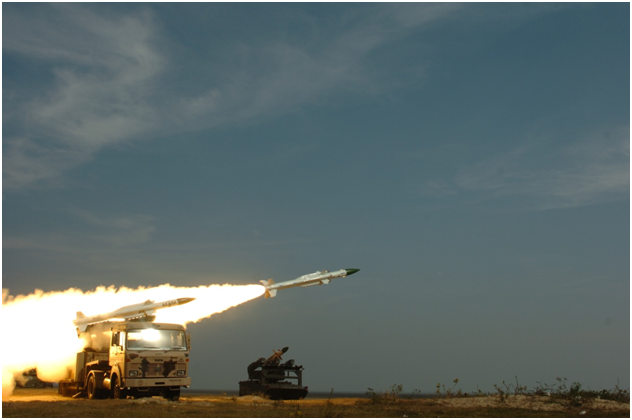
Akash is a mobile short-range air defence system designed to protect defined areas and critical points against aerial attack. Bharat Dynamics lists an operating range from 4.5km to 25km and an engagement altitude from 100 metres to 20km.
The complete capability extends well beyond the missile itself. Launchers, radar, command elements, vehicles, communications, electrical power, guidance equipment and support hardware have to be produced and integrated into a controlled configuration before a battery can be accepted by a customer.
Production stability therefore depends on the complete industrial chain. Missile output can be constrained by delays in radar equipment, electronics or vehicle integration just as easily as by a bottleneck on the final missile assembly line.
Qualified suppliers also have to maintain traceability and repeatable production over extended periods. Specialist defence components may be ordered in comparatively small quantities, leaving programmes exposed when a sole or limited source supplier loses capacity or when long gaps between orders make skilled labour difficult to retain.
Continuing domestic procurement reduces some of that risk by keeping demand active between export batches. Export contracts then provide additional volume and can extend the period over which tooling, personnel and qualified processes remain economically viable.
Overseas work brings additional manufacturing and support requirements. Export systems can require customer-specific documentation, training, spares, maintenance arrangements and configuration changes alongside the physical missile and launcher equipment.
Those differences have to remain controlled during manufacture. A factory producing equipment for several customers cannot allow national configurations to become mixed, particularly where communications equipment, support packages or other integration details differ between orders.
Armenia was the first overseas Akash customer publicly identified, with Tajikistan and Turkmenistan now also named by the Indian government. Several customers create a more diversified order book, but delivery schedules can place different pressures on the manufacturing network if multiple batches overlap.
Bharat Dynamics has expanded its production footprint as India’s missile portfolio has grown. Akash sits alongside other guided weapons and underwater systems, allowing investments in electronics, test equipment, warhead-related processes, computing and integration to support more than one programme.
That broader workload is useful when individual missile contracts move through peaks and troughs. Specialist production equipment and skilled personnel remain active rather than depending entirely on one weapon family.
Akash also illustrates the transition from indigenous development into repeat manufacture. The programme emerged from India’s Integrated Guided Missile Development Programme and has since moved through domestic introduction into export supply.
Reaching stable production does not mean the industrial challenge has ended. Maintaining output while adding customers places greater pressure on supplier scheduling, acceptance testing and support arrangements, particularly if new orders arrive while existing domestic commitments remain active.
Missile manufacturing also depends heavily on test capacity. Completed hardware must pass inspection and acceptance processes before delivery, meaning production can only rise sustainably when test equipment, ranges and technical staff expand alongside assembly capacity.
A steady order book gives suppliers greater justification for making those investments. It also allows manufacturers to purchase long lead materials and components against a clearer demand forecast rather than rebuilding inventories when each new contract is signed.
The programme’s export phase consequently adds an industrial dimension to India’s defence export ambitions. The immediate question is not simply whether another customer signs for Akash, but whether the existing manufacturing system can absorb additional demand without weakening delivery performance or configuration control.
For Bharat Dynamics, Bharat Electronics and their suppliers, the next measure will be sustained output across domestic and overseas batches. Stable production becomes most valuable when it can remain stable as volume, customer count and through-life support requirements continue to increase.