IN Brief:
- The €8.5 million Series A takes Osavul’s total funding to approximately €12 million.
- Its platform combines information, cyber and physical threat data and is used by NATO and security organisations in more than 10 countries.
- Funding will support further AI development, commercial expansion and wider deployment across critical infrastructure markets.
Osavul has raised €8.5 million in Series A funding to expand its hybrid threat intelligence platform, taking total funding to approximately €12 million as the Luxembourg headquartered company extends technology developed with government and defence users into critical infrastructure and commercial security markets.
The round was led by cybersecurity investor 33N Ventures, with participation from Balnord, G+D Ventures and existing investor 42CAP. Osavul plans to use the capital to deepen its artificial intelligence capabilities, build its commercial organisation and expand into additional markets while continuing work with defence and government customers.
The company’s platform is designed to identify activity that crosses conventional security boundaries. Instead of treating cyber incidents, information operations and physical threats as separate categories, Osavul combines data from open and privileged sources to assess hostile intent and map it against an organisation’s people, facilities and supply chains.
Osavul says its assessments are evidence traced and reviewed by analysts, while deployments can run on premises within sovereign infrastructure so that sensitive customer data remains inside controlled systems. That architecture is intended to give government and defence organisations a way to combine wider intelligence collection with data handling requirements that may rule out a conventional shared cloud service.
The company says its systems now serve government, defence and security organisations in more than 10 countries, including the UK, Germany, Poland, Nordic markets, the United States and parts of Asia Pacific. It is also one of three technology companies delivering NATO’s Information Environment Assessment Capability.
That NATO work gives the funding round a more direct defence connection than a conventional cybersecurity investment. Information environment assessment requires organisations to identify campaigns, actors and narratives across large volumes of public data, while hybrid threat analysis extends the problem into cyber and physical activity that may affect infrastructure or personnel.
The technical challenge is the combination of weak signals rather than a shortage of alerts. A cyber indicator may sit with one security team, suspicious online activity with another and a physical event with a third. A coordinated campaign can therefore appear fragmented if the organisation has no common analytical layer linking the activity to the same actor, target or objective.
Osavul’s platform is intended to provide that layer by connecting information, cyber and physical data before an incident becomes an obvious attack. The company says each attributed campaign is used to improve its analytical models, while human analysts review the evidence before assessments are presented to customers.
Human review remains important because hybrid threat intelligence rarely produces the certainty expected from a conventional technical alarm. Attribution can remain incomplete, benign activity can resemble preparation and the same indicator may have different significance depending on the organisation being targeted.
The new funding will test whether an approach developed alongside defence and security organisations can scale into energy, aviation, transport, ports, financial services and other critical sectors. Those operators can face many of the same hostile actors but normally buy technology through commercial security budgets, regulatory programmes and enterprise procurement rather than defence acquisition structures.
That shift changes the product requirement. Government customers may accept specialist analytical workflows or closer support where the threat justifies it, while commercial operators usually require repeatable deployment, integration with existing security systems, auditable outputs and predictable service models.
Osavul says total contract value increased fourfold during 2025, although it has not disclosed revenue or individual customer values. The figure indicates commercial momentum without establishing the scale of recurring income, and the Series A remains an expansion round rather than evidence that hybrid threat intelligence has already become a standard enterprise security category.
Critical infrastructure creates a clear overlap with defence resilience. Ports, logistics providers, energy networks, communications systems and industrial suppliers can all support military activity without being part of a defence organisation, leaving them exposed to cyber, physical and information operations that can have consequences beyond the individual company.
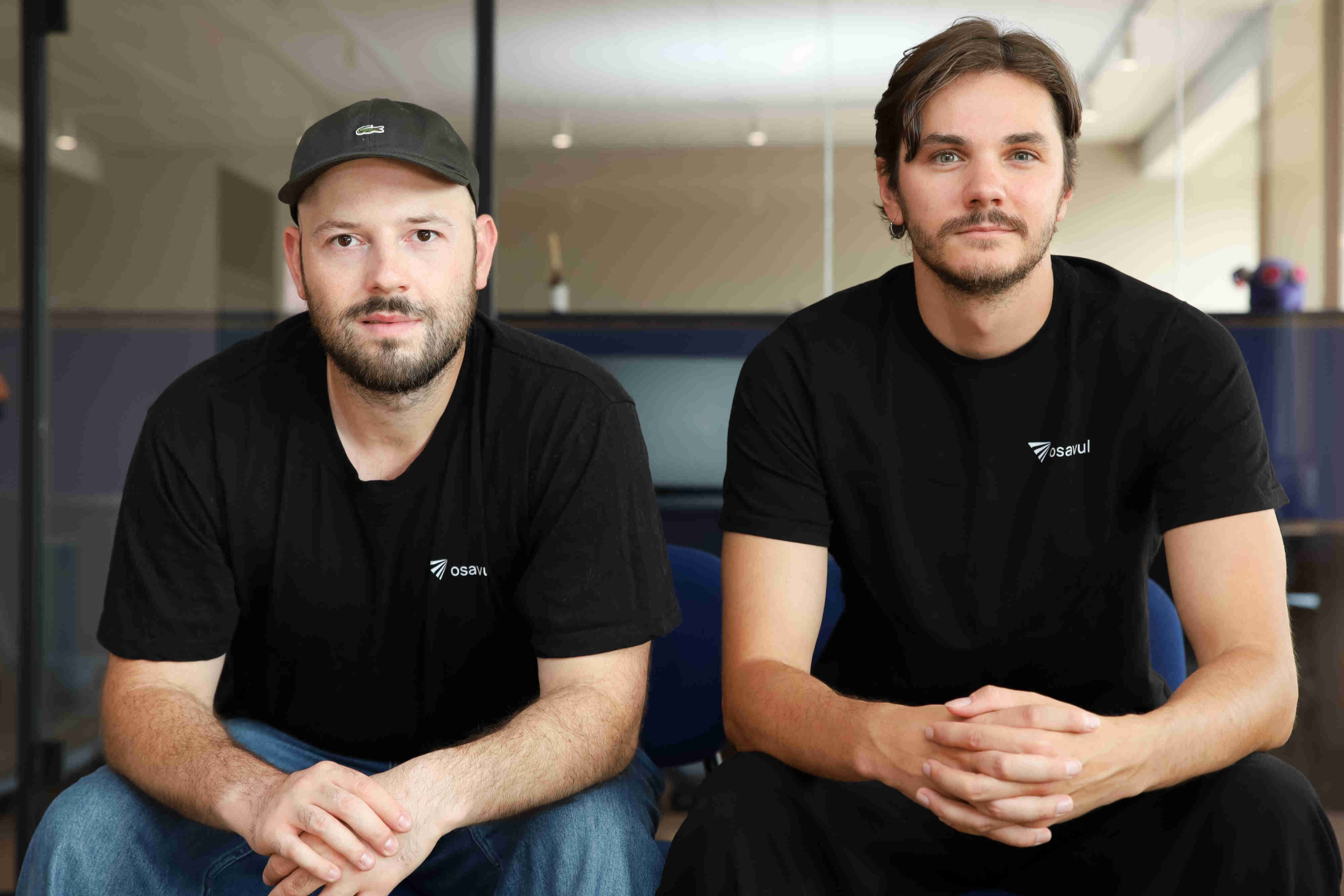
Osavul co-founder and chief executive Dmytro Plieshakov said the company would continue working with governments and defence organisations while bringing the same capability to businesses operating critical services. Co-founder Dmytro Bilash said the company is increasingly serving customers in regions facing conflict and instability, where sovereign and multilingual intelligence is required.
The funding gives Osavul additional resources to pursue that dual market, but expansion will depend on maintaining analytical quality as the number and type of deployments increase. Models built around security sensitive government work have to remain explainable and controllable when introduced into enterprises with different data structures, risk thresholds and governance requirements.
The next phase will therefore be shaped by both technical performance and deployment discipline. Deeper AI capability may increase the volume and speed of analysis, but repeatable commercial growth will depend on whether Osavul can preserve evidence traceability, analyst oversight and sovereign deployment options while moving beyond the specialist customers that shaped the original platform.