IN Brief:
- Lakestar and Rochefort Asset Management co-led an $85m Series A investment valuing Tiberius Aerospace above $1bn post-money.
- The financing is allocated to supplier expansion, certification and continued development of the company's GRAIL engineering platform.
- Tiberius is seeking licensed Allied manufacture of its liquid-fuelled ramjet 155mm Sceptre round, following an earlier $500m agreement.
Tiberius Aerospace has secured an $85m Series A financing round to expand its network of defence manufacturing partners and advance the certification of long-range precision munitions. The investment was co-led by European investor Lakestar and US-based Rochefort Asset Management, with the companies reporting a post-money valuation of more than $1bn. The new capital is distinct from a $500m manufacturing, licensing and distribution agreement for the company’s Sceptre artillery round announced on 1 October.
Lakestar and Rochefort Asset Management co-led the equity round, joined by new investors Dream Ventures and Aero X Ventures and existing backers Blacklake, Moonshots Capital, and UA1. Rochefort has also extended a senior secured debt facility, for which no amount was published. The company identifies four uses for its new financing: enlarging the manufacturing partner network, advancing product certification, continuing development, and extending its GRAIL engineering and supply chain software. The debt facility should not be added to the $85m equity total without a disclosed value and financing breakdown.
Sceptre is a guided 155mm projectile designed to be launched from NATO-standard artillery while using a liquid-fuelled ramjet propulsion system to extend its range. In conventional tube artillery, the gun supplies the projectile’s initial acceleration, after which the round follows its trajectory and loses energy to aerodynamic drag. A ramjet instead uses forward motion to compress incoming air, mixes that air with fuel and produces thrust, provided the system reaches the operating conditions needed for sustained combustion. Packaging that arrangement into an artillery-calibre body presents constraints in volume, thermal loading, structural strength and guidance-system integration.
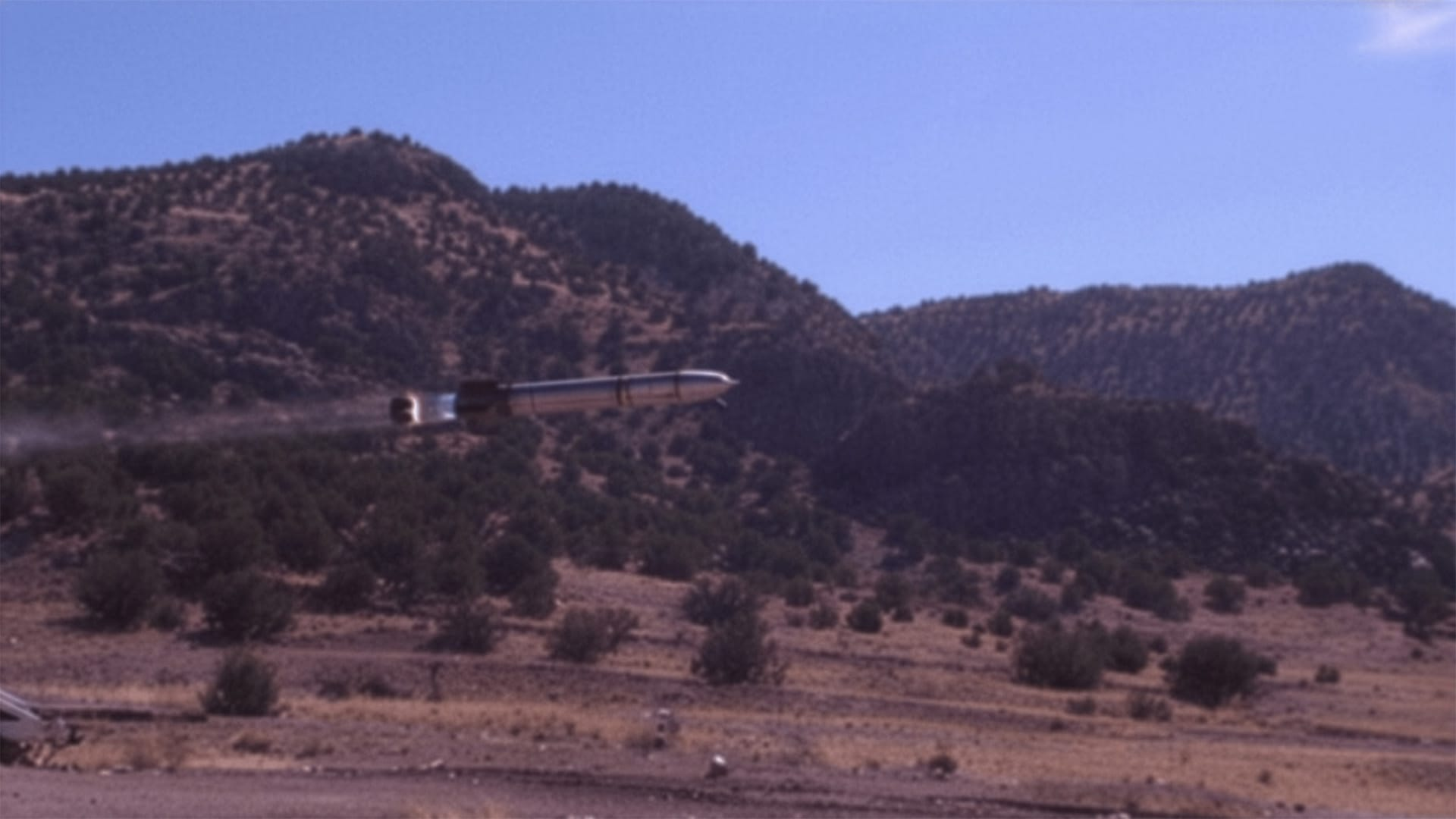
Tiberius reports an in-flight ignition test of its liquid-fuelled ramjet artillery round following launch from a NATO-standard howitzer in New Mexico in April 2026. This establishes a disclosed development step, while the extent of subsequent qualification remains unspecified. A 140km range cited by Rochefort co-founder Kyle Bass is a claimed capability, rather than a published result from a full operational test programme. The company has not disclosed acceptance of a production-configured round or a complete qualification schedule.
The system’s claimed ability to use existing artillery platforms could reduce the requirement for a wholly new launcher fleet, but integration still extends beyond the dimensions of the projectile. A gun system needs compatible handling, fire-control data and safe operating procedures, while the ammunition must tolerate the intense acceleration associated with launch. Fuel systems, onboard electronics and guidance components must function after that event and through the remainder of the flight. Testing and certification will therefore determine which platforms and ammunition configurations are approved, rather than a shared 155mm nominal calibre alone.
Tiberius is pursuing a model in which it retains design ownership and licenses manufacture to vetted suppliers in Allied countries. This separates the central engineering baseline from the factories producing the hardware, giving participating states a potential domestic manufacturing route. It also increases the importance of controlled drawings, component traceability, test methods, and consistent acceptance criteria. Production at several facilities is only interchangeable when changes in material, process, or supplier can be assessed against an approved configuration.
The October agreement with UK technology partners, valued by Tiberius at $500m, concerns manufacture, licensing, and distribution of Sceptre. It is commercially separate from the 17 November financing round. The former sets out an intended industrial route for the munition; the latter provides capital to expand partners and progress certification. Neither figure specifies how many qualified rounds have entered production or been accepted by an armed force, and the company has not published that delivery data.
GRAIL is intended to coordinate the distributed production model by connecting requirements, engineering information, suppliers, compliance, and manufacturing records. A shared design baseline can help licensed manufacturers work from controlled revisions and demonstrate which materials or processes were approved. The company has not provided measured reductions in lead time, defect rates, or unit cost attributable to GRAIL. Those manufacturing outcomes will depend on its implementation at individual suppliers and the maturity of the underlying munition programme.
Development work already involves government organisations. Tiberius identifies the UK Ministry of Defence as its first customer in 2025, refers to verification and validation support from the US Defense Innovation Unit, and has entered a cooperative research and development agreement with the US Army Combat Capabilities Development Command Armaments Center. These relationships provide routes for testing and technical assessment. Separate evidence will be needed for full qualification, orders against an accepted production standard, and operational fielding.
Expanding licensed production will require coordination across more than the projectile body. A guided ramjet projectile brings together propulsion components, fuel management, electronics, mechanical structures and the interfaces needed for gun launch and mission planning. Each element can introduce different material, manufacturing and environmental qualification requirements. A distributed production model must also manage the inspection and traceability of those components and determine whether a local manufacturing substitution changes an approved design baseline.
Tiberius is also developing Invictus, a precision missile with stated design goals exceeding Mach 3 and reaching up to 200km. The company has not allocated the $85m publicly between Invictus, Sceptre, certification, and GRAIL, or provided a timetable for individual partner factories. Its immediate industrial commitment is therefore the expansion of a licensed manufacturing network alongside continued product development, with qualification and production acceptance still to be established.