IN Brief:
- Ocius New Zealand has opened its parent company's first overseas maritime maintenance facility in Auckland.
- The operation supports the Royal New Zealand Navy's Bluebottle vessels, Tahi and Rua, following their acquisition in April 2025.
- The facility provides local maintenance and technical support, with recruitment under way for additional engineering personnel.
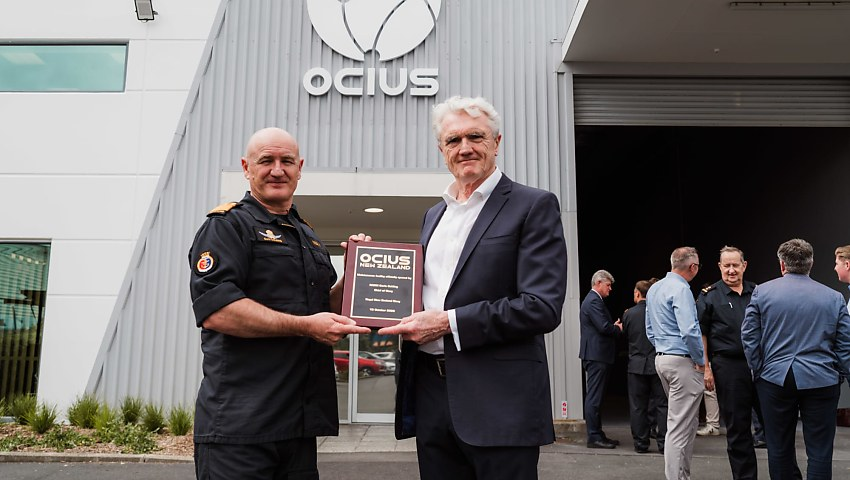
Australian maritime autonomy company Ocius Technology has opened its first overseas maintenance facility in Auckland, establishing a local engineering operation to support the Royal New Zealand Navy’s Bluebottle uncrewed surface vessels. Operated through the company’s wholly owned subsidiary, Ocius New Zealand, the facility will provide maintenance and technical support for the vessels as they undertake persistent maritime surveillance missions.
The Royal New Zealand Navy acquired two Bluebottles in April 2025 following a seven-month trial. Named Tahi and Rua, the vessels are used to extend surveillance across New Zealand’s maritime domain, working alongside existing naval and border security capabilities. Ocius has supported the Navy and New Zealand Customs Service for approximately two years, and the Auckland operation provides a permanent local base for maintaining the equipment rather than relying exclusively on support arrangements centred in Australia.
Bluebottle is a renewable-powered uncrewed surface vessel designed to remain at sea for extended periods. Its propulsion and electrical systems use energy derived from the sun, wind and waves, reducing the dependence on conventional fuel supplies that would otherwise require a vessel to return regularly for replenishment. The platform carries surveillance and communications equipment and can operate under remote supervision, providing information on maritime activity without requiring personnel to remain aboard throughout the mission.
Extended endurance does not remove the requirement for inspection and maintenance. Electrical equipment, exposed mechanical components and sensor assemblies must tolerate continued operation in a marine environment, where saltwater exposure, movement and biological growth can affect equipment condition. A vessel may remain capable of generating renewable energy while an individual surveillance sensor or communications component requires attention. The ability to diagnose faults and restore the relevant equipment is therefore part of sustaining the vessel’s surveillance capability, even where the basic propulsion system has sufficient endurance for a longer deployment.
Ocius has previously reported Bluebottle deployments lasting several months, with the company identifying marine growth as one of the factors limiting extended operations. The platform’s design incorporates a retractable sail and arrangements for deploying underwater sensor payloads, allowing it to support missions that require information from above and below the surface. Its modular sensor architecture creates flexibility for different surveillance roles, although the equipment carried by individual Royal New Zealand Navy vessels and its maintenance requirements have not been fully detailed in the Auckland announcement.
Establishing local maintenance capability is intended to reduce the logistical effort associated with returning vessels to service after inspection or repair. Equipment faults may be resolved through component replacement or technical intervention, while more substantial work could require support from the original manufacturer or specialist suppliers. Ocius has not disclosed the Auckland facility’s workshop capacity, initial staffing level or the precise division of maintenance responsibilities between its engineers and Navy personnel. It has confirmed that recruitment is under way for technical and engineering roles, including personnel holding New Zealand security clearances.
Robert Dane, Ocius Technology’s founder and chief executive, said the establishment of the subsidiary would allow Bluebottles to be maintained locally and returned to the water with less delay. The company expects the Auckland base to support its wider activities across the Pacific as demand for persistent maritime surveillance develops, although no additional regional vessel orders have been announced alongside the facility opening.
The two New Zealand vessels are part of a wider Bluebottle programme that has developed substantially in Australia. In March 2026, the Australian government announced A$176 million for another 40 Australian-designed and manufactured vessels, adding to the 15 already operated by Maritime Border Command. The contract supports a larger fleet and associated industrial activity in Australia, while the Auckland facility represents a separate expansion of technical support outside the company’s home market.
Ocius has also been developing the platform’s underwater sensing capabilities. Earlier agreements with ThayerMahan and Thales Australia provide for the integration of sonar equipment on Bluebottle vessels, extending the types of information that can be collected during long-duration deployments. Those arrangements concern the wider platform family rather than a confirmed modification package for Tahi and Rua. Nevertheless, integrating different mission payloads increases the importance of equipment compatibility, software configuration and access to engineering support when systems are changed or repaired.
Rear Admiral Garin Golding, chief of the Royal New Zealand Navy, identified the facility as supporting the service’s move towards more persistent maritime surveillance. Its value will depend on how effectively the local team can maintain vessel availability as operational experience accumulates. Ocius has not published a target turnaround time or a quantified availability improvement for the Auckland operation, but the opening establishes a support capability in the same country as the Navy’s Bluebottle fleet, with further expansion dependent on demand.