IN Brief:
- The proposed ten-year arrangement covers 850 US F-35 aircraft, plus international demand across production Lots 21–30.
- The programme intends to maintain an overall production rate of 156 aircraft annually, not 156 for the US alone.
- Lockheed plans at least US$7bn in self-funded support initiatives; prices and binding contracts remain subject to future decisions.
Lockheed Martin and the US Department of War have announced a ten-year framework for F-35 production and sustainment, covering 850 aircraft for American customers alongside international orders. The arrangement is intended to give the programme longer-term demand visibility, but does not yet constitute a fully funded order for 850 new aircraft.
Announced on 22 October, the framework covers production Lots 21–30, associated initial spare parts, ten years of modification kits and sustainment services. The parties intend to maintain an overall production rate of 156 aircraft per year across US and international requirements, rather than assigning that entire annual output to American forces.
Lockheed says multiyear authority and the necessary appropriations must be granted before the F-35 Joint Program Office and company can finalise contractual terms, pricing and delivery schedules. The eventual formal award will determine what is binding and when individual aircraft and support packages are due.
The framework also provides for Lockheed to self-fund at least US$7bn in initiatives supporting the programme, according to reporting of the government’s announcement. The company expects greater predictability to support production equipment, suppliers and sustainment capacity, although the precise timing and allocation of the proposed investment have not been publicly itemised.
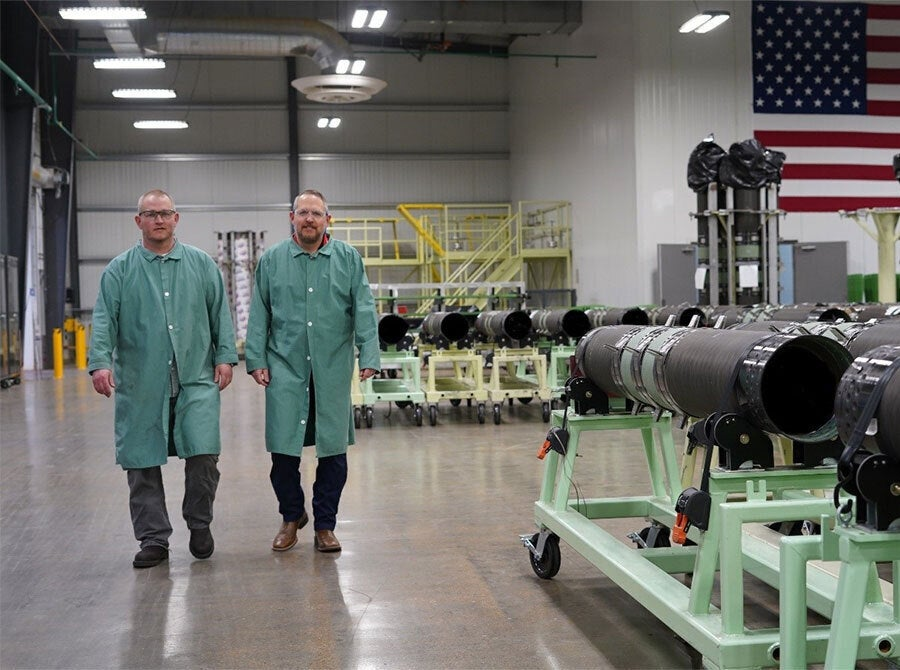
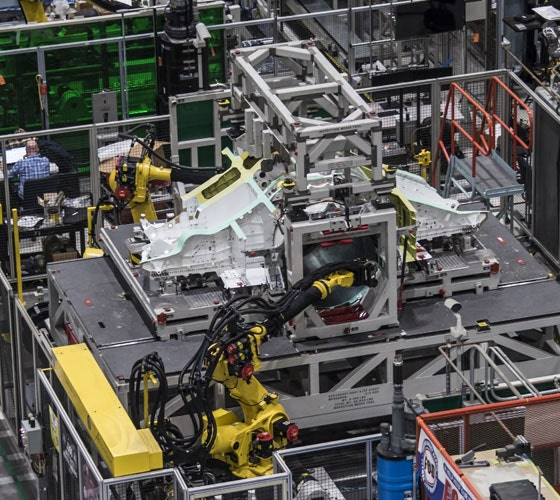
Planning for a production rate does not establish the number of aircraft delivered or accepted in a particular year. Final assembly is one part of a manufacturing system dependent on structural sections, engines, electronics, sensors, software and equipment supplied through an international industrial network.
An aircraft can progress through assembly only when the required components meet their specifications and are available in the right sequence. Constraints at a specialist supplier can delay later operations even where final assembly space and workers are available. Production plans must therefore account for lead times, inspection capacity and the coordination of several manufacturing stages.
F-35 production involves three aircraft variants with different operational and structural requirements. The conventional F-35A, short take-off and vertical landing F-35B, and carrier-based F-35C share elements of their underlying systems but require variant-specific assemblies and manufacturing processes.
Shared components can support purchasing economies when demand is stable, while differences in structure, propulsion arrangements and equipment create separate tooling and qualification requirements. A single annual programme rate does not specify the mix of variants that will be produced for particular customers.
The proposed agreement seeks to replace some uncertainty associated with serial short-term production negotiations. Suppliers may be better able to justify investments in machinery, workforce and material procurement when they have clearer information about likely orders, but confidence depends on the final commercial arrangements and continued appropriations.
Longer procurement horizons can also introduce risk when prices or technical requirements change. Contractors and customers must agree how costs, performance and delivery obligations will be handled over time. The framework itself does not disclose a final unit price or contract-wide monetary value from which such terms can be evaluated.
The expected manufacturing benefits extend beyond new aircraft. Initial spares form part of the support required for aircraft entering service, while modifications allow changes to be incorporated into fleets delivered under earlier production standards. Work on software and mission systems can create continuing engineering and qualification requirements.
Sustainment covers activities such as maintenance, repairs, spare parts provisioning and technical support over an aircraft’s service life. As the global fleet increases, the amount of equipment requiring service grows, while the availability of repair facilities and replacement parts influences the readiness of aircraft already delivered.
Lockheed intends to use integrated data and long-term planning to improve support performance. The government describes an approach linking funding decisions to readiness outcomes, although specific contractual performance measures and financial incentives will be established only when the arrangements are finalised.
The announced investment is intended partly to address supplier resilience. A company may need to maintain more than one qualified source for certain components, increase inspection capacity or commission replacement manufacturing equipment to reduce vulnerability to interruptions. Such changes require funding and technical approval before they affect deliveries.
The multinational nature of the programme means the framework is relevant to suppliers outside the United States as well. British businesses contribute important systems and manufacturing work to the F-35, but the 850-aircraft figure describes proposed US procurement rather than the volume allocated to UK manufacturing or to any one partner country.
Lockheed and the US government forecast substantial long-term savings from higher-volume purchasing and greater certainty. These are anticipated outcomes, not audited reductions already achieved under a contract that has yet to be concluded. The estimates will depend on agreed pricing, industrial performance and sustainment expenditure.
The programme already operates at considerable scale, with aircraft delivered to multiple national forces. Maintaining a production rhythm across different customers requires orders and acceptance arrangements to be coordinated, particularly as modifications and changing aircraft configurations affect manufacturing and delivery.
For the next ten years, the framework sets out the procurement and support ambition rather than completing the necessary legal and financial steps. The next decisive development will be the grant of multiyear authority and appropriations, followed by contracts establishing prices, schedules and quantities that can be executed.