IN Brief:
- Canada is contributing C$15 million to a C$64.8 million Xona Space Systems Canada project in Montréal.
- The planned centre combines satellite engineering, manufacturing, specialist testing and mission operations, with about 126 jobs expected.
- Xona’s proposed Pulsar low Earth orbit navigation service is intended to complement GPS and Galileo; operational performance remains to be demonstrated at the intended scale.
Xona Space Systems Canada will establish additional satellite manufacturing, engineering and mission operations capacity in Montréal with support from a C$15 million Canadian government investment. The federal contribution forms part of a C$64.8 million project intended to support the company’s Pulsar positioning, navigation and timing service, which uses satellites in low Earth orbit.
The funding was announced on 20 October through the Strategic Response Fund. The project includes a development and manufacturing centre, specialised testing infrastructure and mission control facilities. Canada expects approximately 126 skilled jobs to result from the investment, although that figure describes anticipated recruitment rather than positions already filled.
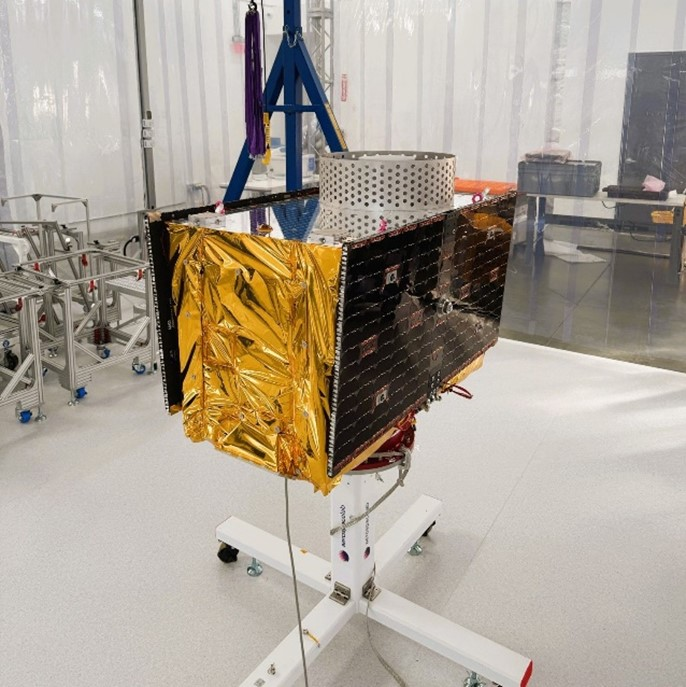
The planned centre will provide an additional Canadian industrial base for producing and supporting spacecraft used by the Pulsar network. Xona intends to develop equipment, manage satellite operations and expand commercial services from the new facilities. Neither the total project expenditure nor the completion of individual buildings and production systems was confirmed at the time of the announcement.
Pulsar is designed to complement established global navigation satellite systems, including GPS and Galileo. Its architecture places navigation transmitters in low Earth orbit rather than the medium Earth orbits used by those conventional systems. The different orbital geometry creates opportunities for alternative signal characteristics, but it also introduces requirements for constellation coverage and the management of rapidly moving satellites.
A navigation receiver determines its position by processing signals from satellites with known orbital positions and timing information. The quality of that calculation depends on the number and geometry of available satellites, the signal received and how the equipment manages errors introduced by its environment. Timing services use related information to synchronise infrastructure requiring accurate reference signals.
Xona intends Pulsar to provide additional signals for compatible receiving equipment, including applications where existing satellite navigation is vulnerable to interference or difficult reception conditions. The company describes stronger signals and authentication functions among its design objectives, but the new funding announcement does not provide independently verified accuracy or interference-resistance results for a fully deployed global service.
Authentication is relevant because false navigation signals can mislead receivers about position or timing. Where a system provides an authenticated signal, a compatible receiver can evaluate whether particular information comes from an authorised source. The availability of authentication does not independently remove every vulnerability associated with interference, signal loss or incorrect receiver configuration.
Lower orbital altitude can influence received signal power, while the relative motion of satellites affects how often receiving equipment can observe individual spacecraft. Maintaining dependable navigation coverage requires an appropriately designed constellation, ground control functions and reliable handling of changes in satellite visibility.
The industrial project will therefore connect physical satellite manufacturing with operational infrastructure. Spacecraft hardware requires controlled assembly, electrical verification and environmental testing suited to the conditions expected during launch and in orbit. Mission control facilities must also support tracking, monitoring and the management of satellite operations throughout the service life.
Specialist testing equipment can help establish whether components and complete assemblies meet their engineering requirements before launch. Those activities may cover electrical functions, mechanical integrity and environmental performance, depending on the spacecraft and customer specification. Xona has not announced a verified annual production rate for the Montréal facility.
Expanding manufacturing also requires qualified personnel and consistent access to specialised components. Work in spacecraft engineering, testing and mission operations calls for different technical skills, with production readiness determined by equipment commissioning, employee training and approved processes rather than the availability of floor space alone.
Canada identifies positioning, navigation and timing as an important dual-use capability. Navigation services are relevant to transport and commercial infrastructure, while military equipment and communications networks can also depend on reliable location and synchronisation information. The government links the project to its Defence Industrial Strategy and its framework for resilient positioning and timing.
The Arctic is specifically identified in the investment rationale. Remote operations can face limited terrestrial infrastructure and demanding environmental conditions, making satellite services a potentially important source of navigation and timing information. The actual performance of a service in those locations still depends on compatible receivers, satellite availability and the local signal environment.
The project is intended to support Canadian industrial capacity rather than create an exclusively government-owned navigation system. Pulsar is a commercial service under development, and the contribution does not establish that the Canadian Armed Forces have purchased a completed operational service or obtained control over the entire satellite constellation.
Public investment and defence relevance also need to be distinguished from assured market adoption. Manufacturers and operators selecting navigation equipment must assess the signals supported by their devices, the reliability required for an application and how a complementary service would be integrated with existing systems.
The C$64.8 million project gives Xona a defined expansion programme in Montréal, with federal funding supporting the manufacturing and operations infrastructure behind Pulsar. Its next measurable milestones will involve establishing the planned facilities, recruiting and training personnel, and demonstrating the capabilities required for the company’s intended commercial and defence customers.