IN Brief:
- Rosebank Engineering, RMIT and Swinburne have begun an AMCRC-backed two-year aircraft component repair research project.
- The work targets laser directed energy deposition of aerospace alloys, including Inconel, titanium and 15-5PH stainless steel.
- The partners aim to demonstrate repeatable repairs supported by material testing and a qualification route aligned with OEM and NASA requirements.
Rosebank Engineering is leading a two-year Australian research project to develop laser-based repairs that could qualify for use on selected military aircraft components. Announced on 26 October 2026, the Additive Manufacturing Cooperative Research Centre-backed collaboration involves RMIT Centre for Additive Manufacturing and Swinburne University of Technology, alongside Rosebank’s aerospace sustainment engineers.
The research will investigate laser directed energy deposition (L-DED) for high-value aerospace alloys and seek evidence suitable for original equipment manufacturer requirements and NASA-STD-6030. The partners intend to demonstrate a repaired military aircraft component, but the programme has not yet established an authorised repair method. Alignment with a materials or process standard alone would not constitute approval to return a particular aircraft part to service.
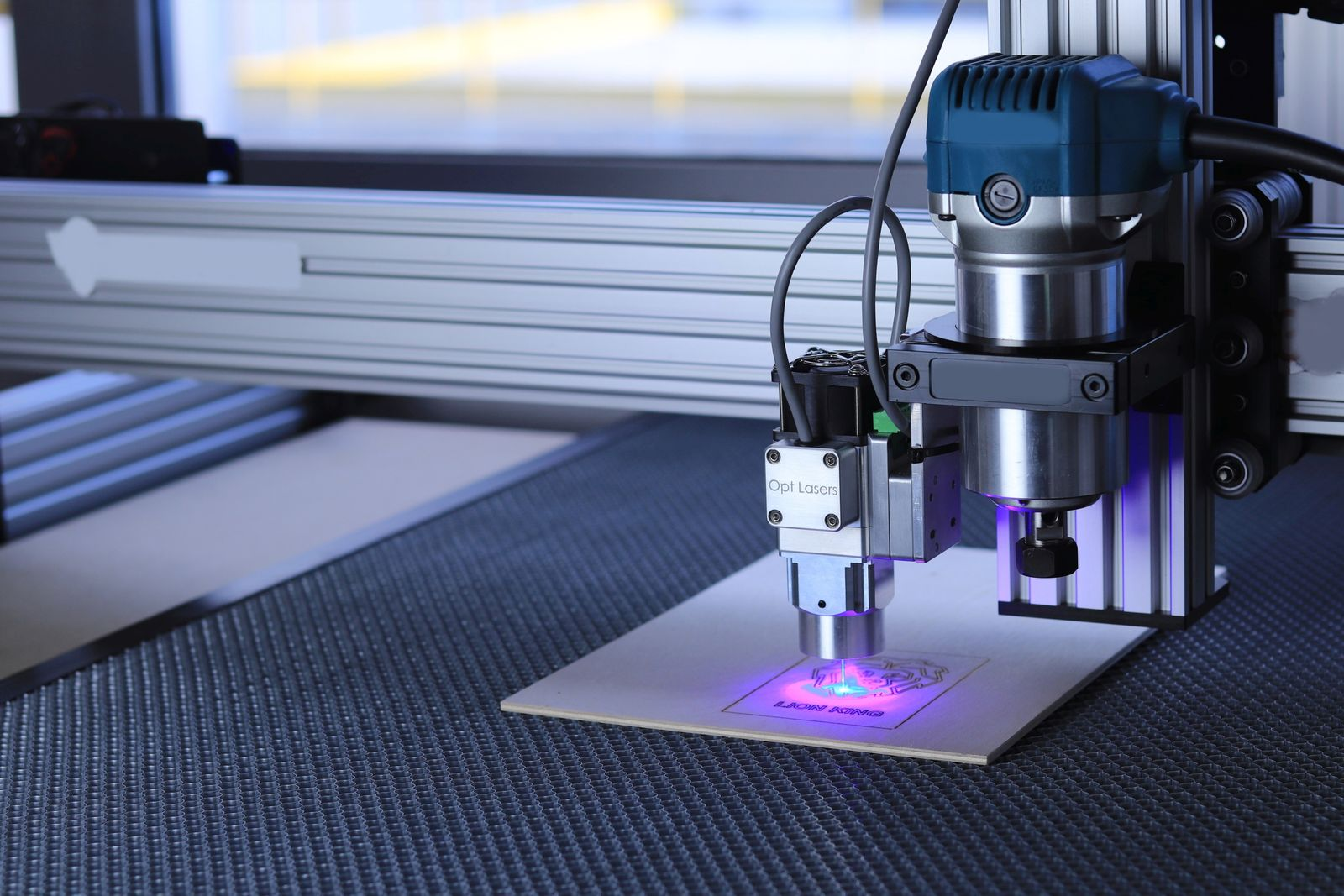
L-DED feeds material, typically in powder or wire form, into a region heated by a laser. The deposited metal bonds with the prepared component surface and is built into the required repair geometry. Unlike replacing a complete expensive part, this approach may allow a worn or damaged area to be restored while much of the original component is retained.
Aerospace repairs demand more than an accurate external shape. The deposited material and the interface with the existing component have to satisfy the loads, temperatures and environmental conditions associated with the part’s intended use. A repair that looks dimensionally correct may still have unacceptable fatigue behaviour, internal defects or residual stress if its thermal history is not controlled.
Inconel alloys, titanium alloys and 15-5PH stainless steel are among the materials named for the programme. They respond differently to heating, cooling and repeated loading; some rely on precipitation-hardening mechanisms, while others derive properties from different microstructures or thermal histories. A process that produces acceptable results for one grade cannot automatically be applied to another without repeatable materials data and the relevant component-level qualification.
Heating only a limited repair zone creates a difficult engineering trade-off. Sufficient energy is needed to form a sound deposit, but the local thermal cycle may also change the properties of adjacent parent material. The surrounding component can constrain expansion and contraction, introducing residual stresses or distortion that are unacceptable in a tightly toleranced aerospace assembly.
Rosebank plans to use its Adaptive Monitoring and Control of Laser Additive Deposition (AMCLAD) system during process development and validation. Researchers will examine laser rescanning, in which controlled additional heat is applied to deposited material to influence microstructure as it forms. They aim to obtain the necessary mechanical properties without separate post-process heat treatment, an outcome that remains to be demonstrated for the selected repairs and alloys.
Removing a whole-component heat treatment may reduce the risk of changing nearby material properties or distorting accurately machined features. It may also avoid heating assemblies whose constituent materials tolerate different temperatures. These are potential benefits rather than certified results: rescanning parameters, resulting phase structures and defects will be characterised and tested before any decision on whether a separate heat treatment can safely be omitted.
RMIT’s research team is contributing laser process optimisation under Professor Milan Brandt. Swinburne researchers, including Professor Suresh Palanisamy, will undertake detailed material characterisation and mechanical testing. The collaboration is structured to create a body of evidence rather than rely on a single successful demonstration of deposited material.
Researchers plan to measure tensile strength, fatigue life, residual stress, corrosion and wear performance across the repaired material and its interface with the parent component. Each assessment addresses a different failure mechanism: a deposit may satisfy a static strength test yet fail under repeated cycling or environmental exposure. The tests therefore need to be interpreted together for the intended component and service conditions.
Residual stress measurements are especially relevant to repair because heating and cooling can leave internal forces even when no external load is applied. These forces may affect dimensional stability or combine with operational loading. Corrosion and wear tests address other service exposures, while material characterisation can reveal porosity, cracking, phase distribution or changes across the repaired interface.
Evidence from material characterisation and mechanical testing will feed a material property suite intended to support aerospace qualification. Process records will need to link the original component condition, feedstock, laser settings, deposited geometry, inspections and test outcomes. The stated reference to NASA-STD-6030 sets a research and qualification objective; it does not itself grant approval from an aircraft manufacturer, operator or airworthiness authority.
One target is a possible repair route for in-demand F/A-18 engine components, although no individually approved part, certified process specification or fleet adoption decision has been identified. Engine components can be exposed to high temperatures, cyclic loading and exacting tolerances, making the relationship between repair geometry, heat-affected material and inspection evidence decisive for any proposed return-to-service authorisation.
Rosebank already operates in Australian aerospace sustainment and engineering, but extending laser deposition to critical repairs requires individual technical substantiation and acceptance through the relevant airworthiness route. Project results may eventually support manufacturing and maintenance work on additional aircraft families; applicability will depend on the alloys, operating conditions and authorised repair limits.
Replacement aircraft parts can have long international supply lead times, especially when low-volume components are needed for ageing fleets. A qualified Australian repair route might eventually shorten some waits and preserve expensive material, but its benefits depend on repeatable process results and component-specific approval. Over the two-year programme, the partners plan to assemble the materials data and a demonstrator repair that could support a subsequent certification decision.