IN Brief:
- Germany's BAAINBw has contracted MBDA Deutschland to develop an airborne high-energy laser demonstrator.
- Principal Laser-Pod components will be designed for potential future flight operations, with particular attention to size, weight, and environmental resistance.
- The programme extends German directed-energy development beyond existing maritime work towards possible Luftwaffe applications.
MBDA Deutschland has received a contract from Germany’s Federal Office of Bundeswehr Equipment, Information Technology and In-Service Support (BAAINBw) to develop an airborne high-energy laser demonstrator. The project will investigate technologies required for a future laser weapon aboard Luftwaffe aircraft, with principal components of the proposed Laser-Pod designed to accommodate conditions associated with later flight operations.
The contract, confirmed on 2 November, extends Germany’s directed-energy development into an airborne application following earlier ground-based and naval laser work. MBDA will develop demonstrator equipment intended to establish the feasibility of an aircraft-mounted laser system, concentrating on the technical requirements imposed by aviation rather than production of an operational weapon.
Aircraft integration introduces substantial engineering constraints because the equipment must operate within restricted space and weight allowances while withstanding vibration, acceleration, temperature changes, and other flight conditions. The laser source, optical components, electrical equipment, and supporting systems must ultimately be compatible with the structure and operating environment of the intended aircraft.
The Laser-Pod concept creates a particular challenge around packaging. A high-energy laser requires an optical source, beam-directing equipment, electrical supplies, and thermal management, together with the control systems needed to operate them. These functions occupy space and contribute mass, making the arrangement of individual components an important part of assessing whether the equipment could eventually be carried by an aircraft.
Electrical demand is closely connected to the system’s physical design. Generating a high-energy optical beam requires a substantial electrical input, while additional power is consumed by controls, sensors, and cooling equipment. The conversion process also generates heat, requiring thermal management to prevent temperatures exceeding the operating limits of sensitive components.
Managing that heat becomes more demanding when equipment is carried aboard an aircraft. A ship or fixed installation may have greater space available for supporting machinery, while an airborne system must work within the mass, volume, and power resources allocated to the installation. Cooling hardware consequently forms part of the overall equipment package rather than an independent service that can be added without affecting the platform.
The intended flight environment also influences the mechanical design of optical equipment. Laser beam generation and direction depend on accurately aligned components, while aircraft motion and vibration can disturb the relationship between the laser and its intended target. Suitable mounting, stabilisation, and control arrangements would be needed to preserve beam alignment during operation.
Maintaining a concentrated beam on a moving target adds a further requirement. A laser weapon must direct sufficient energy towards a selected point for the necessary duration, with target movement and platform motion affecting the pointing task. Beam quality, tracking accuracy, and stabilisation therefore influence the potential performance of the complete system alongside the optical power available.
The environment through which the beam travels creates additional constraints. Atmospheric absorption, scattering, and turbulence can influence the energy delivered to a target, with conditions changing according to altitude, range, and weather. An airborne system would consequently require assessment of its optical performance under the conditions associated with its intended use.
MBDA identifies drones and cruise missiles among the threats that future airborne laser systems could be intended to counter. The two target categories present different combinations of speed, size, manoeuvrability, and operating conditions. Any eventual weapon capability would have to be assessed against defined threat requirements rather than the performance of the laser source in isolation.
The German manufacturer has placed particular emphasis on designing the Laser-Pod’s principal components for future flight conditions. This provides a more demanding development basis than demonstrating laser effects using equipment intended only for laboratory or ground testing. It also means the engineering programme must consider the eventual installation environment while the technology remains under development.
German industrial participation forms part of the project’s development approach. MBDA is prioritising domestic suppliers and national systems expertise as it advances the demonstrator, drawing on Germany’s established research and development capabilities in laser technology. The country has treated high-energy lasers as a strategic technology area since 2019, supporting research into potential applications across the armed forces.
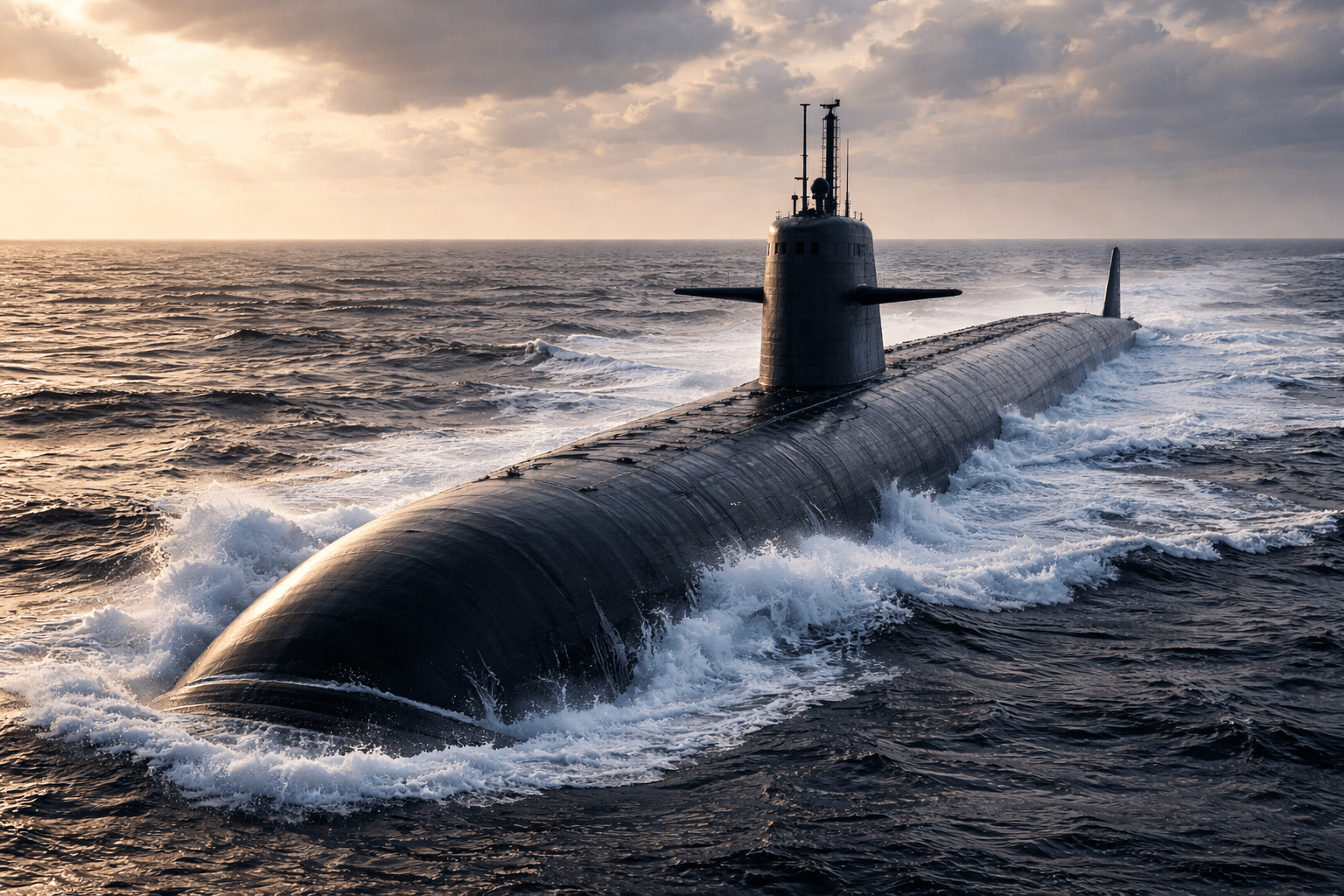
MBDA’s experience includes the German naval laser programme developed with Rheinmetall. A joint demonstrator underwent extensive testing aboard the frigate Sachsen before further evaluation at the Bundeswehr’s WTD91 establishment in Meppen. The programme examined target detection, tracking, beam direction, and engagement under operationally relevant conditions.
The naval demonstrator completed more than 1,000 laser firings during its wider test programme, including engagements involving air, surface, and land targets. That work supported a subsequent contract for development of a complete naval laser weapon system, with Germany targeting operational capability during 2029.
Although both programmes concern high-energy lasers, their integration environments differ considerably. The naval project incorporates experience gained from operating equipment aboard a warship, while the new Laser-Pod demonstrator must address the considerably tighter physical and environmental constraints associated with flight. Its equipment will require separate engineering development and evaluation before any aircraft integration programme can proceed.
Experience with laser tracking, optical control, and other subsystem technologies provides an industrial foundation for the airborne project. Component packaging, electrical requirements, and thermal performance will determine how readily those technologies can be adapted to an aircraft installation. The demonstrator programme will examine that feasibility before decisions concerning a potential operational configuration.
The contract establishes a further development programme within Germany’s directed-energy industrial base. Its immediate work concerns the Laser-Pod demonstrator and components designed for possible later flight operations, with the results intended to inform subsequent Luftwaffe capability development.