IN Brief:
- KNDS and SeaOwl have signed a cooperation agreement for the development and testing of an armed uncrewed surface vessel.
- The announced design has a 30kg payload, a maximum speed of 35 knots, and a combat range of up to 200km.
- Autonomous navigation is planned, but the companies specify that a remote operator retains the final engagement decision.
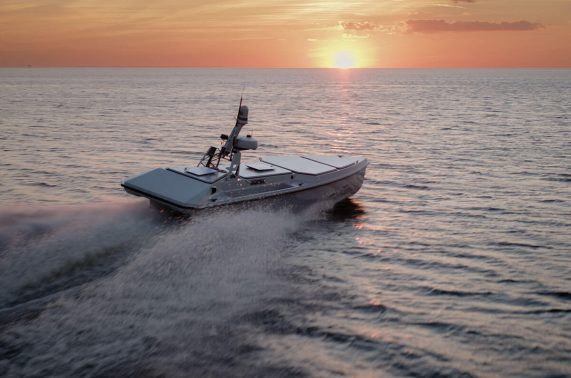
KNDS and SeaOwl Technology Solutions have agreed to develop and test an armed uncrewed surface vessel integrating a KNDS-qualified warhead with SeaOwl’s maritime robotics. Announced at Euronaval on 3 November, the cooperation covers the vessel, autonomous navigation, remote operation, and the controlled link between the platform and its weapon.
The proposed craft has a stated maximum speed of 35 knots, a payload of 30kg, and a combat range of up to 200km. The companies describe a vessel intended for both offensive and defensive missions, with measures to reduce radar and optical signatures. Those figures are design specifications announced by the partners rather than independently verified operational results from a completed naval acceptance programme.
SeaOwl is providing the maritime robotic platform and autonomy expertise, while KNDS is supplying the munition-related capability and its experience of qualification and safety. Developing the vessel as a complete system means its navigation and communications functions must operate alongside a protected weapon control chain. The agreement covers integration and testing, not a completed fleet acceptance or a production order.
The partners describe a cyber-secure architecture with protection for the firing chain. Their proposed control arrangement separates autonomous navigation from engagement decisions: a remote operator retains exclusive authority to authorise firing. That division gives the developers distinct software and equipment functions to test, particularly where route execution and operator commands may occur on different timescales.
Autonomous surface navigation must interpret position, heading, nearby contacts, and the motion of the waterborne platform. Its control system then has to adjust propulsion and steering as conditions change, while maintaining sufficient information about obstacles and other vessels. The manufacturer’s performance claims do not identify the sensor suite, levels of autonomy, or the operating conditions used to calculate the quoted range.
The intended operating range also places demands on the link between the vessel and its remote controller. KNDS and SeaOwl have not published their datalink configuration or the defined behaviour after an interruption. Those parameters will have to be demonstrated alongside the advertised speed and range as the new platform moves through its testing programme.
The 30kg figure is described as the craft’s payload, with KNDS providing a qualified warhead for integration. Qualification of a warhead establishes a basis for the munition component but does not itself qualify the complete autonomous vessel. Sea trials will still need to examine the interaction between the hull, control equipment, power supply, payload mounting, safety controls, and the intended operating environment.
The quoted 35-knot top speed and range of up to 200km describe different aspects of the intended operating envelope. The companies have not specified a cruise-speed profile, sea state, or propulsion arrangement to connect the two figures. Trial results will need to establish how platform loading and environmental conditions affect actual endurance and manoeuvrability.
SeaOwl’s maritime robotics work provides the vessel control functions needed to integrate position, heading, and obstacle information while the remote operator supervises the mission. Weapon authorisation remains a separate responsibility. Testing those functions together will involve establishing that navigation commands, equipment status, and engagement permissions are handled consistently across the system rather than being conflated within a single autonomous decision.
The companies have also described measures to reduce the vessel’s radar and optical signatures. A smaller signature can affect how a craft is detected, but no numerical signature data or comparative trials have been made public. Signature performance will vary with aspects including hull geometry, materials, weather, viewing angle, and installed mission equipment. The general design objective should therefore be distinguished from a certified stealth performance claim.
At Euronaval, SeaOwl managing director Mathieu Glade described a one-way variant intended, among other roles, to intercept hostile surface drones approaching ships or ports. He also discussed launching multiple vessels, but the cooperation release does not establish that a swarm-control function has completed qualification. The immediate industrial programme remains development and testing of the platform and its munition integration.
Completing that work will require interfaces between the vessel structure, propulsion and control equipment, remote operator station, and qualified warhead to be assessed as a combined system. The existing warhead qualification covers the munition component; platform-level trials must still establish the operating behaviour and safety arrangements for the integrated craft. Neither company has published the full test schedule or detailed configuration.
The 3 November agreement identifies the two engineering partners and their division of responsibilities, with a 30kg payload, a 35-knot maximum speed, and a stated combat range of up to 200km. KNDS and SeaOwl have not named a launch customer, production quantity, or service-entry date. Further testing will determine how the announced configuration performs as an integrated naval system.