IN Brief:
- ASELSAN has disclosed a $1.1bn export agreement with an unnamed international customer.
- The contract is for air defence systems, but no particular radar, gun, missile system, or quantity was named.
- Its technical scope, production schedule, and delivery obligations await further customer or manufacturer disclosure.
ASELSAN has signed a $1.1bn export contract to supply air defence systems to an international customer. The Turkish defence electronics manufacturer disclosed the agreement to the country’s Public Disclosure Platform on 3 November, identifying it as a new business relationship expected to contribute positively to revenue.
The official filing names the buyer only as an international customer. It provides no system models, quantities, delivery dates or allocation between hardware and support services. Consequently, the $1.1bn value cannot be translated into a number of missile batteries or radars, and no specific product in ASELSAN’s catalogue can yet be linked to this order.
ASELSAN’s existing air defence portfolio covers surveillance sensors, fire control equipment, communications, command systems and weapon-related technology for different engagement ranges. Integrated air defence requires information to pass between these layers, from detecting an approaching object and determining its track to assigning an available effector and assessing the outcome of an engagement.
A radar provides measurements of a target’s position and movement, but command and control equipment must combine those measurements with identification data, operating restrictions and the status of available weapons. A short-range system facing small unmanned aircraft has different requirements from a longer-range network tracking fast aircraft or missiles. The customer and operational requirement therefore determine the final equipment architecture.
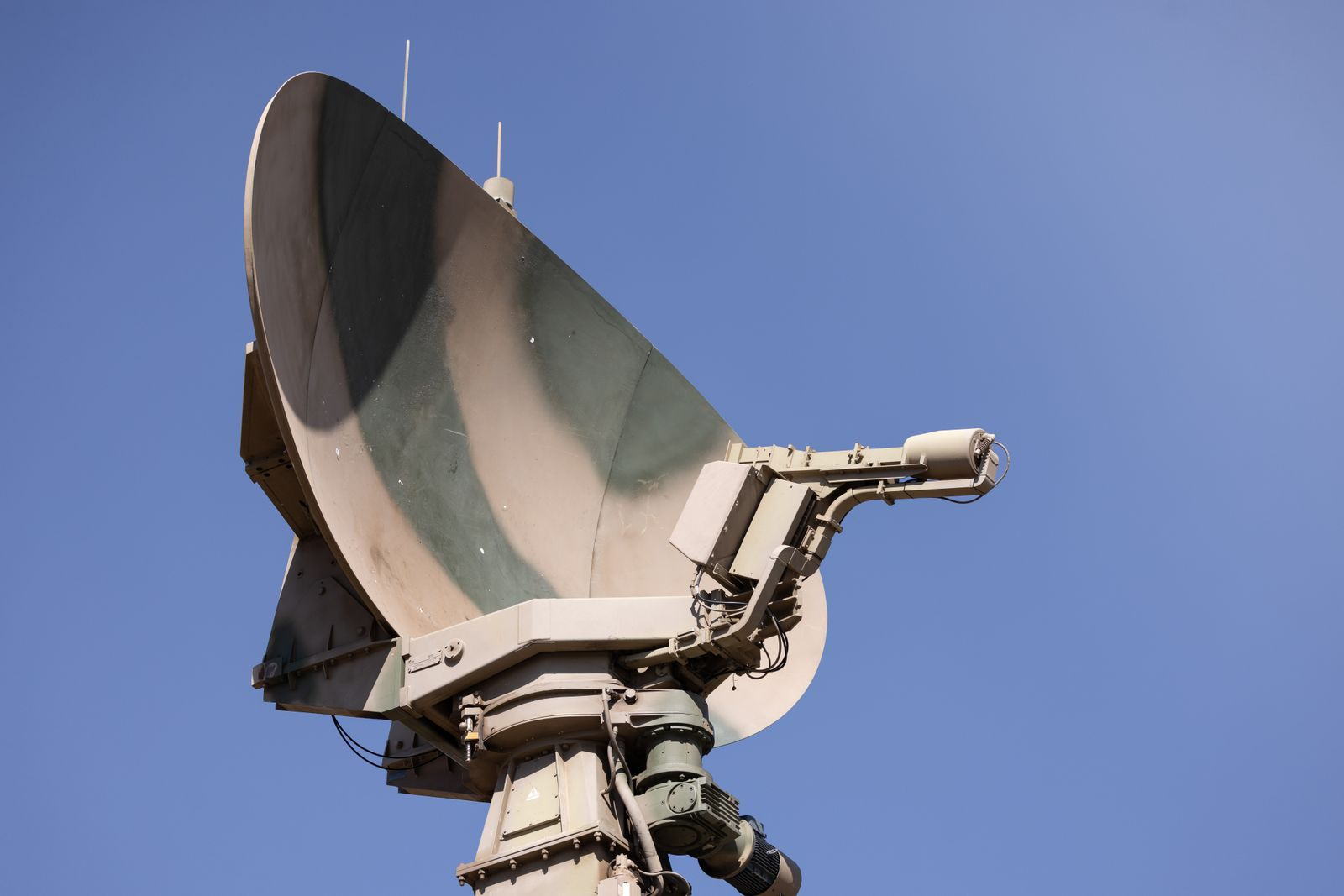
One established ASELSAN product is KORKUT 150/35, a mobile very short-range air defence system intended to protect mechanised units. The company describes an arrangement comprising three weapon-system vehicles and one command-and-control vehicle. Its sensors include three-dimensional search radar, while tracking equipment and electro-optical sensors support engagement of targets selected through the local air picture.
KORKUT’s 35mm weapons can fire programmable ATOM airburst ammunition. Rather than relying solely on a direct hit, a programmed round releases fragments near the predicted target position. The combination places demanding requirements on tracking accuracy, timing and fire control, particularly against small objects whose position can change rapidly. ASELSAN gives a four-kilometre effective range for the gun system in its published specification.
KORKUT’s technical specifications provide an example of the company’s gun-based air defence engineering, but ASELSAN has not identified it as part of the export contract. Its other products cover radar surveillance, fire control and integration with missile-based air defence. Across these applications, the link between detection, target identification, command decisions and effectors determines how a deployed system is configured.
The portfolio includes technology associated with the HİSAR family and SİPER long-range air defence programme, as well as naval point-defence equipment. Their operational functions differ, but each requires compatible sensors, command software, secure communications and maintenance arrangements. Any mixed-system acquisition would additionally require integration with the customer’s existing surveillance network and rules for identification and weapon allocation.
The contract notice does not break down how much of the price relates to equipment, integration, spares, training or subsequent support. That distinction affects the manufacturing work implied by the award: a radar order has a different mix of antenna production, electronics assembly and acceptance testing from a complete layered air defence system. The customer’s existing equipment would also determine which interfaces need to be adapted.
The possible equipment configuration also determines which production processes the contractor would use. Radar arrays, specialist electronic assemblies, command software, mechanical structures and vehicle integration demand different manufacturing and test facilities. Once the customer and equipment are disclosed, the required electromagnetic, environmental and interoperability testing can be assessed against an identifiable system design.
Where equipment is installed on vehicles, power generation, cooling, cable routing and mechanical stability affect what the sensors and effectors can achieve. Fixed-site installations place different constraints on foundations, grid or generator supply and communications links. These engineering decisions have a direct bearing on installation work and the support package even when the principal radar or weapon remains unchanged.
Exports also involve qualification and acceptance arrangements. Factory tests establish whether equipment meets its specification before shipment, while site acceptance and operational evaluation confirm that it functions within the customer’s configuration. Maintaining the capability afterwards requires replacement components, calibration, software control and trained technicians. The undisclosed delivery terms leave the division between these stages open.
ASELSAN already manufactures and supports equipment across several air defence product lines and overseas markets. The newly disclosed award adds a substantial export contract to that established activity, although there is no published production schedule against which to assess additional factory capacity or supplier demand. Its contribution to future revenue is acknowledged in the filing, without a year-by-year breakdown.
The filing classifies the agreement as a new business relationship beginning on 3 November 2026, with no previous announcement for the same transaction. Product selection and deliveries remain undisclosed. Any later disclosure of a named customer, radar, missile or gun installation would allow the technical and industrial scope of the $1.1bn award to be assessed more precisely.