IN Brief:
- Kongsberg and Navantia signed an underwater technology memorandum of understanding at Euronaval on 4 November.
- The companies will investigate HUGIN autonomous vehicle integration and advanced sonar for conventional submarines.
- Kongsberg will contribute autonomy and sensing expertise, while Navantia leads submarine integration; no production order has been announced.
Norwegian defence technology group Kongsberg and Spanish naval shipbuilder Navantia have signed an agreement to investigate the integration of autonomous underwater vehicles and advanced sonar technology into conventional submarines, extending their cooperation into new undersea systems.
The memorandum of understanding was signed at Euronaval in Paris on 4 November and made public on 9 November. It establishes a framework for identifying joint development opportunities, integrating Kongsberg’s HUGIN autonomous underwater vehicles, and examining technologies that could support future submarine designs and modernisation programmes.
Kongsberg will contribute its expertise in autonomous systems and sonar, while Navantia will lead the integration of the proposed equipment into submarine platforms. The companies intend to develop arrangements compatible with the operational standards of the Spanish Navy and other NATO naval services. No customer contract, funded development programme, or completed submarine integration has been announced.
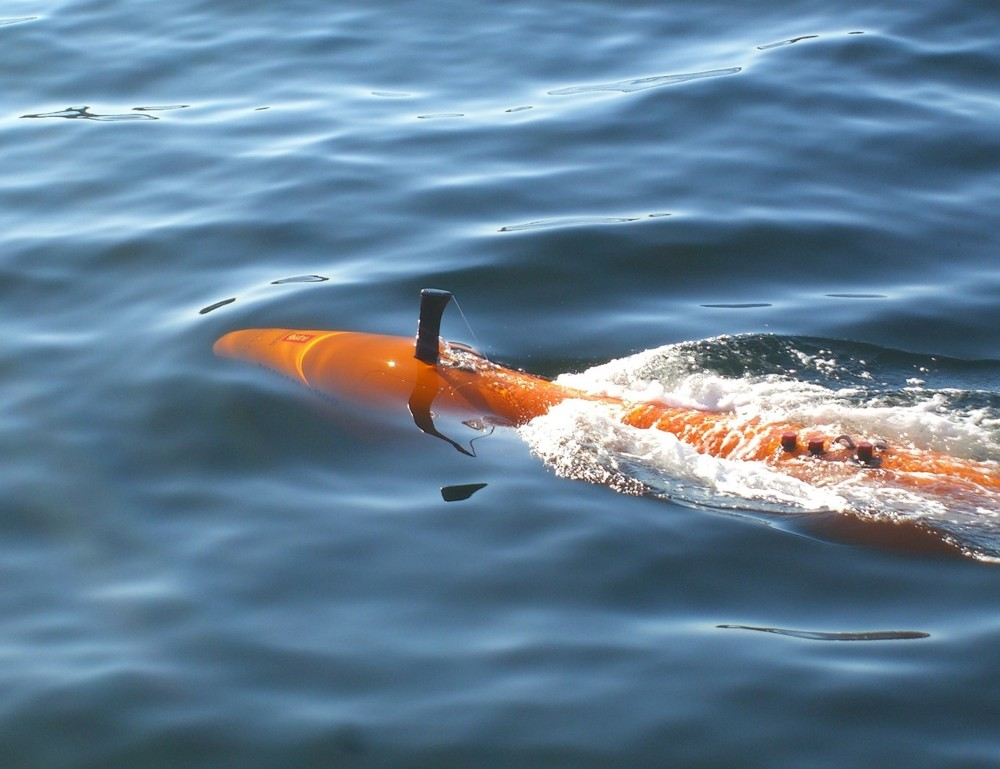
HUGIN is an established family of autonomous underwater vehicles developed for underwater sensing and survey applications. The platforms operate without requiring a continuous remote-control connection, using onboard navigation, sensors, and mission-management equipment to execute assigned tasks. Different configurations can support activities involving seabed observation, environmental information gathering, and other underwater measurement requirements.
Employing an autonomous vehicle from a submarine creates additional engineering challenges compared with deploying the same equipment from a surface ship or shore facility. Submarines have restricted internal volume, established structural arrangements, and equipment configured around their existing operational requirements. Adding a vehicle and its supporting systems would require careful consideration of the space, electrical power, control interfaces, and mechanical arrangements available within the host platform.
Launch and recovery would form a significant part of any eventual installation. An autonomous underwater vehicle requires a means of entering the water and, depending on the operating concept, being recovered or supported after completing its mission. The method selected would influence the submarine’s equipment configuration and operating procedures. Kongsberg and Navantia have not disclosed an intended launch and recovery arrangement or identified the submarine class on which it might first be demonstrated.
Underwater vehicles also depend on navigation methods suitable for operation without continuous access to satellite positioning signals. Inertial navigation, acoustic positioning, and other onboard measurements can contribute to an estimate of vehicle position, with the appropriate combination determined by the platform and mission. Errors can accumulate during extended operations, making navigation performance and the interpretation of collected data important elements of system design.
Communications create another constraint because radio-frequency signals are heavily attenuated by seawater. Acoustic communication can provide an alternative, but generally offers lower bandwidth and longer transmission delays than conventional links operating above the surface. An autonomous vehicle may therefore need to continue executing its mission while contact with the supporting submarine is intermittent, exchanging information when communications become available.
These characteristics influence how a submarine could use an autonomous vehicle for sensing tasks. Mission information must be prepared before deployment, while the vehicle’s onboard systems need sufficient capability to manage the assigned work. Data collected during the mission must subsequently be transferred, processed, and interpreted. The companies have not identified the mission software or communications standards that would be used in the proposed HUGIN integration.
The agreement also covers the development and implementation of advanced sonar technologies. Sonar systems detect and characterise underwater objects and environmental conditions through acoustic measurements, with performance influenced by the sensors, operating environment, and processing methods. Integrating new sonar equipment into an existing submarine can require modifications to its supporting electronics, control systems, and arrangements for handling the resulting information.
The acoustic characteristics of the host submarine are relevant to sensor performance. Noise generated by machinery, propulsion equipment, and water movement can affect measurements, while the location and mounting of transducers influence the information that can be collected. The selection of a sonar configuration must account for these conditions alongside the available electrical and processing capacity. No specific new sonar model has been selected under the published agreement.
Kongsberg’s role will concentrate on the autonomous vehicles and underwater sensing technologies, while Navantia will be responsible for examining how those systems can be accommodated within conventional submarine designs. Combining those responsibilities brings together equipment development and platform engineering, with the technical requirements of each influencing the eventual integration approach.
Navantia’s submarine manufacturing experience includes the Spanish Navy’s S-80 programme, providing an existing industrial foundation for work on conventional underwater platforms. The new memorandum does not specify that HUGIN vehicles will be installed on an S-80 submarine, however, and no corresponding Spanish Navy procurement or modernisation decision has been confirmed.
Future submarine designs and existing vessels present different integration possibilities. New platforms can potentially incorporate equipment interfaces and supporting arrangements during the initial design process, while modernisation programmes must work within the limitations of the original vessel. The companies intend to explore both areas, including opportunities associated with future production batches, rather than concentrating exclusively on a single announced installation.
Anti-submarine warfare and intelligence operations are among the applications identified for the proposed cooperation. Autonomous underwater vehicles could provide additional sensing capacity for such missions, but their practical contribution would depend on the equipment installed, operating arrangements, and evidence obtained through development and testing. The agreement does not establish that an integrated system has been demonstrated or accepted for naval service.
Kongsberg and Navantia have previously signed cooperation agreements concerning Norwegian F-310 frigates and the integration of Naval Strike Missile technology into Navantia designs. The latest memorandum extends their relationship into submarine autonomy and underwater sensing, with a different technical scope and no associated production quantity.
The companies will now seek specific development opportunities through which the agreement can progress beyond its initial framework. Subsequent work would need to establish the submarine configuration, autonomous vehicle variant, sonar equipment, integration interfaces, and testing requirements. Until those decisions are made, the arrangement remains a proposed engineering collaboration rather than a funded submarine capability programme.