IN Brief:
- Titania was developed in Hampshire under a £9.5m BAE Systems and Dstl programme and launched in October 2026.
- Project Inaros will test neuromorphic surveillance sensors in the UK, Australia, and Cyprus.
- The developments support wider UK investment exceeding £3bn in military space capabilities over four years.
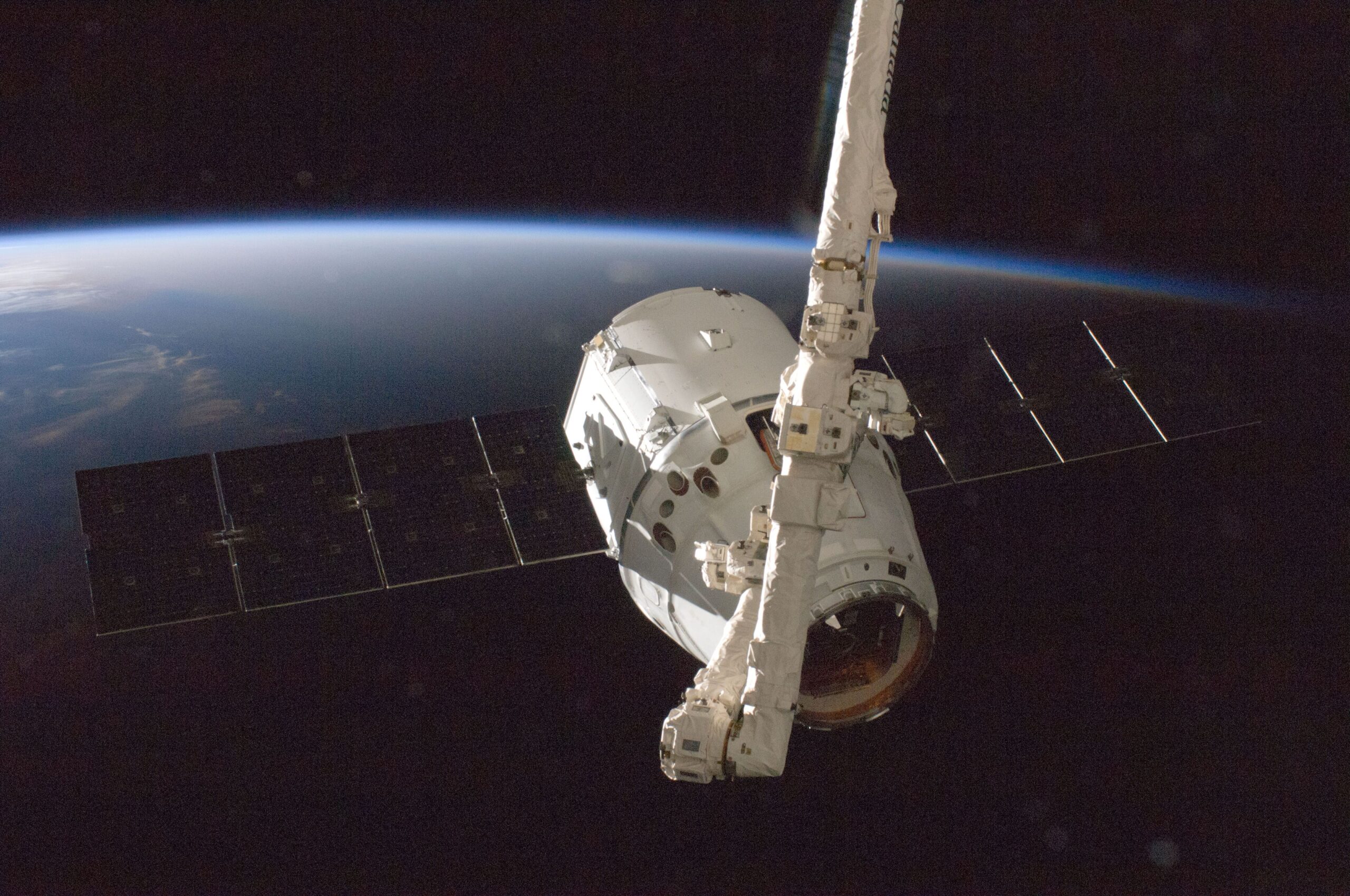
British defence manufacturer BAE Systems and the Defence Science and Technology Laboratory (Dstl) have completed the development and launch of Titania, a military Earth observation satellite intended to strengthen the United Kingdom’s space-based intelligence, surveillance, and reconnaissance capabilities.
The spacecraft entered orbit in October 2026 under the Ministry of Defence’s ISTARI programme, with the launch confirmed publicly on 7 November. Titania is the second satellite in the UK’s growing military observation constellation, following Tyche, and will be operated by UK Space Command. The milestone accompanies a separate programme to trial advanced ground sensors for monitoring activity around British satellites.
Designed and manufactured in Hampshire under a £9.5m contract, Titania weighs approximately 100kg and completes an orbit of the Earth every 90 minutes, travelling at around 27,000 kilometres per hour. The Ministry of Defence has not disclosed its complete imaging payload, observation resolution, or operational tasking arrangements, and successful launch should be distinguished from confirmation that every intended function has completed commissioning.
Military Earth observation satellites provide information about locations and activity that cannot always be monitored continuously from aircraft or terrestrial positions. Repeated orbital passes allow imagery to be collected at different times, supporting assessments of changes in infrastructure, equipment, and other observable features. The information available from each pass depends on the spacecraft’s sensor configuration, orbital position, observation conditions, and the time required to process the data.
ISTARI is intended to expand British control over the spacecraft and supporting systems used for military intelligence collection. Satellite ownership and operation are only part of that requirement. Ground infrastructure must support mission planning, communications with orbiting equipment, the receipt and processing of imagery, and its distribution to authorised users. These functions determine how effectively information gathered in orbit can be incorporated into military operations.
Dstl contributed to Titania’s development from its original concept through scientific and technical work, programme delivery, and launch. BAE Systems provided specialist spacecraft engineering and manufacturing expertise. The completed satellite adds to the domestic industrial capacity associated with military space systems, including the design, assembly, and verification of equipment intended to operate in orbit.
Further ISTARI developments are planned through separate manufacturing partnerships. Surrey Satellite Technology Limited will contribute to Juno, while Airbus Defence and Space is involved with Oberon. These projects will extend the programme’s spacecraft portfolio, although their individual payload configurations, launch arrangements, and operational introduction dates must be assessed separately from Titania’s completed launch.
The Ministry of Defence is also establishing Project Inaros, which will test three neuromorphic sensors designed to monitor objects and activity in space. The equipment has been developed by British-Australian company Optera in partnership with the National Security Strategic Investment Fund. Trial installations are planned in the United Kingdom, Australia, and British facilities in Cyprus, creating geographically separated observation positions.
Neuromorphic sensing uses an approach inspired by biological visual processing, concentrating on changes in the observed scene rather than relying exclusively on conventional sequences of complete images. Such technology can potentially provide information about moving objects while reducing the amount of unnecessary visual data that needs to be processed. Its actual performance in military space surveillance will depend on the sensors, processing methods, and conditions examined during the trials.
Ground-based optical monitoring of orbital objects introduces several technical constraints. A sensor’s view depends on its geographical location, environmental conditions, the illumination of the object, and the object’s apparent motion across the sky. Different sites can provide additional observation opportunities, but combining measurements requires accurate timing and suitable methods for processing information obtained from separate locations.
Inaros is intended to investigate whether this technology can contribute to detecting unusual or threatening activity near British satellites. The proposed system could ultimately support earlier warning of objects or behaviour requiring further assessment. However, the Ministry of Defence has not published its detection thresholds, tracking accuracy, or the operational requirements that would apply to a permanent network.
The trial network is expected to contribute information relevant to UK Space Command organisations, including No. 1 Space Operations Squadron, No. 2 Space Warning Squadron, and the newly established No. 3 Space Effects Squadron. These units are involved in the operation, monitoring, and protection of British military space capabilities. Introducing additional sensors would require their observations to be integrated into established procedures for assessing space activity.
Titania and Inaros address different parts of the military space system. Titania is intended to observe activity on Earth, while Inaros will examine the use of ground sensors to monitor objects in orbit. The former contributes to intelligence collection; the latter concerns awareness of the environment surrounding satellites and potential threats to the infrastructure on which space-based services depend.
The two developments form part of more than £3bn of UK defence investment in space capabilities over four years. That wider allocation includes activities beyond Titania and Inaros, and should not be interpreted as the combined contract value of the two projects. Their respective industrial arrangements also differ, with Titania involving a completed spacecraft development programme and Inaros proceeding through a new sensor trial.
With Titania launched, further work will establish how its observations are incorporated into the operational ISTARI system. Inaros will generate separate evidence about the performance of distributed neuromorphic monitoring. Neither the operational acceptance date for Titania nor a decision to procure a permanent Inaros sensor network has been disclosed.